
 Afrika
 Asia
Asia Yuropu
 Amerika yeKumaodzanyemba
 Australia neOceania
 Antarctica
 Gungwa rePacific
 Gungwa reAtlantic
 Gungwa reIndia
 Gungwa reArctic
 Gungwa reMediterranean
 Gungwa Dzvuku
 Gungwa reCaribbean
 Gungwa reCoral
 Gungwa reChina yeKumaodzanyemba
 Gungwa rePhilippines
 Gungwa reAndaman
 Gungwa reKuchamhembe
 Gungwa reTimor neArafura
 Gungwa reBengal
 Gulf yeCalifornia
Six-spot burnet
 Ine chepfu kana ikadyiwaInodya: ZvirimwaIne chepfu, haina uturu hwekuruma kana kubaya
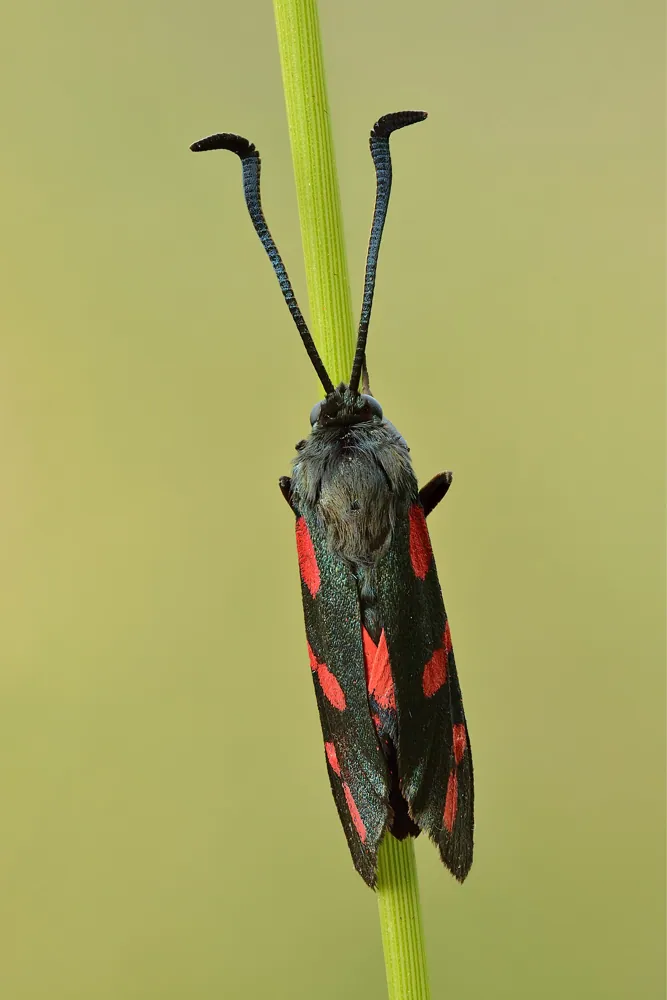
The six-spot burnet is a day-flying moth with dark green wings marked by six bright red spots. It lives in meadows and grassy places across much of Europe and parts of Asia. Its bright colours warn birds and lizards that it is toxic.1



 Maziviro ayo
- Forewings are dark metallic green with six vivid red spots1
- Sometimes the spots are merged together, or they are yellow or black1
- Hindwings are red with a blackish fringe1
- Wingspan is 30 to 40 mm, and the sexes look similar1
- Adults fly on hot, sunny days from June to August1
- Larva is plump and hairy, usually pale green with rows of black spots1
Inowanzovhiringidzwa ne: It can be confused with the five-spot burnet, especially when the spots on its forewings have merged together.1
Simba rechepfu
Ine ngozi chete kana chimwe chinhu chikaidya.
Ine ngozi yakadii kuvanhu?
Ngozi kuvanhu: Ngozi shomaSenyuchi kubaya kana kushoma. Kazhinji haina ngozi kuvanhu.Inoitei kana yatya?
When attacked, it releases a liquid containing cyanide, and its bright colours warn predators such as birds and lizards that it is toxic.1
 Kana munhu akaibata kana kuidya
- Kana munhu akaidya kana aine zviratidzo mushure mekuidya: fonera nhamba yechimbichimbi kana nzvimbo yeruzivo rwechepfu ipapo ipapo.
Gara uchitanga wafonera nhamba yechimbichimbi (112, 000, 911). Iri izano rakajairika rerubatsiro rwekutanga, kwete zano rechiremba. Zvakakosha zverubatsiro rwekutanga
 Gara wakachengeteka
- Usambobata mhuka yesango, kuedza kuitora kana kuinetsa, kunyange iri diki, uye kunyange ichiita seyakarara kana yakafa.
- Ipa nzvimbo. Kana ukasangana nayo, dzikama, dzokera shure zvishoma nezvishoma uirege iende nenzira yayo.
- Kana wakaibata kana kuidya: usakwesha maziso kana muromo wako, geza maoko ako uye wana rubatsiro rwechiremba.
Haisi kukutsvaga. Chepfu yayo iripo chete kuti pasava nechinhu chinoidya. Zvimwe pamusoro pekugara wakachengeteka
Yakakura sei?
Yakareba zvakadii?
 inenge kureba sechibatanidzo chemapepa
Six-spot burnet yakakura sei kana yaenzaniswa NEWE?
Masvomhu chete mubrowser yako. Hapana chinochengetwa kana kutumirwa kupi zvako.
Inomhanya zvakadii?


_-_Kulna.jpg)
Chokwadi
Kwakabva chokwadi
- Six-spot burnet (Wikipedia (CC BY-SA 4.0))
- Zygaena filipendulae (iNaturalist): mazita nekurongwa kwemhuka.
- Venom Wiki: danho rengozi, saizi yakajairika nekufungidzira kwekumhanya ndezvedu. Ona kuti tinozviwana sei: Matinoyera ngozi.
Chokwadi chimwe nechimwe pane peji rino chine nhamba inoratidza kwachakabva. Kana takakanganisa, ruregerero, tiri vanoda mhuka, kwete magazini yesainzi. Tiudze pa[email protected] tichazvigadzirisa.
 Chinyavada chine nzara! Venom Wiki iprojekiti yemunhu mumwe: yemahara, isina kushambadza uye isina zvinokuteedzera. Chipo chidiki chinobatsira kuti irambe iri paindaneti.Fudza chinyavada
Zvimwe kubva muboka rimwe chete: Dzimwe mhuka dzine chepfu
 Spanish flyDzimwe mhuka dzine chepfuInoda chirembaUsabata
 Common quailDzimwe mhuka dzine chepfuInongorwadza
 Cinnabar mothDzimwe mhuka dzine chepfuIsina ngozi
 Black oil beetleDzimwe mhuka dzine chepfuInongorwadzaUsabata
 Red-striped oil beetleDzimwe mhuka dzine chepfuInongorwadzaUsabata
 Japanese pufferfishDzimwe mhuka dzine chepfuInouraya
Inogarawo mu: Yuropu
 Common European adderMavhaipa nemaadderInoda chiremba
 Common waspNyuchi, mago nemahornetInongorwadza
 European hornetNyuchi, mago nemahornetInongorwadza
 Fire salamanderMatatya ane chepfu, matoad nemanewtInongorwadzaUsabata
 Western honey beeNyuchi, mago nemahornetInongorwadza
 Blunt-nosed viperMavhaipa nemaadderInogona kuuraya