
 Afrika
 Asia
Asia Yuropu
 Amerika yeKumaodzanyemba
 Australia neOceania
 Antarctica
 Gungwa rePacific
 Gungwa reAtlantic
 Gungwa reIndia
 Gungwa reArctic
 Gungwa reMediterranean
 Gungwa Dzvuku
 Gungwa reCaribbean
 Gungwa reCoral
 Gungwa reChina yeKumaodzanyemba
 Gungwa rePhilippines
 Gungwa reAndaman
 Gungwa reKuchamhembe
 Gungwa reTimor neArafura
 Gungwa reBengal
 Gulf yeCalifornia
Eurasian water shrew
 Inoruma
The Eurasian water shrew is a small, dark mammal that lives close to fresh water across northern Europe and Asia. It is one of the few venomous mammals, and it uses its venom to paralyse the prey it catches in the water.1



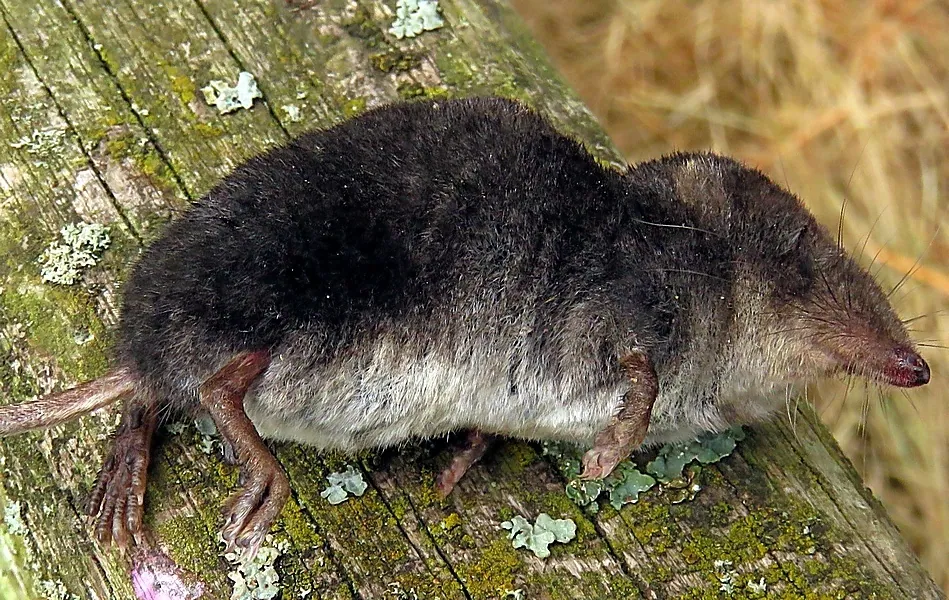
 Maziviro ayo
- Short, dark greyish-black fur on the head, back and sides1
- Dirty white underparts, sharply separated from the darker back1
- A white spot just behind the eye, and often another near the small ear1
- Black nose and a long, tapering snout1
- Sharp teeth tipped with red, and a slender tail with a keel of short white hairs underneath1
Simba reuturu
Uturu hunobuda nemeno ayo painoruma.
Uturu hwayo hunoitei?
Its saliva contains a neurotoxic venom, which attacks the nerves. It delivers this venom at the base of the skull of its prey, and the venom paralyses prey even when the prey is larger than the shrew. Tests on field voles showed the venom is lethal at a minimum dose of 15 mg per kg of body weight.1
Ine ngozi yakadii kuvanhu?
Ngozi kuvanhu: Ngozi shomaSenyuchi kubaya kana kushoma. Kazhinji haina ngozi kuvanhu.Hantaviruses have been detected in shrews in Hungary and Poland, which raises public health concerns, although how the virus spreads is largely unknown.1
Inoitei kana yatya?
Its venom is thought to immobilise organisms that may threaten it.1
 Kana ikaruma
- Geza ronda zvakanaka uye wana rubatsiro rwechiremba.
Gara uchitanga wafonera nhamba yechimbichimbi (112, 000, 911). Iri izano rakajairika rerubatsiro rwekutanga, kwete zano rechiremba. Zvakakosha zverubatsiro rwekutanga
 Gara wakachengeteka
- Usambobata mhuka yesango, kuedza kuitora kana kuinetsa, kunyange iri diki, uye kunyange ichiita seyakarara kana yakafa.
- Ipa nzvimbo. Kana ukasangana nayo, dzikama, dzokera shure zvishoma nezvishoma uirege iende nenzira yayo.
- Kana imwe ikakuruma: dzikama, gara wakanyarara, fonera nhamba yechimbichimbi (112, 000, 911) kana kuti enda kuchipatara nokukurumidza. Rangarira kuti yaitaridzika sei, mufananidzo unobatsira.
Haisi kukutsvaga. Inoshandisa uturu hwayo kubata chikafu kana kuzvidzivirira, uye inotonyanya kuda kuhwanda. Zvimwe pamusoro pekugara wakachengeteka
Yakakura sei?
Yakareba zvakadii?
Inorema zvakadii?

 yakareba sezvidhinha zvematoyi 3 zvakateedzana
 yakareruka zvekuti haungainzwe paruoko rwako
 inogona kumhanya mamita 100 mumasekondi 90 (munhu anomhanyisa kupfuura vose anoda 9.6)
Eurasian water shrew yakakura sei kana yaenzaniswa NEWE?
Masvomhu chete mubrowser yako. Hapana chinochengetwa kana kutumirwa kupi zvako.
Inomhanya zvakadii?


Chokwadi
It is one of the few venomous mammals. Its venom comes from glands at the base of its lower front teeth, and grooves along the teeth channel the venom into the bite.1
Its teeth are tipped with red because of deposits of iron, which harden the enamel of the tips.1
It can dive up to two metres underwater and stay under for about twenty seconds before it must surface to breathe.1
Its short fur holds air, so its skin stays dry while it swims.1
It has a home range of about 500 square metres, but when foraging on land it can travel up to 3 km.1
Kune nyanzvi dzeuturu
- Zita resainzi
- Neomys fodiens
- Boka
- Mhuka dzinoyamwisa dzine uturu
- Mhuri
- Soricidae2
- Odha
- Eulipotyphla
- Makondinendi
- Yuropu, Asia
- Vacheche
- Litters of four to eight or more young are born after a 24-day gestation period, and females can have one or two litters a year.1
- Makore ekurarama
- kunenge makore 31
- Iri kurarama sei musango
- Least concern1
- Ngozi kuvanhu
- 1 / 5: Ngozi shoma3
Kwakabva chokwadi
- Eurasian water shrew (Wikipedia (CC BY-SA 4.0))
- Neomys fodiens (iNaturalist): mazita nekurongwa kwemhuka.
- Venom Wiki: danho rengozi, saizi yakajairika nekufungidzira kwekumhanya ndezvedu. Ona kuti tinozviwana sei: Matinoyera ngozi.
Chokwadi chimwe nechimwe pane peji rino chine nhamba inoratidza kwachakabva. Kana takakanganisa, ruregerero, tiri vanoda mhuka, kwete magazini yesainzi. Tiudze pa[email protected] tichazvigadzirisa.
 Chinyavada chine nzara! Venom Wiki iprojekiti yemunhu mumwe: yemahara, isina kushambadza uye isina zvinokuteedzera. Chipo chidiki chinobatsira kuti irambe iri paindaneti.Fudza chinyavada
Zvimwe kubva muboka rimwe chete: Mhuka dzinoyamwisa dzine uturu
 Bengal slow lorisMhuka dzinoyamwisa dzine uturuInongorwadza
 Javan slow lorisMhuka dzinoyamwisa dzine uturuInongorwadza
 Pygmy slow lorisMhuka dzinoyamwisa dzine uturuInongorwadza
 Sunda slow lorisMhuka dzinoyamwisa dzine uturuInongorwadza
 Kayan River slow lorisMhuka dzinoyamwisa dzine uturuInongorwadza
 Philippine slow lorisMhuka dzinoyamwisa dzine uturuInongorwadza
Inogarawo mu: Yuropu
 Common European adderMavhaipa nemaadderInoda chiremba
 Spanish flyDzimwe mhuka dzine chepfuInoda chirembaUsabata
 Common waspNyuchi, mago nemahornetInongorwadza
 European hornetNyuchi, mago nemahornetInongorwadza
 Fire salamanderMatatya ane chepfu, matoad nemanewtInongorwadzaUsabata
 Western honey beeNyuchi, mago nemahornetInongorwadza