
 Afrika
 Asia
Asia Yuropu
 Amerika yeKumaodzanyemba
 Australia neOceania
 Antarctica
 Gungwa rePacific
 Gungwa reAtlantic
 Gungwa reIndia
 Gungwa reArctic
 Gungwa reMediterranean
 Gungwa Dzvuku
 Gungwa reCaribbean
 Gungwa reCoral
 Gungwa reChina yeKumaodzanyemba
 Gungwa rePhilippines
 Gungwa reAndaman
 Gungwa reKuchamhembe
 Gungwa reTimor neArafura
 Gungwa reBengal
 Gulf yeCalifornia
Philippine slow loris
 Inoruma
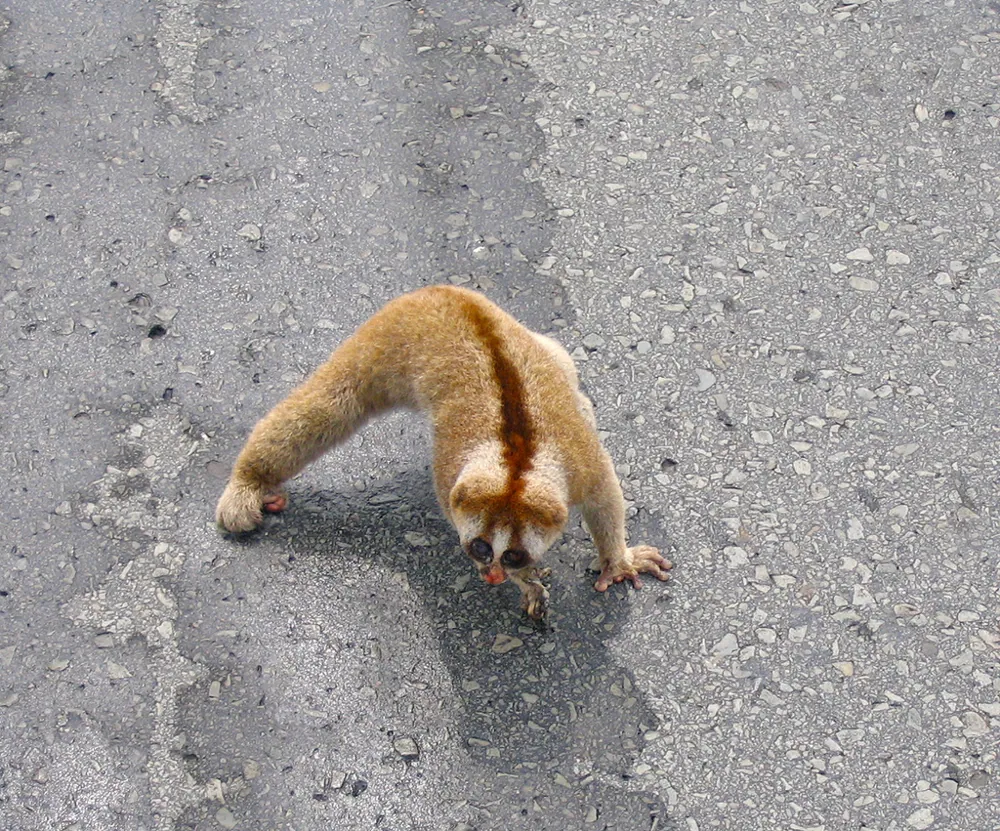
The Philippine slow loris is a small primate with pale golden to red fur and large eyes. It lives in lowland forests, gardens and plantations on the north and east coasts of Borneo and in the Sulu Archipelago of the Philippines. It is special because it is one of the smallest slow lorises and one of the hardest to find in the wild.1

 Maziviro ayo
- Pale golden to red fur1
- Low-contrast markings on the face and head, with no strong dark face mask1
- Short, unfluffed body hair1
- Consistently lacks a second upper incisor (front tooth)1
- Small body, with a vestigial tail, round head and short ears; it is nocturnal and moves through the trees1
Inowanzovhiringidzwa ne: It is often confused with other slow lorises. The Bornean kayan slow loris (N. kayan) also has pale body colour, but it has a dark, high-contrast face mask and longer, fluffier fur. Its face markings are much fainter than those of N. kayan.1
Simba reuturu
Uturu hunobuda nemeno ayo painoruma.
Uturu hwayo hunoitei?
This animal has a gland on the inside of its elbow that makes a pungent, clear, oily toxin. It spreads the toxin on its toothcomb (a set of lower front teeth) and uses it for defence.1
Ine ngozi yakadii kuvanhu?
Ngozi kuvanhu: InorwadzaInogona kurwadza chaizvo, asi kazhinji haisi njodzi huru.Inoitei kana yatya?
When threatened, it wipes toxin from its elbow gland onto its toothcomb.1
 Kana ikaruma
- Geza ronda zvakanaka uye wana rubatsiro rwechiremba.
Gara uchitanga wafonera nhamba yechimbichimbi (112, 000, 911). Iri izano rakajairika rerubatsiro rwekutanga, kwete zano rechiremba. Zvakakosha zverubatsiro rwekutanga
 Gara wakachengeteka
- Usambobata mhuka yesango, kuedza kuitora kana kuinetsa, kunyange iri diki, uye kunyange ichiita seyakarara kana yakafa.
- Ipa nzvimbo. Kana ukasangana nayo, dzikama, dzokera shure zvishoma nezvishoma uirege iende nenzira yayo.
- Kana imwe ikakuruma: dzikama, gara wakanyarara, fonera nhamba yechimbichimbi (112, 000, 911) kana kuti enda kuchipatara nokukurumidza. Rangarira kuti yaitaridzika sei, mufananidzo unobatsira.
Haisi kukutsvaga. Inoshandisa uturu hwayo kubata chikafu kana kuzvidzivirira, uye inotonyanya kuda kuhwanda. Zvimwe pamusoro pekugara wakachengeteka
Yakakura sei?
Yakareba zvakadii?
Inorema zvakadii?

 yakareba sezvidhinha zvematoyi 9 zvakateedzana
 inogona kumhanya mamita 100 mumasekondi 180 (munhu anomhanyisa kupfuura vose anoda 9.6)
Philippine slow loris yakakura sei kana yaenzaniswa NEWE?
Masvomhu chete mubrowser yako. Hapana chinochengetwa kana kutumirwa kupi zvako.
Inomhanya zvakadii?


Chokwadi
It is so rare and hard to find that in one 75-day field study at Sabangau National Park, researchers recorded only 12 sightings.1
It has a curved grooming claw on its second hind toe, which it uses for scratching and grooming.1
Fossils of this species have been found in the Late Pleistocene site of Niah in Sarawak.1
It is one of the smallest slow lorises, and it is the least studied of Indonesia's slow lorises.1
Kwakabva chokwadi
- Philippine slow loris (Wikipedia (CC BY-SA 4.0))
- Nycticebus menagensis (iNaturalist): mazita nekurongwa kwemhuka.
- Venom Wiki: danho rengozi, saizi yakajairika nekufungidzira kwekumhanya ndezvedu. Ona kuti tinozviwana sei: Matinoyera ngozi.
Chokwadi chimwe nechimwe pane peji rino chine nhamba inoratidza kwachakabva. Kana takakanganisa, ruregerero, tiri vanoda mhuka, kwete magazini yesainzi. Tiudze pa[email protected] tichazvigadzirisa.
 Chinyavada chine nzara! Venom Wiki iprojekiti yemunhu mumwe: yemahara, isina kushambadza uye isina zvinokuteedzera. Chipo chidiki chinobatsira kuti irambe iri paindaneti.Fudza chinyavada
Zvimwe kubva muboka rimwe chete: Mhuka dzinoyamwisa dzine uturu
 Bengal slow lorisMhuka dzinoyamwisa dzine uturuInongorwadza
 Javan slow lorisMhuka dzinoyamwisa dzine uturuInongorwadza
 Pygmy slow lorisMhuka dzinoyamwisa dzine uturuInongorwadza
 Sunda slow lorisMhuka dzinoyamwisa dzine uturuInongorwadza
 Kayan River slow lorisMhuka dzinoyamwisa dzine uturuInongorwadza
 Eurasian water shrewMhuka dzinoyamwisa dzine uturuIsina ngozi
 Deathstalker
 Indian cobra
 Indian saw-scaled viper
 King cobra
 Puff adder
 Bvumbi raRussell