
 Afrika
 Asia
Asia Yuropu
 Amerika yeKumaodzanyemba
 Australia neOceania
 Antarctica
 Gungwa rePacific
 Gungwa reAtlantic
 Gungwa reIndia
 Gungwa reArctic
 Gungwa reMediterranean
 Gungwa Dzvuku
 Gungwa reCaribbean
 Gungwa reCoral
 Gungwa reChina yeKumaodzanyemba
 Gungwa rePhilippines
 Gungwa reAndaman
 Gungwa reKuchamhembe
 Gungwa reTimor neArafura
 Gungwa reBengal
 Gulf yeCalifornia
Giant Pacific octopus
 Inoruma
The giant Pacific octopus is the largest octopus species on Earth. It lives along the coasts of the North Pacific, from Baja California up to Alaska and across to Japan and Korea. It plays an important part in the health of deep sea ecosystems.1



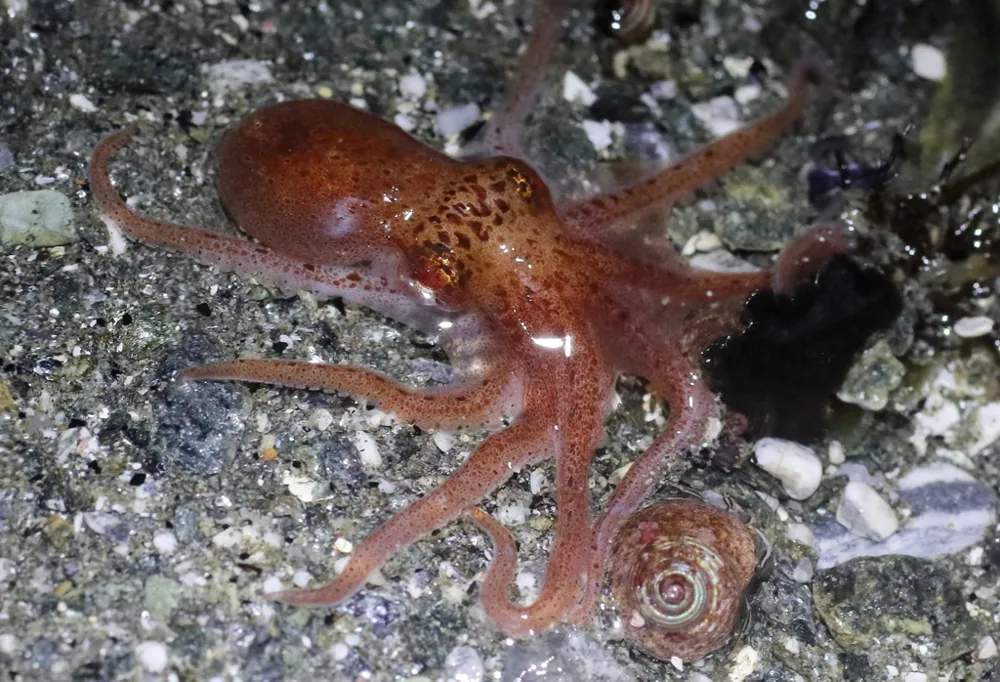
 Maziviro ayo
- It is the largest octopus species, with adults usually weighing around 15 kg.1
- Its arm span can reach up to 4.3 m.1
- Its largest suckers are about 6.4 cm across.1
- It is well camouflaged and often hides in kelp or its den.1
- Piles of shells and bones outside a den, called den litter, can show that one is nearby.1
Simba reuturu
Uturu hunobuda nemeno ayo painoruma.
Ine ngozi yakadii kuvanhu?
Ngozi kuvanhu: Ngozi shomaSenyuchi kubaya kana kushoma. Kazhinji haina ngozi kuvanhu. Kana ikaruma
- Kusunga nekumisa (pressure immobilisation): monera bhandeji rinotambanuka zvakasimba pamusoro peparumwa wozokwira nenhengo yose, isungirire nechitsigiso (splint), uye chengeta munhu asingafambe zvachose kusvikira rubatsiro rwasvika.
- Octopus ine mhete dzebhuruu kana hozhwa yecone inogona kumisa kufema kwemunhu achiri kumuka: shevedza rubatsiro ugare wakagadzirira kumufemera mumuromo kusvikira vanhu veambulensi vatora basa.
Gara uchitanga wafonera nhamba yechimbichimbi (112, 000, 911). Iri izano rakajairika rerubatsiro rwekutanga, kwete zano rechiremba. Zvakakosha zverubatsiro rwekutanga
 Gara wakachengeteka
- Usambobata mhuka yesango, kuedza kuitora kana kuinetsa, kunyange iri diki, uye kunyange ichiita seyakarara kana yakafa.
- Ipa nzvimbo. Kana ukasangana nayo, dzikama, dzokera shure zvishoma nezvishoma uirege iende nenzira yayo.
- Kana imwe ikakuruma: dzikama, gara wakanyarara, fonera nhamba yechimbichimbi (112, 000, 911) kana kuti enda kuchipatara nokukurumidza. Rangarira kuti yaitaridzika sei, mufananidzo unobatsira.
Haisi kukutsvaga. Inoshandisa uturu hwayo kubata chikafu kana kuzvidzivirira, uye inotonyanya kuda kuhwanda. Zvimwe pamusoro pekugara wakachengeteka
Kupi pasi rose?
Yakakura sei?
Yakareba zvakadii?
Inorema zvakadii?
 yakareba seimbwa 4 kubva pamhuno kusvika kumuswe
 yakareba semabhanana 24 akateedzana
 inogona kushambira kureba kwedziva guru rekushambira (50 m) mumasekondi 7,2
Giant Pacific octopus yakakura sei kana yaenzaniswa NEWE?
Masvomhu chete mubrowser yako. Hapana chinochengetwa kana kutumirwa kupi zvako.
Inomhanya zvakadii?

Chokwadi
Octopuses are ranked as the most intelligent invertebrates, and this species can recognise people it often meets and open childproof bottles.1
Its largest suckers can each support about 16 kg.1
The largest individual may have weighed 270 kg, with an arm span of 9.8 m, according to the fisherman who caught it.1
It spends about 94% of its time hidden in dens, kelp or camouflage.1
Unlike most octopuses, which live about one year, it lives three to five years.1
It is the largest octopus species on Earth.1
Kune nyanzvi dzeuturu
- Zita resainzi
- Enteroctopus dofleini
- Boka
- Hozhwa dzecone nemaoctopus
- Mhuri
- Enteroctopodidae2
- Odha
- Octopoda
- Makondinendi
- Gungwa rePacific, Makungwa makuru
- Vacheche
- The female lays between 120,000 and 400,000 eggs on a hard surface and guards them for about 6 months, until they hatch. She dies soon after the young hatch. Hatchlings are about the size of a grain of rice, and very few survive to adulthood.1
- Makore ekurarama
- kunenge makore 51
- Ngozi kuvanhu
- 1 / 5: Ngozi shoma3
Kwakabva chokwadi
- Giant Pacific octopus (Wikipedia (CC BY-SA 4.0))
- Enteroctopus dofleini (iNaturalist): mazita nekurongwa kwemhuka.
- Venom Wiki: danho rengozi, saizi yakajairika nekufungidzira kwekumhanya ndezvedu. Ona kuti tinozviwana sei: Matinoyera ngozi.
Chokwadi chimwe nechimwe pane peji rino chine nhamba inoratidza kwachakabva. Kana takakanganisa, ruregerero, tiri vanoda mhuka, kwete magazini yesainzi. Tiudze pa[email protected] tichazvigadzirisa.
 Chinyavada chine nzara! Venom Wiki iprojekiti yemunhu mumwe: yemahara, isina kushambadza uye isina zvinokuteedzera. Chipo chidiki chinobatsira kuti irambe iri paindaneti.Fudza chinyavada
Zvimwe kubva muboka rimwe chete: Hozhwa dzecone nemaoctopus
 Geography coneHozhwa dzecone nemaoctopusInouraya
 Greater blue-ringed octopusHozhwa dzecone nemaoctopusInouraya
 Southern blue-ringed octopusHozhwa dzecone nemaoctopusInouraya
 Blue sea dragonHozhwa dzecone nemaoctopusInongorwadza
 Common octopusHozhwa dzecone nemaoctopusIsina ngozi
 Blue-lined octopusHozhwa dzecone nemaoctopusInouraya
Inogarawo mu: Gungwa rePacific
 Australian box jellyfishMajellyfish nezvimwe zvinobaya zvegungwaInourayaUsabata
 Japanese pufferfishDzimwe mhuka dzine chepfuInouraya
 Hawksbill sea turtleDzimwe mhuka dzine chepfuInogona kuuraya
 Irukandji jellyfishMajellyfish nezvimwe zvinobaya zvegungwaInogona kuurayaUsabata
 Reef stonefishHove dzine uturuInogona kuurayaUsabata
 Crown-of-thorns starfishMasea urchin, nyeredzi dzegungwa nemakonye egungwaInoda chirembaUsabata