
 Afrika
 Asia
Asia Yuropu
 Amerika yeKumaodzanyemba
 Australia neOceania
 Antarctica
 Gungwa rePacific
 Gungwa reAtlantic
 Gungwa reIndia
 Gungwa reArctic
 Gungwa reMediterranean
 Gungwa Dzvuku
 Gungwa reCaribbean
 Gungwa reCoral
 Gungwa reChina yeKumaodzanyemba
 Gungwa rePhilippines
 Gungwa reAndaman
 Gungwa reKuchamhembe
 Gungwa reTimor neArafura
 Gungwa reBengal
 Gulf yeCalifornia
Habu jellyfish
 Matentacle anobaya
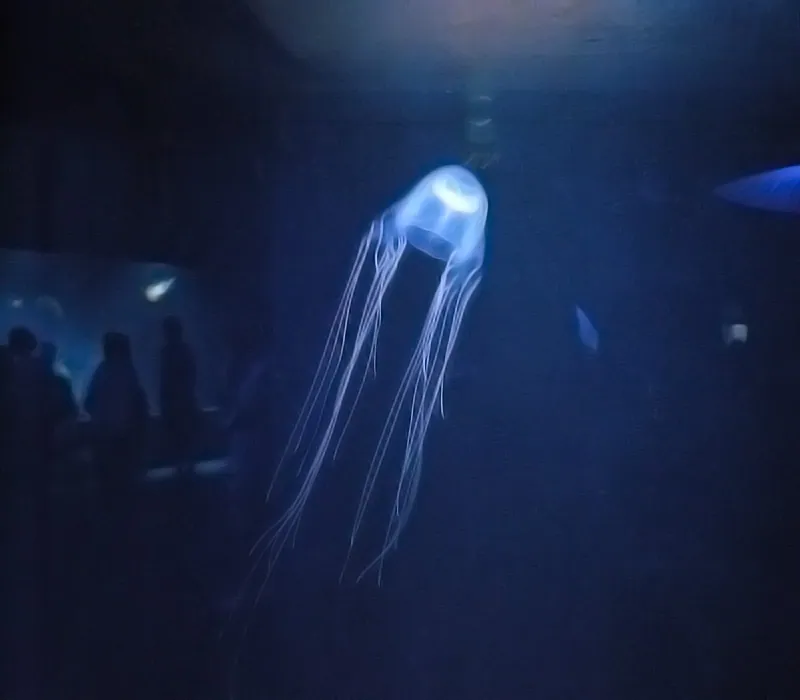
The habu jellyfish is a species of box jellyfish. It lives in coastal waters around Japan, including Okinawa and the Ryukyu Islands, and in the Philippines. It was discovered in 2009, and it is highly venomous.1
 Maziviro ayo
- The bell is box-shaped.1
- Adults have a smooth bell. Juveniles have a warty bell.1
- Typical adults are about 60 mm tall. The largest recorded bell is about 110 mm tall.1
- Four short stalks, called pedalia, each carry tentacles. On average each stalk has seven tentacles, with up to nine.1
- The nematocyst threads, the stinging parts of the tentacles, are lavender.1
Inowanzovhiringidzwa ne: It was once thought to be the same species as Chiropsalmus quadrigatus, found in Malaysia. That name is no longer recognised as a separate species. It is also closely related to Chironex fleckeri, but it is much smaller, with fewer tentacles on average.1
Simba reuturu
Zviuru zvemasero madiki anobaya zvinopfura kana chimwe chinhu chazvibata.
Uturu hwayo hunoitei?
The venom is highly potent. Its stings cause great pain. The symptoms include cardiac arrest, which stops the heart, and respiratory failure with acute pulmonary oedema, which means fluid builds up in the lungs and breathing fails.1
Ine ngozi yakadii kuvanhu?
Ngozi kuvanhu: Ine ngozi zvikuruInogona kuuraya munhu asina kurapwa.It is highly venomous and has caused several deaths in Japanese waters.1
 Kana ikabaya
- Buda mumvura ubvise matentacle ose (nemagirovhosi kana nejira).
- Kune jellyfish yebhokisi yekunzvimbo dzinopisa: dira vhiniga pakabayiwa kwemasekondi 30 zvishoma, shevedza rubatsiro ugare wakagadzirira kuita CPR. Kune bluebottle nedzimwe zhinji: suka nemvura yegungwa, wozoshandisa mvura inopisa kuderedza marwadzo.
Gara uchitanga wafonera nhamba yechimbichimbi (112, 000, 911). Iri izano rakajairika rerubatsiro rwekutanga, kwete zano rechiremba. Zvakakosha zverubatsiro rwekutanga
 Gara wakachengeteka
- Usambobata mhuka yesango, kuedza kuitora kana kuinetsa, kunyange iri diki, uye kunyange ichiita seyakarara kana yakafa.
- Ipa nzvimbo. Kana ukasangana nayo, dzikama, dzokera shure zvishoma nezvishoma uirege iende nenzira yayo.
- Kana imwe ikakubaya: dzikama, gara wakanyarara, fonera nhamba yechimbichimbi (112, 000, 911) kana kuti enda kuchipatara nokukurumidza. Rangarira kuti yaitaridzika sei, mufananidzo unobatsira.
Haisi kukutsvaga. Inoshandisa uturu hwayo kubata chikafu kana kuzvidzivirira, uye inotonyanya kuda kuhwanda. Zvimwe pamusoro pekugara wakachengeteka
Kupi pasi rose?
Yakakura sei?
Yakareba zvakadii?
 yakareba sezvidhinha zvematoyi 3 zvakateedzana
Habu jellyfish yakakura sei kana yaenzaniswa NEWE?
Masvomhu chete mubrowser yako. Hapana chinochengetwa kana kutumirwa kupi zvako.
Inomhanya zvakadii?


Chokwadi
Each of its four rhopalia, the sense organs at the bell edge, has six eyes. Two of these eyes have lenses.1
It has eight different types of stinging cells.1
Its adult bell is smooth, but juvenile bells are warty.1
Its maximum bell height is only one half to one third of the size of Chironex fleckeri.1
Kuputsa ngano
Ngano: It is called the hub jellyfish.
Chokwadi: The name "hub jellyfish" comes from erroneous machine translations. Its Japanese name, habu-kurage, means viper jellyfish.1
Kwakabva chokwadi
- Chironex yamaguchii (Wikipedia (CC BY-SA 4.0))
- Chironex yamaguchii (iNaturalist): mazita nekurongwa kwemhuka.
- Venom Wiki: danho rengozi, saizi yakajairika nekufungidzira kwekumhanya ndezvedu. Ona kuti tinozviwana sei: Matinoyera ngozi.
Chokwadi chimwe nechimwe pane peji rino chine nhamba inoratidza kwachakabva. Kana takakanganisa, ruregerero, tiri vanoda mhuka, kwete magazini yesainzi. Tiudze pa[email protected] tichazvigadzirisa.
 Chinyavada chine nzara! Venom Wiki iprojekiti yemunhu mumwe: yemahara, isina kushambadza uye isina zvinokuteedzera. Chipo chidiki chinobatsira kuti irambe iri paindaneti.Fudza chinyavada
Zvimwe kubva muboka rimwe chete: Majellyfish nezvimwe zvinobaya zvegungwa
 Australian box jellyfishMajellyfish nezvimwe zvinobaya zvegungwaInourayaUsabata
 Irukandji jellyfishMajellyfish nezvimwe zvinobaya zvegungwaInogona kuurayaUsabata
 Portuguese man o' warMajellyfish nezvimwe zvinobaya zvegungwaInoda chirembaUsabata
 Lion's mane jellyfishMajellyfish nezvimwe zvinobaya zvegungwaInongorwadzaUsabata
 Moon jellyfishMajellyfish nezvimwe zvinobaya zvegungwaIsina ngozi
 Common kingslayerMajellyfish nezvimwe zvinobaya zvegungwaInogona kuurayaUsabata
Inogarawo mu: Gungwa rePacific
 Geography coneHozhwa dzecone nemaoctopusInouraya
 Greater blue-ringed octopusHozhwa dzecone nemaoctopusInouraya
 Japanese pufferfishDzimwe mhuka dzine chepfuInouraya
 Southern blue-ringed octopusHozhwa dzecone nemaoctopusInouraya
 Hawksbill sea turtleDzimwe mhuka dzine chepfuInogona kuuraya
 Reef stonefishHove dzine uturuInogona kuurayaUsabata