
 Afrika
 Asia
Asia Yuropu
 Amerika yeKumaodzanyemba
 Australia neOceania
 Antarctica
 Gungwa rePacific
 Gungwa reAtlantic
 Gungwa reIndia
 Gungwa reArctic
 Gungwa reMediterranean
 Gungwa Dzvuku
 Gungwa reCaribbean
 Gungwa reCoral
 Gungwa reChina yeKumaodzanyemba
 Gungwa rePhilippines
 Gungwa reAndaman
 Gungwa reKuchamhembe
 Gungwa reTimor neArafura
 Gungwa reBengal
 Gulf yeCalifornia
Indian saw-scaled viper
 Inoruma
The saw-scaled viper is a small, venomous snake of the Middle East, Central Asia and the Indian subcontinent. It is the smallest of the 'big four' Indian snakes that cause the most snakebite cases and deaths. It is easy to miss, which is one reason it causes so many bites.1



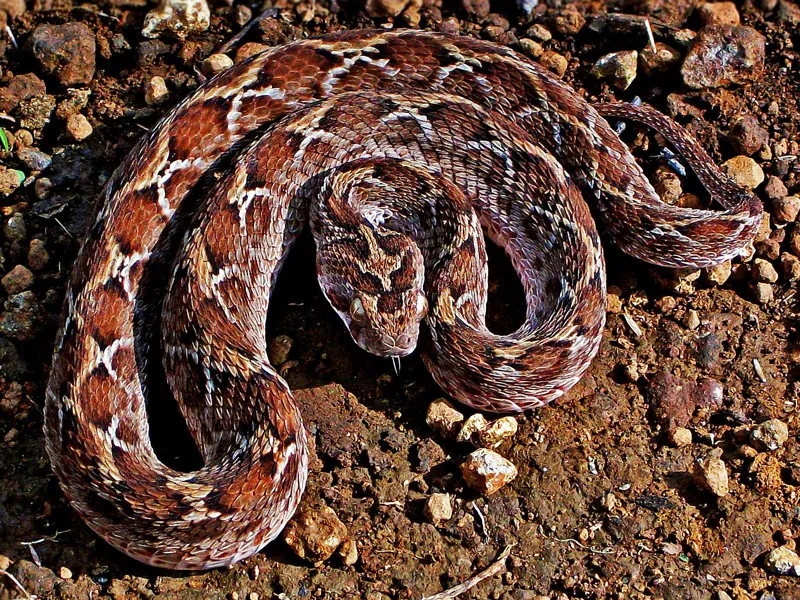
 Maziviro ayo
- Small, usually no more than 60 cm long in total1
- Pale buff, grey, reddish, olive or pale brown body with whitish spots edged in dark brown1
- A whitish cross or trident pattern on the top of the head1
- A faint stripe running from the eye to the angle of the jaw1
- Whitish to pinkish belly, sometimes with brown dots1
Simba reuturu
Uturu hunobuda nemeno ayo painoruma.
Uturu hwayo hunoitei?
Its venom causes swelling and pain within minutes of a bite, and the swelling can spread up the whole limb within 12 to 24 hours, with blisters forming on the skin. The more dangerous effects are whole-body: bleeding and clotting problems, bleeding from the stomach, lungs, nose or urine, and possible shock. Most patients produce little or no urine within a few hours to six days after the bite.1
Ine ngozi yakadii kuvanhu?
Ngozi kuvanhu: InourayaImwe yemhuka dzine ngozi zvikuru pasi rose.About 20% of its bites used to be fatal, but deaths are now quite rare because antivenom is available. It is one of the species responsible for the most snakebite cases because it is inconspicuous and extremely aggressive.1
 Mashoko akanaka: vanachiremba vane mushonga (antivenom) kana kurapwa kwechinhu ichi.1
Inoitei kana yatya?
When threatened it forms a double coil in a figure of eight, with its head in the centre, so it can lash out like a released spring.1
 Kana ikaruma
- Antivenin therapy and intravenous hydration within hours of the bite are vital for survival.1
- Chengeta munhu asingafambe uye akadzikama, chengeta nhengo yakarumwa yakaenzana nemwoyo, bvisa mhete nezvinhu zvakasunga, uende kuchipatara nokukurumidza.
Gara uchitanga wafonera nhamba yechimbichimbi (112, 000, 911). Iri izano rakajairika rerubatsiro rwekutanga, kwete zano rechiremba. Zvakakosha zverubatsiro rwekutanga
 Gara wakachengeteka
- Usambobata mhuka yesango, kuedza kuitora kana kuinetsa, kunyange iri diki, uye kunyange ichiita seyakarara kana yakafa.
- Ipa nzvimbo. Kana ukasangana nayo, dzikama, dzokera shure zvishoma nezvishoma uirege iende nenzira yayo.
- Kana imwe ikakuruma: dzikama, gara wakanyarara, fonera nhamba yechimbichimbi (112, 000, 911) kana kuti enda kuchipatara nokukurumidza. Rangarira kuti yaitaridzika sei, mufananidzo unobatsira.
Haisi kukutsvaga. Inoshandisa uturu hwayo kubata chikafu kana kuzvidzivirira, uye inotonyanya kuda kuhwanda. Zvimwe pamusoro pekugara wakachengeteka
Yakakura sei?
Yakareba zvakadii?
 yakareba sekatsi dzepamba 1,5 kubva pamhuno kusvika kumuswe
 yakareba semabhanana 4 akateedzana
 inogona kumhanya mamita 100 mumasekondi 110 (munhu anomhanyisa kupfuura vose anoda 9.6)
Indian saw-scaled viper yakakura sei kana yaenzaniswa NEWE?
Masvomhu chete mubrowser yako. Hapana chinochengetwa kana kutumirwa kupi zvako.
Inomhanya zvakadii?


Chokwadi
On average it produces about 18 mg of dry venom, with a recorded maximum of 72 mg. The lethal dose for an adult is estimated at only 5 mg.1
When it rains, up to 80% of the adult population may climb into bushes and trees. Once, about 20 individuals were seen massed on one cactus or small shrub.1
It moves mainly by sidewinding, a method it is very skilled at and surprisingly quick with. Only two points of its body touch the hot ground, which may help it avoid overheating.1
Its venom is used to make several drugs, including echistatin, an anticoagulant that can be made by chemical synthesis, and ecarin, used in a clotting test.1
In the northern parts of its range, it hibernates in winter.1
Kwakabva chokwadi
- Echis carinatus (Wikipedia (CC BY-SA 4.0))
- Echis carinatus (iNaturalist): mazita nekurongwa kwemhuka.
- Venom Wiki: danho rengozi, saizi yakajairika nekufungidzira kwekumhanya ndezvedu. Ona kuti tinozviwana sei: Matinoyera ngozi.
Chokwadi chimwe nechimwe pane peji rino chine nhamba inoratidza kwachakabva. Kana takakanganisa, ruregerero, tiri vanoda mhuka, kwete magazini yesainzi. Tiudze pa[email protected] tichazvigadzirisa.
 Chinyavada chine nzara! Venom Wiki iprojekiti yemunhu mumwe: yemahara, isina kushambadza uye isina zvinokuteedzera. Chipo chidiki chinobatsira kuti irambe iri paindaneti.Fudza chinyavada
 Puff adder
 Bvumbi raRussell
 Common European adder
 Eastern Russell's viper
 Northeast African carpet viper
 Armenian viper
 Deathstalker
 Indian cobra
 King cobra
 Asian giant hornet
 Komodo dragon
 Spanish fly
_Photographed_By_Shantanu_Kuveskar.jpg)