
 Afrika
 Asia
Asia Yuropu
 Amerika yeKumaodzanyemba
 Australia neOceania
 Antarctica
 Gungwa rePacific
 Gungwa reAtlantic
 Gungwa reIndia
 Gungwa reArctic
 Gungwa reMediterranean
 Gungwa Dzvuku
 Gungwa reCaribbean
 Gungwa reCoral
 Gungwa reChina yeKumaodzanyemba
 Gungwa rePhilippines
 Gungwa reAndaman
 Gungwa reKuchamhembe
 Gungwa reTimor neArafura
 Gungwa reBengal
 Gulf yeCalifornia
Median wasp
 Inobaya
The median wasp is a social wasp that lives across Europe and temperate Asia, as far east as Japan. It builds hanging paper nests in shrubs and trees, and sometimes under the eaves of buildings. It is usually calm, but it will sting if its nest is threatened.1



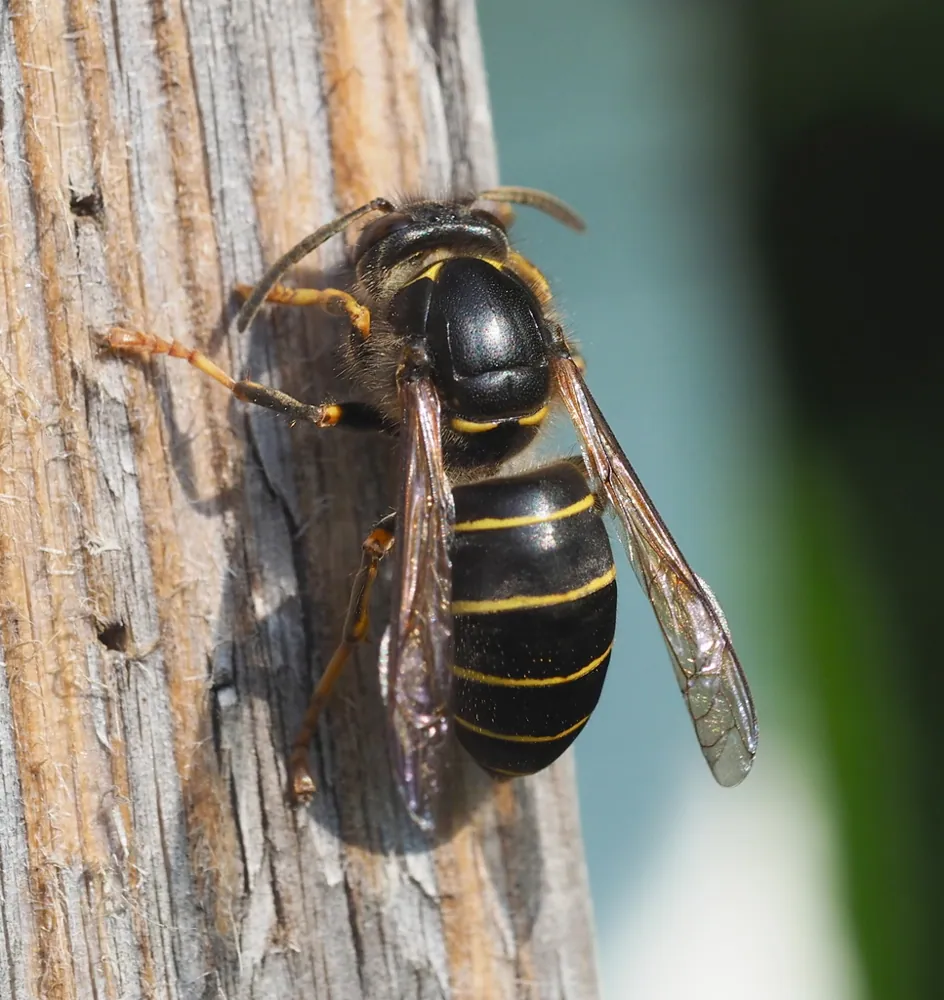
 Maziviro ayo
- Medium to large, about 16 to 22 mm long1
- Yellow and black stripes on the abdomen1
- Yellow clypeus (the face plate below the eyes) with a thin black central line1
- Large yellow areas behind the eyes1
- Shiny black thorax with four yellow spots that are tinted orange or red1
Inowanzovhiringidzwa ne: Queens are often mistaken for hornets because of their reddish colouring. They can be told apart by the yellow spots on the thorax and their deep black colour.1
Simba reuturu
Uturu hunobuda nerumbori.
Ine ngozi yakadii kuvanhu?
Ngozi kuvanhu: InorwadzaInogona kurwadza chaizvo, asi kazhinji haisi njodzi huru.The median wasp is not usually aggressive. It will sting if it feels its nest is threatened, so keep well away from nests.1
Inoitei kana yatya?
A disturbed wasp first places its head at the nest entrance in an alert position, then flies quickly around the nest and may drop suddenly to the ground.1
 Kana ikabaya
- Bvisa rumbori rwenyuchi nekurikwenya, wotonhodza panzvimbo iyoyo.
- Kana munhu achinetseka kufema, chiso kana huro zvichizvimba, kana achinzwa kunge ofenda, ndiyo njodzi yeallergy: fonera nhamba yechimbichimbi uye shandisa pen yake yeadrenaline kana anayo.
Gara uchitanga wafonera nhamba yechimbichimbi (112, 000, 911). Iri izano rakajairika rerubatsiro rwekutanga, kwete zano rechiremba. Zvakakosha zverubatsiro rwekutanga
 Gara wakachengeteka
- Usambobata mhuka yesango, kuedza kuitora kana kuinetsa, kunyange iri diki, uye kunyange ichiita seyakarara kana yakafa.
- Ipa nzvimbo. Kana ukasangana nayo, dzikama, dzokera shure zvishoma nezvishoma uirege iende nenzira yayo.
- Kana imwe ikakubaya: dzikama, gara wakanyarara, fonera nhamba yechimbichimbi (112, 000, 911) kana kuti enda kuchipatara nokukurumidza. Rangarira kuti yaitaridzika sei, mufananidzo unobatsira.
Haisi kukutsvaga. Inoshandisa uturu hwayo kubata chikafu kana kuzvidzivirira, uye inotonyanya kuda kuhwanda. Zvimwe pamusoro pekugara wakachengeteka
Yakakura sei?
Yakareba zvakadii?
 inenge kureba sechibatanidzo chemapepa
 inogona kubhururuka ichiyambuka nhandare yose yebhora mumasekondi 15
Median wasp yakakura sei kana yaenzaniswa NEWE?
Masvomhu chete mubrowser yako. Hapana chinochengetwa kana kutumirwa kupi zvako.
Inomhanya zvakadii?


Chokwadi
Sisters share 0.75 of their genes by descent, which is higher than the 0.5 shared between full siblings, because of how sex is determined in this order of insects.1
The queen curls her body around the nest's central stalk, which is thought to help keep eggs and larvae warm.1
Workers sometimes police the nest, with the queen or other workers destroying eggs laid by other workers.1
Workers can forage at temperatures as low as 7 °C (45 °F).1
Its nests are made of paper pulp produced by chewing and digesting wood.1
Kuputsa ngano
Ngano: Queens are hornets because of their reddish colour.
Chokwadi: The queen is a median wasp. She can be told apart by the yellow spots on her thorax and her deep black colour.1
Kune nyanzvi dzeuturu
- Zita resainzi
- Dolichovespula media
- Boka
- Nyuchi, mago nemahornet
- Mhuri
- Vespidae2
- Odha
- Hymenoptera
- Makondinendi
- Yuropu, Asia
- Vacheche
- A single queen starts each nest in early May and rears about 10 workers herself. Each colony can grow to about 1000 cells, and around 800 wasps reach adulthood.1
- Ngozi kuvanhu
- 2 / 5: Inorwadza3
Kwakabva chokwadi
- Median wasp (Wikipedia (CC BY-SA 4.0))
- Dolichovespula media (iNaturalist): mazita nekurongwa kwemhuka.
- Venom Wiki: danho rengozi, saizi yakajairika nekufungidzira kwekumhanya ndezvedu. Ona kuti tinozviwana sei: Matinoyera ngozi.
Chokwadi chimwe nechimwe pane peji rino chine nhamba inoratidza kwachakabva. Kana takakanganisa, ruregerero, tiri vanoda mhuka, kwete magazini yesainzi. Tiudze pa[email protected] tichazvigadzirisa.
 Chinyavada chine nzara! Venom Wiki iprojekiti yemunhu mumwe: yemahara, isina kushambadza uye isina zvinokuteedzera. Chipo chidiki chinobatsira kuti irambe iri paindaneti.Fudza chinyavada
Zvimwe kubva muboka rimwe chete: Nyuchi, mago nemahornet
 Asian giant hornetNyuchi, mago nemahornetInogona kuuraya
 Common waspNyuchi, mago nemahornetInongorwadza
 European hornetNyuchi, mago nemahornetInongorwadza
 Western honey beeNyuchi, mago nemahornetInongorwadza
 Giant honey beeNyuchi, mago nemahornetInoda chiremba
 Asian hornetNyuchi, mago nemahornetInongorwadza
Inogarawo mu: Yuropu
 Common European adderMavhaipa nemaadderInoda chiremba
 Spanish flyDzimwe mhuka dzine chepfuInoda chirembaUsabata
 Fire salamanderMatatya ane chepfu, matoad nemanewtInongorwadzaUsabata
 Blunt-nosed viperMavhaipa nemaadderInogona kuuraya
 Nose-horned viperMavhaipa nemaadderInogona kuuraya
 Ottoman viperMavhaipa nemaadderInogona kuuraya