
 Afrika
 Asia
Asia Yuropu
 Amerika yeKumaodzanyemba
 Australia neOceania
 Antarctica
 Gungwa rePacific
 Gungwa reAtlantic
 Gungwa reIndia
 Gungwa reArctic
 Gungwa reMediterranean
 Gungwa Dzvuku
 Gungwa reCaribbean
 Gungwa reCoral
 Gungwa reChina yeKumaodzanyemba
 Gungwa rePhilippines
 Gungwa reAndaman
 Gungwa reKuchamhembe
 Gungwa reTimor neArafura
 Gungwa reBengal
 Gulf yeCalifornia
Oriental hornet
 Inobaya
The Oriental hornet is a large social wasp that lives in colonies of thousands of insects, led by a single queen. It lives in parts of Southwest Asia, Northeast Africa, the Middle East and Southern Europe, and it is one of the main pests of honey bees. Its sting can be very painful.1



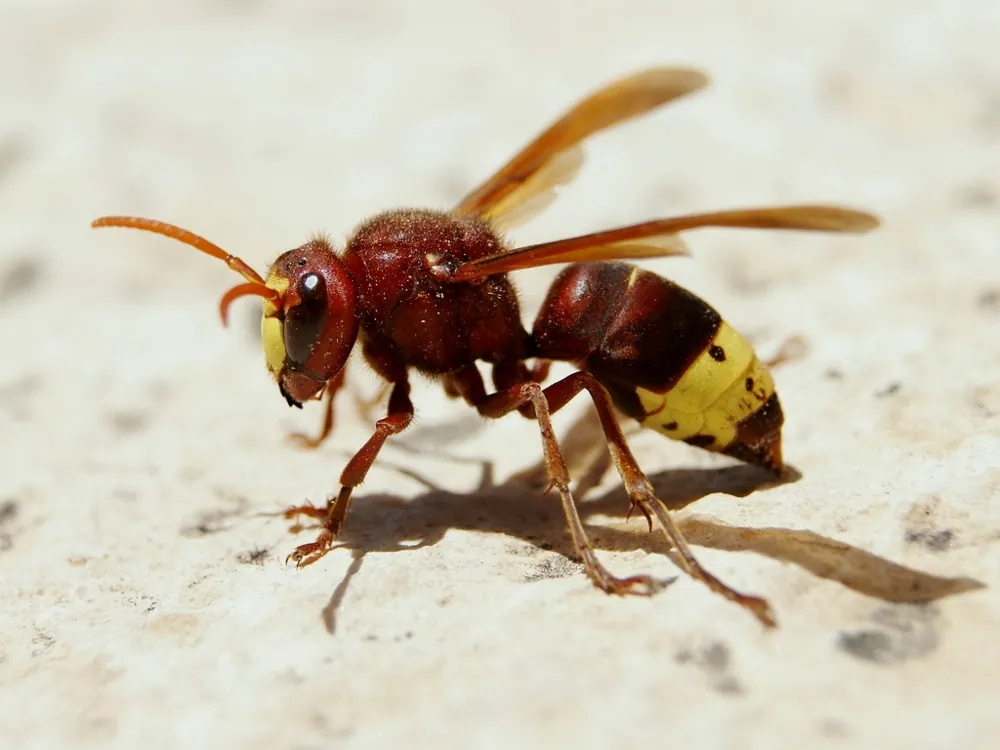
 Maziviro ayo
- Reddish-brown body1
- Thick yellow bands across the abdomen1
- Yellow patches on the head between the eyes1
- Body 25 to 35 mm long; the queen and drones are larger than workers1
- Very strong jaws, and will bite if provoked1
Inowanzovhiringidzwa ne: It looks similar to the European hornet (Vespa crabro). The Asian giant hornet of East Asia should not be confused with it. Males (drones) have 13 antenna segments, while workers and the queen have 12.1
Simba reuturu
Uturu hunobuda nerumbori.
Uturu hwayo hunoitei?
The sting is quite painful to people. Some people are allergic to these stings. Tests on the venom showed that it slowed the growth of some Gram-positive bacteria, a group of bacteria, so it may be useful as a medicine.1
Ine ngozi yakadii kuvanhu?
Ngozi kuvanhu: InorwadzaInogona kurwadza chaizvo, asi kazhinji haisi njodzi huru.The sting can be quite painful, and some people are allergic to it.1
Inoitei kana yatya?
Workers defend the colony, and will bite if provoked.1
 Kana ikabaya
- Bvisa rumbori rwenyuchi nekurikwenya, wotonhodza panzvimbo iyoyo.
- Kana munhu achinetseka kufema, chiso kana huro zvichizvimba, kana achinzwa kunge ofenda, ndiyo njodzi yeallergy: fonera nhamba yechimbichimbi uye shandisa pen yake yeadrenaline kana anayo.
Gara uchitanga wafonera nhamba yechimbichimbi (112, 000, 911). Iri izano rakajairika rerubatsiro rwekutanga, kwete zano rechiremba. Zvakakosha zverubatsiro rwekutanga
 Gara wakachengeteka
- Usambobata mhuka yesango, kuedza kuitora kana kuinetsa, kunyange iri diki, uye kunyange ichiita seyakarara kana yakafa.
- Ipa nzvimbo. Kana ukasangana nayo, dzikama, dzokera shure zvishoma nezvishoma uirege iende nenzira yayo.
- Kana imwe ikakubaya: dzikama, gara wakanyarara, fonera nhamba yechimbichimbi (112, 000, 911) kana kuti enda kuchipatara nokukurumidza. Rangarira kuti yaitaridzika sei, mufananidzo unobatsira.
Haisi kukutsvaga. Inoshandisa uturu hwayo kubata chikafu kana kuzvidzivirira, uye inotonyanya kuda kuhwanda. Zvimwe pamusoro pekugara wakachengeteka
Yakakura sei?
Yakareba zvakadii?
 inenge kureba sechibatanidzo chemapepa
 inogona kubhururuka ichiyambuka nhandare yose yebhora mumasekondi 12
Oriental hornet yakakura sei kana yaenzaniswa NEWE?
Masvomhu chete mubrowser yako. Hapana chinochengetwa kana kutumirwa kupi zvako.
Inomhanya zvakadii?


Chokwadi
The yellow stripe on its exoskeleton can absorb sunlight and generate a small electrical potential, which may help supply energy for digging.1
A 2024 study found that hornets fed sugary solutions containing up to 80% ethanol for a week showed no harmful effects on behaviour or lifespan. Most animals tolerate only up to 4%.1
It is the primary pest that attacks honey bee colonies in many countries.1
It is the only member of the genus Vespa that lives in desert climates, such as those in North Africa and the Middle East.1
Unlike most wasps, which are most active early in the morning, it is most active in the middle of the day.1
Its sisters are closely related, with each worker on average 75% related to her sisters, so workers help raise the colony's young.1
Kwakabva chokwadi
- Oriental hornet (Wikipedia (CC BY-SA 4.0))
- Vespa orientalis (iNaturalist): mazita nekurongwa kwemhuka.
- Venom Wiki: danho rengozi, saizi yakajairika nekufungidzira kwekumhanya ndezvedu. Ona kuti tinozviwana sei: Matinoyera ngozi.
Chokwadi chimwe nechimwe pane peji rino chine nhamba inoratidza kwachakabva. Kana takakanganisa, ruregerero, tiri vanoda mhuka, kwete magazini yesainzi. Tiudze pa[email protected] tichazvigadzirisa.
 Chinyavada chine nzara! Venom Wiki iprojekiti yemunhu mumwe: yemahara, isina kushambadza uye isina zvinokuteedzera. Chipo chidiki chinobatsira kuti irambe iri paindaneti.Fudza chinyavada
Zvimwe kubva muboka rimwe chete: Nyuchi, mago nemahornet
 Asian giant hornetNyuchi, mago nemahornetInogona kuuraya
 Common waspNyuchi, mago nemahornetInongorwadza
 European hornetNyuchi, mago nemahornetInongorwadza
 Western honey beeNyuchi, mago nemahornetInongorwadza
 Giant honey beeNyuchi, mago nemahornetInoda chiremba
 Asian hornetNyuchi, mago nemahornetInongorwadza
Inogarawo mu: Yuropu
 Common European adderMavhaipa nemaadderInoda chiremba
 Spanish flyDzimwe mhuka dzine chepfuInoda chirembaUsabata
 Fire salamanderMatatya ane chepfu, matoad nemanewtInongorwadzaUsabata
 Blunt-nosed viperMavhaipa nemaadderInogona kuuraya
 Nose-horned viperMavhaipa nemaadderInogona kuuraya
 Ottoman viperMavhaipa nemaadderInogona kuuraya