
 Afrika
 Asia
Asia Yuropa
 Amerika Borwa
 Australia le Oceania
 Antarctica
 Lewatle la Pacific
 Lewatle la Atlantic
 Lewatle la India
 Lewatle la Arctic
 Lewatle la Mediterranean
 Lewatle le Lefubedu
 Lewatle la Caribbean
 Lewatle la Coral
 Lewatle la China Borwa
 Lewatle la Philippine
 Lewatle la Andaman
 Lewatle la Leboya
 Lewatle la Timor le Arafura
 Kgwohlo ya Bengal
 Kgwohlo ya California
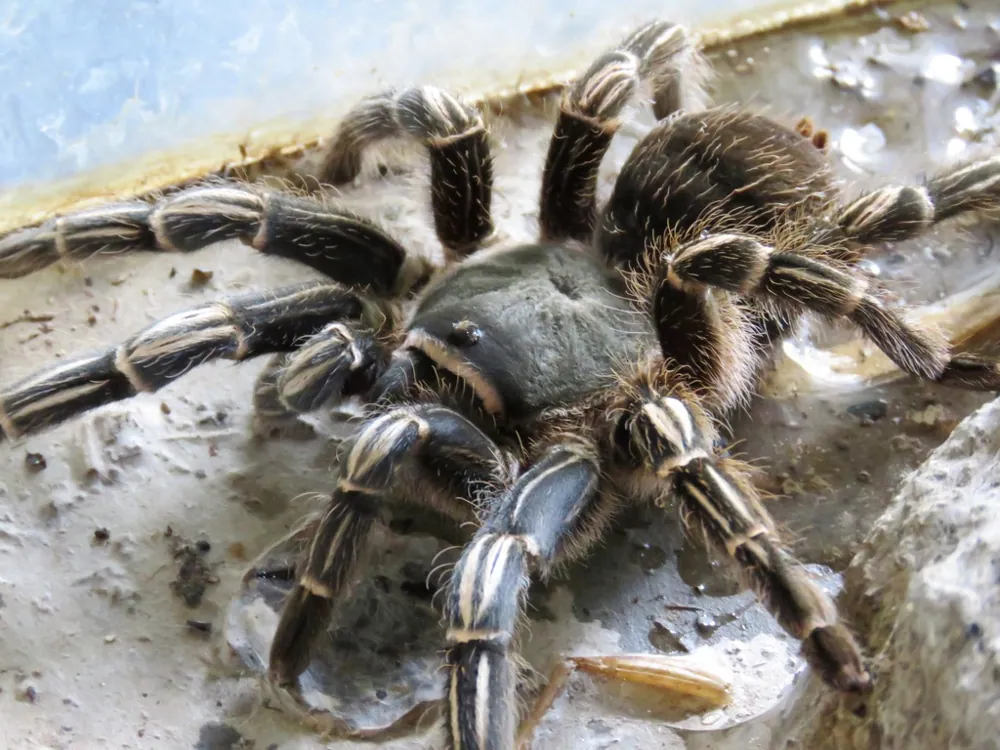
Costa Rican zebra tarantula
 Ho loma
The Costa Rican zebra tarantula is a large spider that lives in western Costa Rica and nearby parts of Central America. It digs deep burrows in dry scrubland, where it shelters from heat by day and cold by night. People mainly need to know about it because it has irritating hairs that it can throw.1

 Ho e tseba jwang
Matla a chefo
Chefo e tswa ka meno a yona a chefo (fangs) kapa ka meno a mang ha e loma.
E kotsi hakae ho batho?
Kotsi ho batho: E bobebeJwaloka ho hlajwa ke notshi kapa ho fetang moo. Ha e na kotsi ho batho.Its main risk to people is its urticating hairs, which irritate human skin. It is rare for it to throw these hairs.1
E etsang ha e tshohile?
It can throw urticating hairs at a threat, but it is rare for it to do so, and it is very skittish.1
 Haeba e loma
- Hlatswa moo e lomileng teng mme o pholise. Fumana thuso ya bongaka haeba bohloko bo le matla kapa motho a ikutlwa a kula.
Kamehla letsetsa nomoro ya tshohanyetso pele (112, 000, 911). Ena ke tataiso e akaretsang ya thuso ya pele, hase keletso ya bongaka. Metheo ya thuso ya pele
 Dula o bolokehile
- O se ke wa ama, wa tshwara kapa wa tena phoofolo ya naheng, leha e le e nyenyane, le leha e shebahala e robetse kapa e shwele.
- E fe sebaka. Ha o kopana le yona, dula o kgutsitse, kgutlela morao butle mme o e tlohele e tsamaye ka tsela ya yona.
- Haeba e nngwe e o loma: dula o kgutsitse, o se ke wa sisinyeha, letsetsa nomoro ya tshohanyetso (112, 000, 911) kapa o ye sepetlele kapele. Hopola hore e ne e shebahala jwang, foto e a thusa.
Ha e o batle. E sebedisa chefo ya yona ho tshwara dijo kapa ho itshireletsa, mme e kgetha ho ipata. Ho eketsehileng ka ho dula o bolokehile
Hokae lefatsheng?
E kgolo hakae?
E telele hakae?
 e telele jwaloka diboloko tsa ho bapala tse 4 moleng
 e ka matha metara e 100 ka metsotswana e 220 (motho ya potlakang ka ho fetisisa o hloka 9,6)
Costa Rican zebra tarantula e kgolo hakae ha e bapiswa le WENA?
Ke dipalo feela ka hara sebatli sa hao. Ha ho letho le bolokwang kapa le romelwang kae kapa kae.
E potlaka hakae?


Dintlha
Its hairs are called urticating hairs, and it can throw them into the air toward a threat.1
Females can live up to 20 years, while males live much shorter lives, up to about five years.1
Zebra tarantulas often gather in large groups in the same area.1
Their deep burrows buffer them from the lowest night-time temperatures as well as the daytime heat.1
Moo dintlha di tswang teng
- Aphonopelma seemanni (Wikipedia (CC BY-SA 4.0))
- Aphonopelma seemanni (iNaturalist): mabitso le tlhophiso.
- Venom Wiki: boemo ba kotsi, boholo bo tlwaelehileng le kakanyo ya lebelo ke tsa rona. Bona kamoo re di balang ka teng: Kamoo re lekanyang kotsi ka teng.
Taba e nngwe le e nngwe leqepheng lena e na le nomoro e bontshang mohlodi wa yona. Haeba re entse phoso, re kopa tshwarelo, re barati ba diphoofolo, hase makasine wa saense. Re bolelle ho [email protected] mme re tla e lokisa.
 Phepheng e lapile! Venom Wiki ke projeke ya motho a le mong: ke mahala, ha e na dipapatso ebile ha e na di-tracker. Thuso e nyenyane ya tjhelete e e boloka e ntse e le inthaneteng.Fepa phepheng
Tse ding tsa sehlopha se le seng: Di-tarantula le di-funnel-web
 Mexican redknee tarantulaDi-tarantula le di-funnel-webHa e na kotsi
 Arizona blond tarantulaDi-tarantula le di-funnel-webHa e na kotsi
 Ravine trapdoor spiderDi-tarantula le di-funnel-webHa e na kotsi
 Trinidad chevron tarantulaDi-tarantula le di-funnel-webE utlwisa bohloko feela
 Antilles pinktoe tarantulaDi-tarantula le di-funnel-webHa e na kotsi
 California trapdoor spiderDi-tarantula le di-funnel-webHa e na kotsi
 Terciopelo
 Eastern coral snake
 Eastern diamondback rattlesnake
 Eyelash viper
 Timber rattlesnake
 Western diamondback rattlesnake