
 Afrika
 Asia
Asia Yuropa
 Amerika Borwa
 Australia le Oceania
 Antarctica
 Lewatle la Pacific
 Lewatle la Atlantic
 Lewatle la India
 Lewatle la Arctic
 Lewatle la Mediterranean
 Lewatle le Lefubedu
 Lewatle la Caribbean
 Lewatle la Coral
 Lewatle la China Borwa
 Lewatle la Philippine
 Lewatle la Andaman
 Lewatle la Leboya
 Lewatle la Timor le Arafura
 Kgwohlo ya Bengal
 Kgwohlo ya California
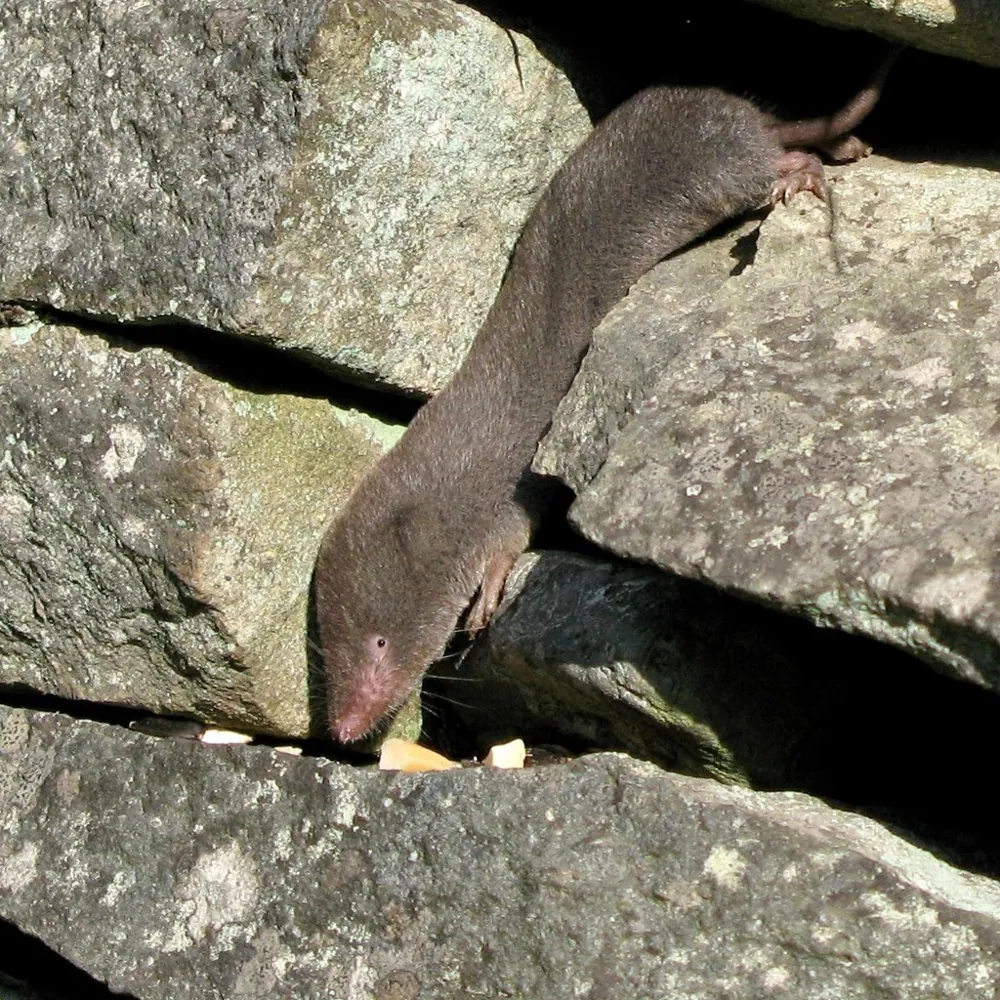
Northern short-tailed shrew
 Ho loma
The northern short-tailed shrew is a small, very active mammal that lives in eastern and central North America. It is one of the few venomous mammals, and it uses venom in its saliva to paralyse the animals it hunts. It is also a voracious eater that can eat up to three times its own weight in food each day.1



 Ho e tseba jwang
Matla a chefo
Chefo e tswa ka meno a yona a chefo (fangs) kapa ka meno a mang ha e loma.
Chefo ya yona (eo e e kenyang ka ho loma kapa ho hlaba) e etsang?
Its saliva contains a kallikrein-like protease, a toxin that paralyses and subdues prey. The toxin is strong enough to kill small animals, including some somewhat larger than the shrew itself. In people, it causes painful bites when they handle the shrew.1
E kotsi hakae ho batho?
Kotsi ho batho: E bobebeJwaloka ho hlajwa ke notshi kapa ho fetang moo. Ha e na kotsi ho batho.Its bites are painful to people who try to handle it.1
E etsang ha e tshohile?
Its scent glands produce a musky odour that deters mammalian carnivores.1
 Haeba e loma
- Hlatswa leqeba hantle mme o fumane thuso ya bongaka.
Kamehla letsetsa nomoro ya tshohanyetso pele (112, 000, 911). Ena ke tataiso e akaretsang ya thuso ya pele, hase keletso ya bongaka. Metheo ya thuso ya pele
 Dula o bolokehile
- O se ke wa ama, wa tshwara kapa wa tena phoofolo ya naheng, leha e le e nyenyane, le leha e shebahala e robetse kapa e shwele.
- E fe sebaka. Ha o kopana le yona, dula o kgutsitse, kgutlela morao butle mme o e tlohele e tsamaye ka tsela ya yona.
- Haeba e nngwe e o loma: dula o kgutsitse, o se ke wa sisinyeha, letsetsa nomoro ya tshohanyetso (112, 000, 911) kapa o ye sepetlele kapele. Hopola hore e ne e shebahala jwang, foto e a thusa.
Ha e o batle. E sebedisa chefo ya yona ho tshwara dijo kapa ho itshireletsa, mme e kgetha ho ipata. Ho eketsehileng ka ho dula o bolokehile
Hokae lefatsheng?
E kgolo hakae?
E telele hakae?
E boima hakae?

 e telele jwaloka diboloko tsa ho bapala tse 4 moleng
 e ka matha metara e 100 ka metsotswana e 90 (motho ya potlakang ka ho fetisisa o hloka 9,6)
Northern short-tailed shrew e kgolo hakae ha e bapiswa le WENA?
Ke dipalo feela ka hara sebatli sa hao. Ha ho letho le bolokwang kapa le romelwang kae kapa kae.
E potlaka hakae?


Dintlha
It is one of the few venomous mammals, and its saliva is used to subdue prey.1
It can eat up to three times its own weight in food each day.1
It is thought to have a poor sense of smell and very limited vision, so it uses echolocation and a fine sense of touch instead.1
Its winter food intake is 43% higher than in summer, because it must work harder to keep its body warm.1
Its nests can be up to 20 cm across and lined with leaves or vole fur, and its waste is kept in a separate latrine area.1
Bakeng sa ditsebi tsa chefo
- Lebitso la saense
- Blarina brevicauda
- Sehlopha
- Diphoofolo tse anyesang tse nang le chefo
- Lelapa
- Soricidae2
- Tatelano
- Eulipotyphla
- Dikontinente
- Amerika Leboya
- Masea
- Females usually have two litters a season, each with six to eight young. The young are born hairless and blind, weighing less than a gram.1
- Boemo ba yona naheng
- Least Concern1
- Kotsi ho batho
- 1 / 5: E bobebe3
Moo dintlha di tswang teng
- Northern short-tailed shrew (Wikipedia (CC BY-SA 4.0))
- Blarina brevicauda (iNaturalist): mabitso le tlhophiso.
- Venom Wiki: boemo ba kotsi, boholo bo tlwaelehileng le kakanyo ya lebelo ke tsa rona. Bona kamoo re di balang ka teng: Kamoo re lekanyang kotsi ka teng.
Taba e nngwe le e nngwe leqepheng lena e na le nomoro e bontshang mohlodi wa yona. Haeba re entse phoso, re kopa tshwarelo, re barati ba diphoofolo, hase makasine wa saense. Re bolelle ho [email protected] mme re tla e lokisa.
 Phepheng e lapile! Venom Wiki ke projeke ya motho a le mong: ke mahala, ha e na dipapatso ebile ha e na di-tracker. Thuso e nyenyane ya tjhelete e e boloka e ntse e le inthaneteng.Fepa phepheng
Tse ding tsa sehlopha se le seng: Diphoofolo tse anyesang tse nang le chefo
 Common vampire batDiphoofolo tse anyesang tse nang le chefoE utlwisa bohloko feela
 Cuban solenodonDiphoofolo tse anyesang tse nang le chefoE utlwisa bohloko feela
 Hispaniolan solenodonDiphoofolo tse anyesang tse nang le chefoE utlwisa bohloko feela
 Hairy-legged vampire batDiphoofolo tse anyesang tse nang le chefoHa e na kotsi
 White-winged vampire batDiphoofolo tse anyesang tse nang le chefoHa e na kotsi
 PlatypusDiphoofolo tse anyesang tse nang le chefoE utlwisa bohloko feela
 Terciopelo
 Eastern coral snake
 Eastern diamondback rattlesnake
 Eyelash viper
 Timber rattlesnake
 Western diamondback rattlesnake