
 Afrika
 Asia
Asia Yuropa
 Amerika Borwa
 Australia le Oceania
 Antarctica
 Lewatle la Pacific
 Lewatle la Atlantic
 Lewatle la India
 Lewatle la Arctic
 Lewatle la Mediterranean
 Lewatle le Lefubedu
 Lewatle la Caribbean
 Lewatle la Coral
 Lewatle la China Borwa
 Lewatle la Philippine
 Lewatle la Andaman
 Lewatle la Leboya
 Lewatle la Timor le Arafura
 Kgwohlo ya Bengal
 Kgwohlo ya California
Platypus
 Mahlabo a nang le chefo
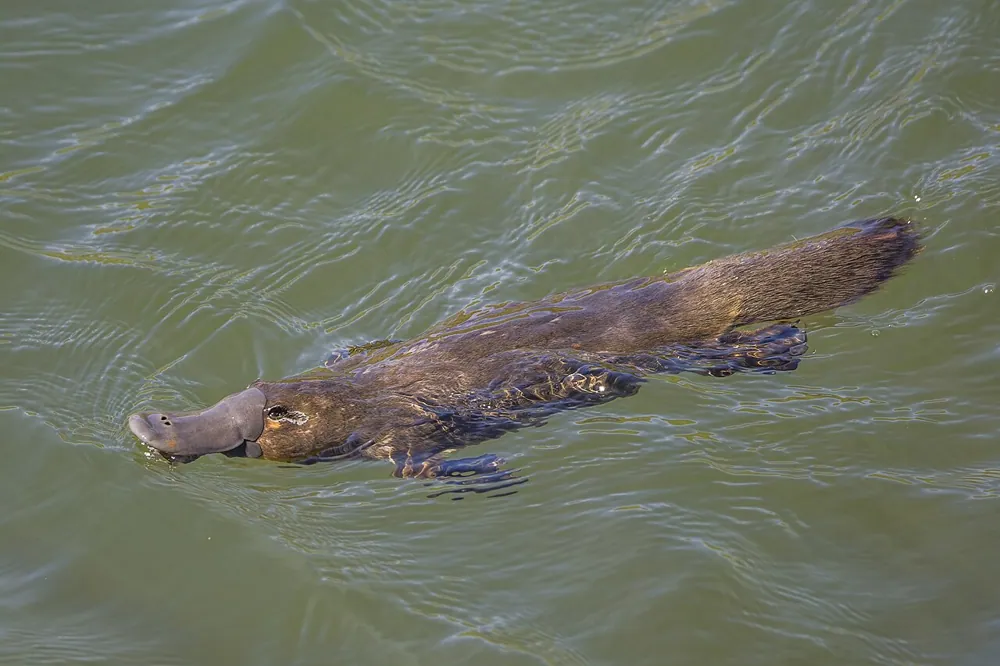
The platypus is a semiaquatic mammal that lays eggs, and it has a duck-like bill and a beaver-like tail. It lives in eastern Australia, including Tasmania. It is special because it is one of the few venomous mammals.1

_Scottsdale.jpg)
 Ho e tseba jwang
- Short, dense, brown fur that is waterproof1
- A soft, duck-like bill1
- A wide, flat, furry tail, unlike the scaly tail of a beaver1
- Short legs with webbing, most noticeably on the front feet1
- Small eyes and ears that sit in a groove that closes underwater1
Hangata e ferekanngwa le: Early European naturalists were confused by the platypus and thought it was a fake, made by sewing a duck's beak onto a beaver-like body. Its tail looks like a beaver's, but it is furry rather than scaly.1
Matla a chefo
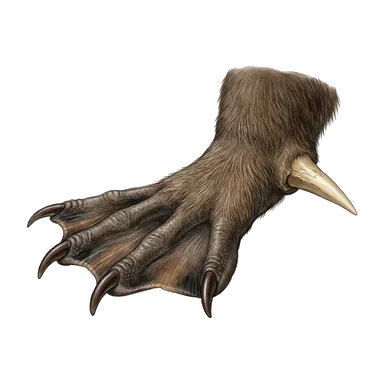
Spur e bohale maotong a ka morao e nka chefo.
Chefo ya yona (eo e e kenyang ka ho loma kapa ho hlaba) e etsang?
Only the male platypus has venom, which it injects through a spur on each hind foot. The venom is powerful enough to cause extreme pain in humans. The affected limb then develops swelling, which starts at the wound and spreads.1
E kotsi hakae ho batho?
Kotsi ho batho: E bohlokoE ka utlwisa bohloko haholo, empa hoo e batlang e le kamehla ha e kotsi haholo.The venom is extremely painful.1
 Haeba lehlabo la yona la leoto le o hlaba
- Hlatswa leqeba hantle mme o fumane thuso ya bongaka.
Kamehla letsetsa nomoro ya tshohanyetso pele (112, 000, 911). Ena ke tataiso e akaretsang ya thuso ya pele, hase keletso ya bongaka. Metheo ya thuso ya pele
 Dula o bolokehile
- O se ke wa ama, wa tshwara kapa wa tena phoofolo ya naheng, leha e le e nyenyane, le leha e shebahala e robetse kapa e shwele.
- E fe sebaka. Ha o kopana le yona, dula o kgutsitse, kgutlela morao butle mme o e tlohele e tsamaye ka tsela ya yona.
- Haeba lehlabo la yona la leoto le o hlaba: dula o kgutsitse, o se ke wa sisinyeha, letsetsa nomoro ya tshohanyetso (112, 000, 911) kapa o ye sepetlele kapele. Hopola hore e ne e shebahala jwang, foto e a thusa.
Ha e o batle. E sebedisa chefo ya yona ho tshwara dijo kapa ho itshireletsa, mme e kgetha ho ipata. Ho eketsehileng ka ho dula o bolokehile
Hokae lefatsheng?
E kgolo hakae?
E telele hakae?
E boima hakae?
 e telele jwaloka dibanana tse 3 tse latellanang
 e telele jwaloka diboloko tsa ho bapala tse 16 moleng
 e ka sesa bolelele ba letangwane le leholo la ho sesa (50 m) ka metsotswana e 51
Platypus e kgolo hakae ha e bapiswa le WENA?
Ke dipalo feela ka hara sebatli sa hao. Ha ho letho le bolokwang kapa le romelwang kae kapa kae.
E potlaka hakae?
Dintlha
The platypus has about 40,000 electroreceptors in its bill, which detect electric signals from prey in murky water.1
Its fur is one of the most densely packed of any mammal, behind only otters. It also glows cyan and green under ultraviolet light.1
The platypus lacks a functional stomach, because it does not have the genes needed to make pepsin, a digestive enzyme.1
Adult platypuses have no teeth. They have heavily keratinised grinding pads instead, and young platypuses lose their teeth around the time they leave their burrow.1
Its average body temperature is about 32 °C, lower than the 37 °C typical of placental mammals.1
Ho senya ditshomo
Tshomo: The platypus is a hoax, made by sewing several animals together.
Nnete: The platypus is a real species. When the first scientists examined a preserved body in 1799, they doubted it, and George Shaw even used scissors to check for stitches.1
Bakeng sa ditsebi tsa chefo
- Lebitso la saense
- Ornithorhynchus anatinus
- Sehlopha
- Diphoofolo tse anyesang tse nang le chefo
- Lelapa
- Ornithorhynchidae2
- Tatelano
- Monotremata
- Dikontinente
- Australia le Oceania
- Masea
- The platypus lays eggs instead of giving birth to live young.1
- Boemo ba yona naheng
- Near-threatened (IUCN). A November 2020 report recommended upgrading it to threatened under Australia's federal EPBC Act.1
- Kotsi ho batho
- 2 / 5: E bohloko3
Moo dintlha di tswang teng
- Platypus (Wikipedia (CC BY-SA 4.0))
- Ornithorhynchus anatinus (iNaturalist): mabitso le tlhophiso.
- Venom Wiki: boemo ba kotsi, boholo bo tlwaelehileng le kakanyo ya lebelo ke tsa rona. Bona kamoo re di balang ka teng: Kamoo re lekanyang kotsi ka teng.
Taba e nngwe le e nngwe leqepheng lena e na le nomoro e bontshang mohlodi wa yona. Haeba re entse phoso, re kopa tshwarelo, re barati ba diphoofolo, hase makasine wa saense. Re bolelle ho [email protected] mme re tla e lokisa.
 Phepheng e lapile! Venom Wiki ke projeke ya motho a le mong: ke mahala, ha e na dipapatso ebile ha e na di-tracker. Thuso e nyenyane ya tjhelete e e boloka e ntse e le inthaneteng.Fepa phepheng
Tse ding tsa sehlopha se le seng: Diphoofolo tse anyesang tse nang le chefo
 Common vampire batDiphoofolo tse anyesang tse nang le chefoE utlwisa bohloko feela
 Bengal slow lorisDiphoofolo tse anyesang tse nang le chefoE utlwisa bohloko feela
 Cuban solenodonDiphoofolo tse anyesang tse nang le chefoE utlwisa bohloko feela
 Hispaniolan solenodonDiphoofolo tse anyesang tse nang le chefoE utlwisa bohloko feela
 Javan slow lorisDiphoofolo tse anyesang tse nang le chefoE utlwisa bohloko feela
 Pygmy slow lorisDiphoofolo tse anyesang tse nang le chefoE utlwisa bohloko feela
E boetse e phela: Australia le Oceania
 Coastal taipanDinoha tsa AustraliaE a bolaya
 Common death adderDinoha tsa AustraliaE a bolaya
 Eastern brown snakeDinoha tsa AustraliaE a bolaya
 Taipan ya naheng e kahareDinoha tsa AustraliaE a bolaya
 Sydney funnel-web spiderDi-tarantula le di-funnel-webE a bolaya
 Noha ya tigerDinoha tsa AustraliaE a bolaya