
 Afrika
 Asia
Asia Yuropa
 Amerika Borwa
 Australia le Oceania
 Antarctica
 Lewatle la Pacific
 Lewatle la Atlantic
 Lewatle la India
 Lewatle la Arctic
 Lewatle la Mediterranean
 Lewatle le Lefubedu
 Lewatle la Caribbean
 Lewatle la Coral
 Lewatle la China Borwa
 Lewatle la Philippine
 Lewatle la Andaman
 Lewatle la Leboya
 Lewatle la Timor le Arafura
 Kgwohlo ya Bengal
 Kgwohlo ya California
Urutu
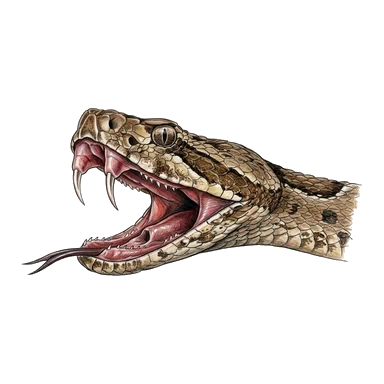 Ho loma
The urutu is a large, stout pit viper from South America. It is highly venomous and is an important cause of snakebites in the areas where it lives. Its body has a striking pattern of dark crescent-shaped markings.1
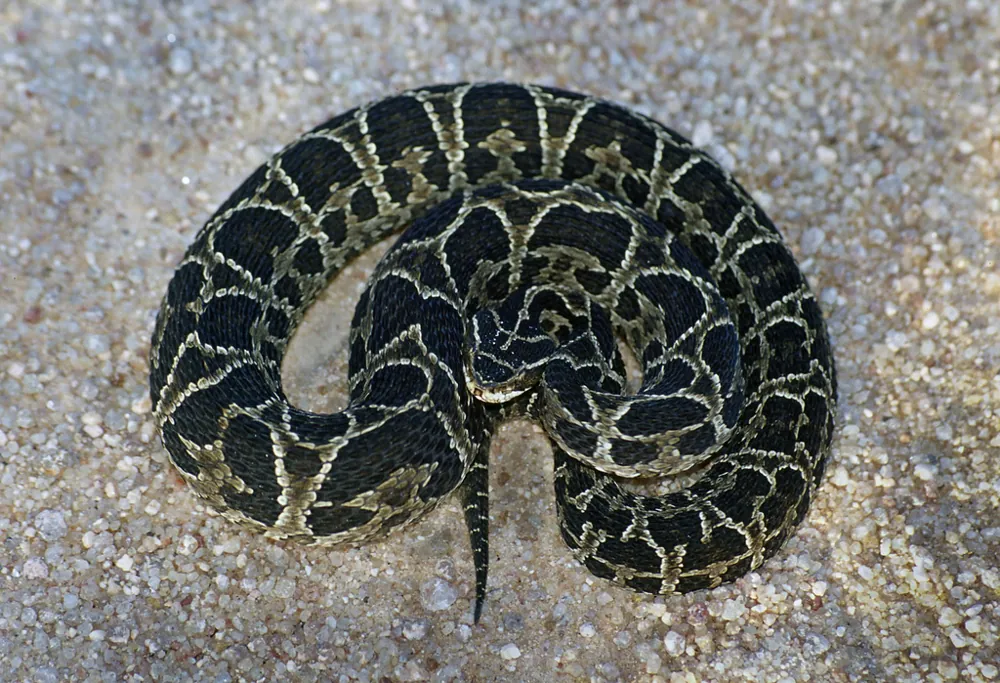
 Ho e tseba jwang
- Large and stout, most adults are 80 to 120 cm long.1
- The top of the head is usually chocolate brown to almost black, with tan to white markings.1
- The body has 22 to 28 dark brown to black markings, each bordered in cream or white. Some look like a cross, and some look like a headphone shape.1
- The pattern on the tail forms a zigzag.1
- A dark brown to black stripe runs along the underside from the neck to the tail tip.1
Matla a chefo
Chefo e tswa ka meno a yona a chefo (fangs) kapa ka meno a mang ha e loma.
Chefo ya yona (eo e e kenyang ka ho loma kapa ho hlaba) e etsang?
The urutu is highly venomous. Its venom mainly contains phospholipase A2, snake venom metalloproteinases, snake venom serine proteases and C-type lectins. In one study of 32 patients, all had local pain and swelling, 97% had prolonged blood clotting, 41% had bleeding (usually from the gums), 32% had blistering and 9% had necrosis (death of tissue).1
E kotsi hakae ho batho?
Kotsi ho batho: E kotsi haholoE ka bolaya motho ya sa fumaneng kalafo.Bites are an important cause of snakebite in its range and often cause severe local tissue damage, but they are rarely fatal. In a survey of 6,601 snakebite cases in Central and South America, 384 were attributed to this species, and 8 of those (2%) were fatal. Some bites have caused gangrene that required amputation, and in 2004 a 44-year-old woman died of a brain bleed after being bitten at home.1
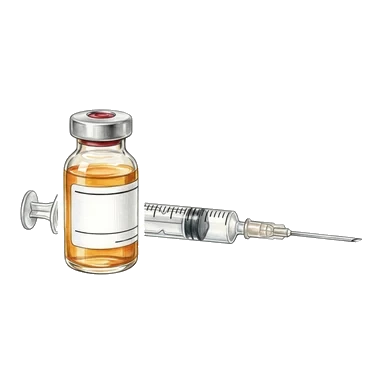 Ditaba tse monate: dingaka di na le moriana (antivenom) kapa kalafo bakeng sa sena.1
 Haeba e loma
- In one Brazilian hospital study, all 32 bitten patients were treated with specific antivenin (antivenom), and none of them died.1
- Boloka motho a sa sisinyehe ebile a kgutsitse, boloka setho se lomilweng se lekana le bophahamo ba pelo, tlosa mesale le dintho tse tiileng, mme o mo ise sepetlele kapele.
Kamehla letsetsa nomoro ya tshohanyetso pele (112, 000, 911). Ena ke tataiso e akaretsang ya thuso ya pele, hase keletso ya bongaka. Metheo ya thuso ya pele
 Dula o bolokehile
- O se ke wa ama, wa tshwara kapa wa tena phoofolo ya naheng, leha e le e nyenyane, le leha e shebahala e robetse kapa e shwele.
- E fe sebaka. Ha o kopana le yona, dula o kgutsitse, kgutlela morao butle mme o e tlohele e tsamaye ka tsela ya yona.
- Haeba e nngwe e o loma: dula o kgutsitse, o se ke wa sisinyeha, letsetsa nomoro ya tshohanyetso (112, 000, 911) kapa o ye sepetlele kapele. Hopola hore e ne e shebahala jwang, foto e a thusa.
Ha e o batle. E sebedisa chefo ya yona ho tshwara dijo kapa ho itshireletsa, mme e kgetha ho ipata. Ho eketsehileng ka ho dula o bolokehile
Hokae lefatsheng?
E kgolo hakae?
E telele hakae?
 e telele jwaloka dikatse tsa lapeng tse 3 ho tloha nkong ho isa mohatleng
 e telele jwaloka dibanana tse 9 tse latellanang
 e ka matha metara e 100 ka metsotswana e 95 (motho ya potlakang ka ho fetisisa o hloka 9,6)
Urutu e kgolo hakae ha e bapiswa le WENA?
Ke dipalo feela ka hara sebatli sa hao. Ha ho letho le bolokwang kapa le romelwang kae kapa kae.
E potlaka hakae?


Dintlha
Genome sequencing found 59 toxin genes from 16 toxin families.1
Its verified maximum length is 169 cm, although reports of over 2 m exist.1
Some unusual individuals have dark stripes running the full length of the body.1
In some specimens the pattern is so concentrated that the markings and the gaps between them are the same colour.1
Females are significantly longer and heavier than males.1
Ho senya ditshomo
Tshomo: The bite of this snake is almost always deadly.
Nnete: Bites are rarely fatal, although they often cause severe local tissue damage. In one survey, only 2% of cases attributed to this species were fatal.1
Bakeng sa ditsebi tsa chefo
- Lebitso la saense
- Bothrops alternatus
- Sehlopha
- Di-pit viper
- Lelapa
- Viperidae2
- Tatelano
- Squamata
- Dikontinente
- Amerika Borwa
- Masea
- It gives birth to live young, with captive females producing 3 to 12 young and some females producing up to 24. The newborns look like adults but are more brightly coloured, and they can strike venomously from birth.1
- Kotsi ho batho
- 4 / 5: E kotsi haholo3
Moo dintlha di tswang teng
- Bothrops alternatus (Wikipedia (CC BY-SA 4.0))
- Bothrops alternatus (iNaturalist): mabitso le tlhophiso.
- Venom Wiki: boemo ba kotsi, boholo bo tlwaelehileng le kakanyo ya lebelo ke tsa rona. Bona kamoo re di balang ka teng: Kamoo re lekanyang kotsi ka teng.
Taba e nngwe le e nngwe leqepheng lena e na le nomoro e bontshang mohlodi wa yona. Haeba re entse phoso, re kopa tshwarelo, re barati ba diphoofolo, hase makasine wa saense. Re bolelle ho [email protected] mme re tla e lokisa.
 Phepheng e lapile! Venom Wiki ke projeke ya motho a le mong: ke mahala, ha e na dipapatso ebile ha e na di-tracker. Thuso e nyenyane ya tjhelete e e boloka e ntse e le inthaneteng.Fepa phepheng
Tse ding tsa sehlopha se le seng: Di-pit viper
 Terciopelo
 Eyelash viper
 Golden lancehead
 South American bushmaster
 Common lancehead
 Jararaca
E boetse e phela: Amerika Borwa
 Golden poison frogDihoho tse chefang, mampotsana le di-newtE a bolayaO se ke wa ama
 Brazilian wandering spiderDikgoE ka bolaya
 Cane toadDihoho tse chefang, mampotsana le di-newtE hloka ngakaO se ke wa ama
 Peruvian giant centipedeDi-centipedeE hloka ngaka
 Bullet antBohlwaE utlwisa bohloko feela
 Common vampire batDiphoofolo tse anyesang tse nang le chefoE utlwisa bohloko feela