
 Afrika
 Asia
Asia Ulaya
Ulaya Amerika Kusini
 Australia na Oceania
 Antaktika
 Bahari ya Pasifiki
 Bahari ya Atlantiki
 Bahari ya Hindi
 Bahari ya Aktiki
 Bahari ya Mediterania
 Bahari ya Shamu
 Bahari ya Karibi
 Bahari ya Matumbawe
 Bahari ya Kusini ya China
 Bahari ya Ufilipino
 Bahari ya Andaman
 Bahari ya Kaskazini
 Bahari ya Timor na Arafura
 Ghuba ya Bengal
 Ghuba ya California
Red-backed poison frog
 Sumu ndani ya ngoziHula: WaduduSumu ya kugusa au kula, hadungi sumu
The red-backed poison frog is a tiny frog that lives high in the Amazon rainforest of Peru and Ecuador. It is moderately poisonous, and its skin poison can cause serious injury to people. Its bright red back warns predators to stay away.1



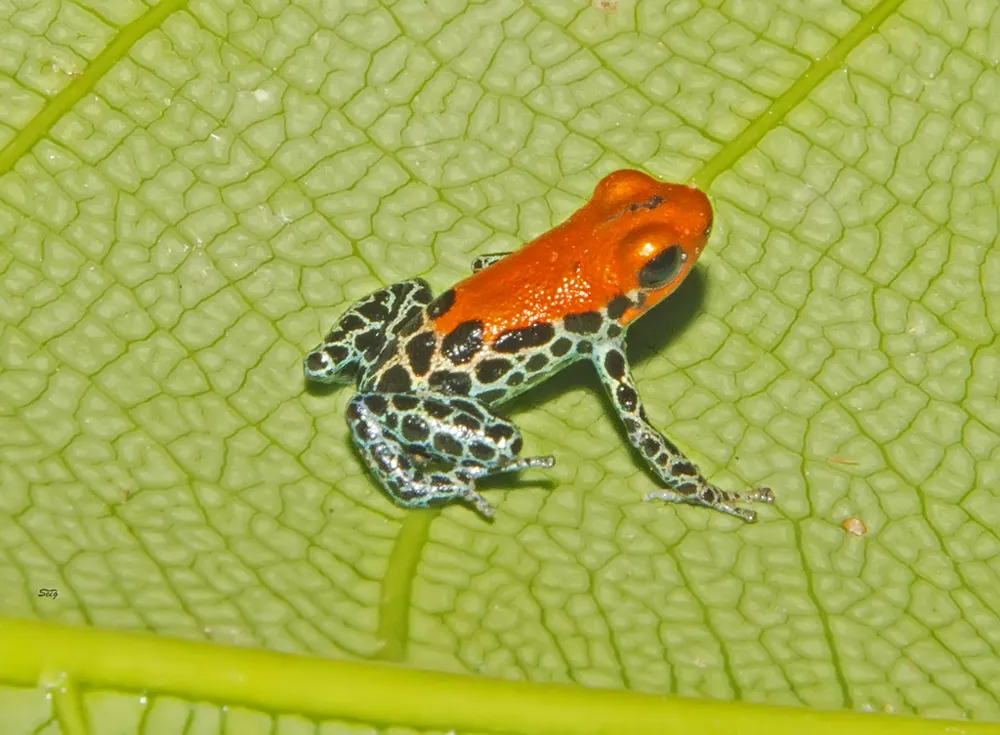
 Jinsi ya kumtambua
Nguvu ya sumu
Ngozi yake ina sumu. Ni hatari kumgusa, kumramba au kumla.
Sumu yake hufanya nini?
This frog is poisonous, not venomous, so it does not bite or sting. Its poison is stored in skin glands just beneath the outer layer of skin. It seeps through open wounds, body openings and pores. The poison can cause serious injury to humans and death in animals such as chickens.1
Ana hatari gani kwa watu?
Hatari kwa watu: InaumaInaweza kuuma sana, lakini karibu kamwe si jambo zito.The poison is moderately toxic and can cause serious injury to humans.1
Hufanya nini akiogopa?
When it is threatened, it shows its bright warning colours, climbs trees to escape, or uses its poison if it cannot get away.1
 Mtu akimgusa au kumla
- Mtu akimgusa: nawa mikono vizuri na usiguse macho wala mdomo. Mtoto au mnyama kipenzi akimramba au kumla: piga kituo cha taarifa za sumu au namba ya dharura.
Daima piga namba ya dharura kwanza (112, 000, 911). Huu ni mwongozo wa jumla wa huduma ya kwanza, si ushauri wa kitabibu. Misingi ya huduma ya kwanza
 Kaa salama
- Kamwe usimguse, kumkamata wala kumchokoza mnyama wa porini, hata akiwa mdogo, na hata akionekana amelala au amekufa.
- Mpe nafasi. Ukikutana naye, tulia, rudi nyuma polepole na umwache aende zake.
- Ukimgusa au kumla: usisugue macho wala mdomo, nawa mikono na utafute msaada wa kitabibu.
Hakuwindi wewe. Sumu yake ipo tu ili asiliwe na yeyote. Zaidi kuhusu kukaa salama
Ana ukubwa gani?
Ana urefu gani?
 mfupi kuliko kidole chako kidogo
 angeweza kukimbia mita 100 kwa sekunde 110 (binadamu mwenye kasi zaidi anahitaji 9.6)
Red-backed poison frog ana ukubwa gani ukilinganisha na WEWE?
Ni hesabu tu kwenye kivinjari chako. Hakuna kinachohifadhiwa wala kutumwa popote.
Ana kasi gani?


Ukweli
Males stick the tadpoles to their backs using a water-soluble mucus, then carry them into the canopy.1
Males place the tadpoles in tiny pools that collect in the centre of bromeliad plants. The mother then feeds them infertile eggs laid in the water.1
Once they become froglets, the young are led to an existing group, where all members accept them, though only their parents care for them.1
It is the second most poisonous frog in its genus Ranitomeya, after R. variabilis.1
Breeding gatherings take place at the end of the wet season, so the eggs are laid at the start of the next wet season, when the young have a steady supply of water.1
Deforestation for charcoal and the capture of frogs for the international pet trade are the main threats to it.1
Kwa wataalamu wa sumu
- Jina la kisayansi
- Ranitomeya reticulata
- Kundi
- Vyura wa sumu, chura na mijusi-maji
- Familia
- Dendrobatidae2
- Mpangilio
- Anura
- Mabara
- Amerika Kusini
- Watoto
- Females lay eggs on the ground, and after the eggs hatch, males carry the tadpoles up into the canopy.1
- Hali yake porini
- Least Concern1
- Hatari kwa watu
- 2 / 5: Inauma3
Ukweli unatoka wapi
- Red-backed poison frog (Wikipedia (CC BY-SA 4.0))
- Ranitomeya reticulata (iNaturalist): majina na uainishaji.
- Venom Wiki: kiwango cha hatari, ukubwa wa kawaida na makadirio ya kasi ni yetu wenyewe. Ona jinsi tunavyovipata: Jinsi tunavyopima hatari.
Kila ukweli kwenye ukurasa huu una namba inayoonyesha chanzo chake. Kama tumekosea kitu, samahani, sisi ni wapenzi wa wanyama, si jarida la kisayansi. Tuambie kupitia [email protected] nasi tutarekebisha.
 Nge ana njaa! Venom Wiki ni mradi wa mtu mmoja: bure, bila matangazo na bila vifuatiliaji. Mchango mdogo husaidia kuiweka hewani.Mlishe nge
Zaidi kutoka kundi hilohilo: Vyura wa sumu, chura na mijusi-maji
 Golden poison frogVyura wa sumu, chura na mijusi-majiAnauaUsiguse
 Cane toadVyura wa sumu, chura na mijusi-majiAnahitaji daktariUsiguse
 Dyeing poison dart frogVyura wa sumu, chura na mijusi-majiInauma tuUsiguse
 Black-legged poison frogVyura wa sumu, chura na mijusi-majiAnaweza kuuaUsiguse
 Bruno's casque-headed frogVyura wa sumu, chura na mijusi-majiAnahitaji daktariUsiguse
 Harlequin poison frogVyura wa sumu, chura na mijusi-majiAnahitaji daktariUsiguse
 Terciopelo
 Brazilian wandering spider
 Eyelash viper
 Golden lancehead
 South American bushmaster
 Peruvian giant centipede