
 Aforika
 Asia
Asia Yuropa
 Amerika Borwa
 Australia le Oceania
 Antarctica
 Lewatle la Pacific
 Lewatle la Atlantic
 Lewatle la India
 Lewatle la Arctic
 Lewatle la Mediterranean
 Lewatle le Lehibidu
 Lewatle la Caribbean
 Lewatle la Coral
 Lewatle la China Borwa
 Lewatle la Philippines
 Lewatle la Andaman
 Lewatle la Bokone
 Lewatle la Timor le la Arafura
 Kou ya Bengal
 Gulf ya California
Common death adder
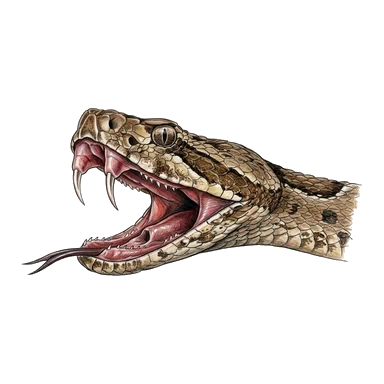 Go loma
The common death adder is a snake from Australia that is one of the most venomous land snakes in the country and in the world. It lives in forests, woodlands, grasslands and heaths on the east coast, and it hides so well that people can walk right past it. It is worth knowing about because its hunting style makes it more dangerous to people in bushland than other venomous snakes.1
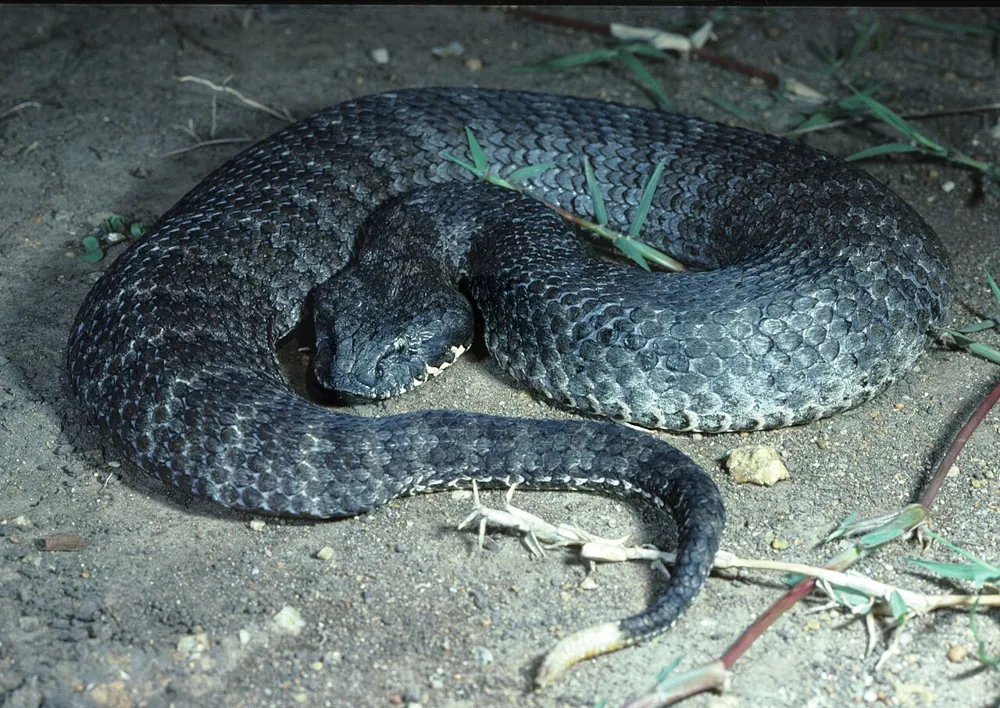
 Tsela ya go e lemoga
- Broad, flattened, triangular head1
- Thick body with bands of red, brown and black1
- Grey, cream or pink belly1
- Can reach a maximum body length of 70 to 100 cm1
Gantsi e tlhakanngwa le: The common or European adder (Vipera berus) is sometimes mentioned as a snake it can be compared with. The two are not closely related: the common death adder belongs to the Elapidae family, while the European adder belongs to the Viperidae family, which is not found in Australia.1
Maatla a botlhole
Botlhole bo tswa ka meno a yone fa e loma.
Botlhole jo e bo tsenyang bo dira eng?
It is one of the most venomous land snakes in Australia and in the world, and it injects venom when it strikes. After striking, it waits for the prey to die before eating it.1
E kotsi go le kae go batho?
Kotsi go batho: E a bolayaNngwe ya diphologolo tse di kotsi go gaisa mo lefatsheng.It is not aggressive, but its habit of lying still and relying on camouflage rather than fleeing makes it more dangerous to people who walk into bushland than other elapid snakes. Its ambush style means people may not see it before they are close enough to be bitten.1
E dira eng fa e tshogile?
It relies on camouflage rather than flight to avoid threats.1
 Fa e loma
- Go gatelela le go sa tshikinyege (pressure immobilisation): bofa bandeiji e e gogegang e e tiileng mo godimo ga fa go lomilweng mme o tswelele o bofe setho sotlhe go ya kwa godimo, se tshegetse ka sepilinti (splint), mme o dire gore motho a nne a sa tshikinyege gotlhelele go fitlha thuso e goroga.
- O se ka wa tlhatswa fa go lomilweng: dibookelo di ka tlhatlhoba botlhole jo bo setseng mo letlalong go tlhopha antivenom e e siameng.
Ka gale leletsa nomoro ya gago ya tshoganyetso pele (112, 000, 911). Se ke kaelo e e akaretsang ya thuso ya ntlha, ga se kgakololo ya bongaka. Motheo wa thuso ya ntlha
 Nna o babalesegile
- O se ka wa ama, wa tshwara kgotsa wa tshwenya phologolo ya naga, le fa e le e nnye, le fa e lebega e robetse kgotsa e sule.
- E fe sebaka. Fa o kopana le yone, ritibala, boela morago ka bonya mme o e tlogele e tsamaye ka tsela ya yone.
- Fa e nngwe e go loma: ritibala, o se ka wa tshikinyega, leletsa nomoro ya gago ya tshoganyetso (112, 000, 911) kgotsa o ye bookelong ka bonako. Gopola gore e ne e lebega jang, setshwantsho se a thusa.
Ga e go batle. E dirisa botlhole jwa yone go tshwara dijo kgotsa go itshireletsa, mme e rata go iphitlha go feta. Go le gontsi ka go nna o babalesegile
Kae mo lefatsheng?
E kgolo go le kae?
E telele go le kae?
 boleele jo bo lekanang le dikatse tsa ntlo di le 2 go tloga kwa nkong go ya mogatleng
 boleele jo bo lekanang le dipanana di le 6 di latelana
 e ka taboga dimetara di le 100 ka metsotswana e le 58 (motho yo o bonako go gaisa o tlhoka 9,6)
Common death adder e kgolo go le kae fa e bapisiwa le WENA?
Ke dipalo fela mo sefetleng sa gago (browser). Ga go sepe se se bolokwang kgotsa se se romelwang gope.
E bonako go le kae?


Dintlha
It can wait in one spot for many days, covered in leaves, with its tail twitching like a grub to lure prey in.1
Cane toads are a threat to it: the toads eat young death adders, and adult death adders that eat the toads are poisoned by the toxic glands on the toads' skin.1
Unlike the European adder, which is a viper, the common death adder belongs to the Elapidae family, which is not found in Australia's viper family.1
A single litter can contain more than 30 young, although the usual range is about 3 to 20.1
Ya baitseanape ba botlhole
- Leina la saense
- Acanthophis antarcticus
- Setlhopha
- Dinoga tsa Australia
- Lelapa
- Elapidae2
- Lekoko
- Squamata
- Dikontinente
- Australia le Oceania
- Masea
- Unlike most snakes, it gives birth to live young. A female produces a litter in late summer of approximately 3 to 20 young, and over 30 young have been recorded in a single litter.1
- Kotsi go batho
- 5 / 5: E a bolaya3
Kwa dintlha di tswang teng
- Common death adder (Wikipedia (CC BY-SA 4.0))
- Acanthophis antarcticus (iNaturalist): maina le thulaganyo ya mefuta.
- Venom Wiki: seelo sa kotsi, bogolo jo bo tlwaelegileng le kakanyo ya lebelo ke tsa rona. Bona kafa re di balang ka teng: Kafa re lekanyang kotsi ka teng.
Ntlha nngwe le nngwe mo tsebeng e e na le nomoro e e supang motswedi wa yone. Fa re dirile phoso, maitshwarelo, re barati ba diphologolo, e seng kgatiso ya saense. Re bolelele kwa [email protected] mme re tla e baakanya.
 Phepheng e tshwerwe ke tlala! Venom Wiki ke porojeke ya motho a le mongwe: ke mahala, ga e na dipapatso le ditraka. Mpho e nnye e thusa go e tshegetsa mo inthaneteng.Fepa phepheng
Tse dingwe tsa setlhopha se se tshwanang: Dinoga tsa Australia
 Coastal taipan
 Eastern brown snake
 Taipan ya kwa teng ga naga
 Noga ya tiger
 Collett's snake
 Desert death adder
E tshela gape kwa: Australia le Oceania
 Sydney funnel-web spiderDitarantula le di-funnel-webE a bolaya
 Redback spiderDigokgoE tlhoka ngaka
 Brown tree snakeDinoga tse di nang le meno a botlhole kwa moragoE utlwisa botlhoko fela
 Hooded pitohuiDiphologolo tse dingwe tse di botlhole go di ama kgotsa go di jaE utlwisa botlhoko felaO se ka wa ama
 PlatypusDiphologolo tse di anyisang tse di tsenyang botlholeE utlwisa botlhoko fela
 Northern tree-dwelling funnel-web spiderDitarantula le di-funnel-webE a bolaya