
 Afrika
 Osiyo
Osiyo Yevropa
 Janubiy Amerika
 Avstraliya va Okeaniya
 Antarktida
 Tinch okeani
 Atlantika okeani
 Hind okeani
 Shimoliy Muz okeani
 Oʻrta yer dengizi
 Qizil dengiz
 Karib dengizi
 Marjon dengizi
 Janubiy Xitoy dengizi
 Filippin dengizi
 Andaman dengizi
 Shimoliy dengiz
 Timor va Arafura dengizi
 Bengal koʻrfazi
 Kaliforniya koʻrfazi
Horseshoe pit viper
 Chaqadi
The horseshoe pit viper is a venomous snake that lives only in the Western Ghats mountains of southern India. It has a pale horseshoe-shaped mark on the back of its neck, which gives it its common name. It is special because its natural range is very small, possibly the smallest of any pit viper confirmed from India.1



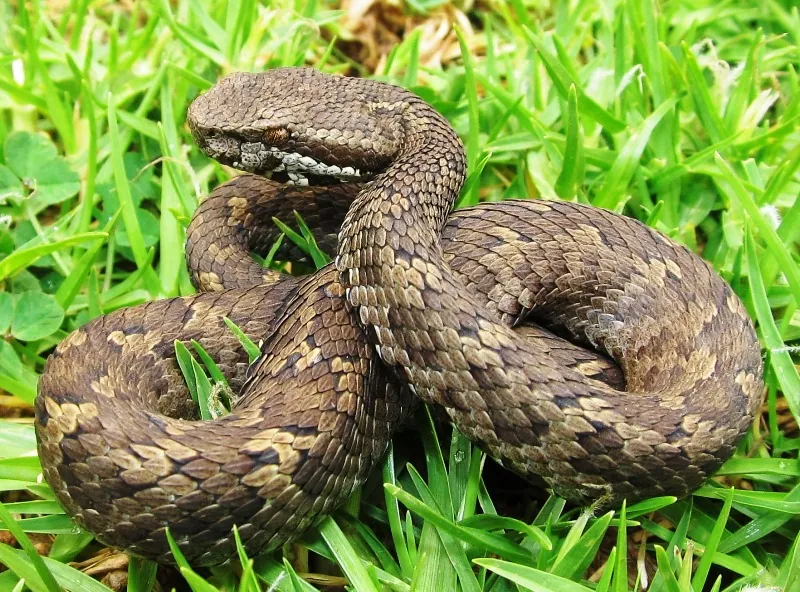
 Uni qanday tanish mumkin
- A pale buff, horseshoe-shaped (inverted "U") mark on the nape of the neck.1
- Pale brownish or buff body with darker grey blotches and some white streaks.1
- Small internasal scales on the snout.1
- 21 rows of smooth or weakly keeled scales along the middle of the body.1
Koʻpincha adashtiriladi: It is often grouped with other pit vipers of peninsular India. It can be told apart by its small internasal scales, the second upper lip scale touching the loreal pit (the heat-sensing pit between eye and nostril), 21 rows of dorsal scales at midbody, and a single row of scales between the lip scales and the eye scales.1
Zahar quvvati
Chaqqanda zahar zaharli tishlari yoki tishlari orqali chiqadi.
Odamlar uchun qanchalik xavfli?
Odamlar uchun xavf: JiddiyChaqqanda shifokor kerak. Oʻlim holatlari juda kam. Agar chaqsa
- Odamni qimirlamay va xotirjam tut, chaqilgan qoʻl yoki oyoqni yurak balandligida ushla, uzuk va siquvchi narsalarni yechib ol va tezda kasalxonaga olib bor.
Har doim avval favqulodda yordam raqamiga qoʻngʻiroq qil (112, 000, 911). Bu birinchi yordam boʻyicha umumiy maslahat, tibbiy maslahat emas. Birinchi yordam asoslari
 Xavfsiz boʻl
- Hech qachon yovvoyi hayvonga tegma, uni tutma yoki jigʻiga tegma, hatto kichkina boʻlsa ham va hatto uxlayotgan yoki oʻlik koʻrinsa ham.
- Unga joy ber. Agar duch kelsang, xotirjam boʻl, sekin orqaga chekin va uni oʻz yoʻliga ketishiga qoʻy.
- Agar biri seni chaqsa: xotirjam boʻl, qimirlamay tur, favqulodda yordam raqamiga qoʻngʻiroq qil (112, 000, 911) yoki tezda kasalxonaga yet. U qanday koʻrinishda ekanini eslab qol, surat yordam beradi.
U seni ovlamoqchi emas. Zaharini ovqat tutish yoki oʻzini himoya qilish uchun ishlatadi va yashirinishni ancha afzal koʻradi. Xavfsiz qolish haqida batafsil
Dunyoning qayerida?
U qanchalik katta?
U qanchalik uzun?
 ketma-ket qoʻyilgan 2 ta banandek uzun
 qator terilgan 12 ta oʻyinchoq gʻishtdek uzun
 100 metrni 110 soniyada bosib oʻtishi mumkin (eng tez odamga 9,6 soniya kerak)
Horseshoe pit viper SEN bilan solishtirganda qanchalik katta?
Faqat brauzeringdagi hisob-kitob. Hech narsa saqlanmaydi va hech qayerga yuborilmaydi.
U qanchalik tez?


Faktlar
Afsonalarni fosh qiluvchi
Afsona: The horseshoe pit viper is found across a wide area, including parts of the Eastern Ghats.
Haqiqat: Early reports from outside the Western Ghats were misidentifications. The species is endemic to the Western Ghats, in Karnataka, Tamil Nadu and Kerala.1
Faktlar qayerdan olingan
- Craspedocephalus strigatus (Wikipedia (CC BY-SA 4.0))
- Craspedocephalus strigatus (iNaturalist): nomlar va tasnif.
- Venom Wiki: xavf darajasi, odatiy oʻlcham va taxminiy tezlik bizning oʻz baholarimiz. Ularni qanday hisoblashimizni koʻr: Xavfni qanday baholaymiz.
Bu sahifadagi har bir faktning manbasiga ishora qiluvchi raqami bor. Agar biror narsani xato yozgan boʻlsak, kechir, biz hayvon ixlosmandlarimiz, ilmiy jurnal emas. [email protected] manziliga yoz, tuzatamiz.
 Chayon och! Venom Wiki bir kishining loyihasi: bepul, reklamasiz va kuzatuvchilarsiz. Kichik xayriya uni internetda saqlab qolishga yordam beradi.Chayonni boq
Shu guruhdan yana: Chuqurboshli ilonlar
 Brown spotted pit viperChuqurboshli ilonlarOʻldirishi mumkin
 HabuChuqurboshli ilonlarOʻldirishi mumkin
 Hump-nosed viperChuqurboshli ilonlarOʻldirishi mumkin
 Hundred-pace viperChuqurboshli ilonlarOʻldirishi mumkin
 Malayan pit viperChuqurboshli ilonlarOʻldirishi mumkin
 MamushiChuqurboshli ilonlarOʻldirishi mumkin
 Deathstalker
 Indian cobra
 Indian saw-scaled viper
 King cobra
 Puff adder
 Rassel qora iloni