
 Afrika
 Osiyo
Osiyo Yevropa
 Janubiy Amerika
 Avstraliya va Okeaniya
 Antarktida
 Tinch okeani
 Atlantika okeani
 Hind okeani
 Shimoliy Muz okeani
 Oʻrta yer dengizi
 Qizil dengiz
 Karib dengizi
 Marjon dengizi
 Janubiy Xitoy dengizi
 Filippin dengizi
 Andaman dengizi
 Shimoliy dengiz
 Timor va Arafura dengizi
 Bengal koʻrfazi
 Kaliforniya koʻrfazi
Western hognose snake
 Chaqadi
The western hognose snake is a small, stout-bodied snake with an upturned nose that looks a bit like a pig's snout. It lives across much of North America, from southern Canada to northern Mexico, in sandy and gravelly places such as prairies and grasslands. It is often mistaken for a rattlesnake, but its bite is not regarded as dangerous to people.1



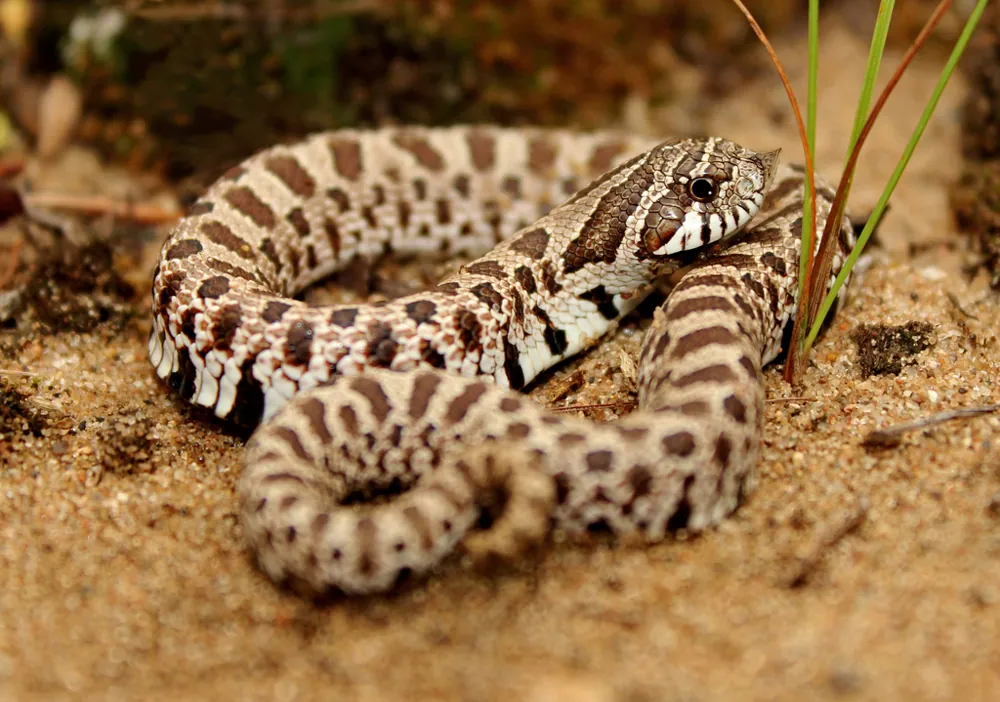
 Uni qanday tanish mumkin
- Relatively small and stout-bodied, with adults rarely exceeding 40–50 cm in total length, tail included.1
- A modified, upturned nose scale gives it a distinctive hog-like snout.1
- Colour and pattern vary a great deal between subspecies and individuals.1
- When threatened, it flattens its neck, hisses and may puff up its throat with air.1
Koʻpincha adashtiriladi: To an untrained eye, most individuals look much like rattlesnakes, which is thought to be a form of mimicry that makes predators wary. Its upturned snout and small, stout body are features to note.1
Zahar quvvati
Chaqqanda zahar zaharli tishlari yoki tishlari orqali chiqadi.
Uning zahari (chaqsa yoki nish ursa) nima qiladi?
The snake releases modified saliva from its Duvernoy's glands, which runs down a groove in its rear fang and helps break down the toxins of toads it eats. No deaths or whole-body (systemic) effects in people have been recorded from its bite. Bites may occasionally be medically significant.1
Odamlar uchun qanchalik xavfli?
Odamlar uchun xavf: YengilAri nishidek yoki undan ham kam. Odamlar uchun deyarli zararsiz.The species is not dangerous to people and is not regarded as venomous. Its bites are extremely rare, and no deaths or systemic effects have been recorded. Bites may uncommonly be medically significant.1
Qoʻrqqanda nima qiladi?
It flattens its neck, hisses and may make mock strikes with its mouth closed. If harassed further, it usually plays dead rather than biting.1
 Agar chaqsa
- Chaqilgan joyni yuv, odamni xotirjam tut va tibbiy yordam ol. Baʼzi turlar (masalan, bumslang) soatlar oʻtib halokatli boʻlishi mumkin.
Har doim avval favqulodda yordam raqamiga qoʻngʻiroq qil (112, 000, 911). Bu birinchi yordam boʻyicha umumiy maslahat, tibbiy maslahat emas. Birinchi yordam asoslari
 Xavfsiz boʻl
- Hech qachon yovvoyi hayvonga tegma, uni tutma yoki jigʻiga tegma, hatto kichkina boʻlsa ham va hatto uxlayotgan yoki oʻlik koʻrinsa ham.
- Unga joy ber. Agar duch kelsang, xotirjam boʻl, sekin orqaga chekin va uni oʻz yoʻliga ketishiga qoʻy.
- Agar biri seni chaqsa: xotirjam boʻl, qimirlamay tur, favqulodda yordam raqamiga qoʻngʻiroq qil (112, 000, 911) yoki tezda kasalxonaga yet. U qanday koʻrinishda ekanini eslab qol, surat yordam beradi.
U seni ovlamoqchi emas. Zaharini ovqat tutish yoki oʻzini himoya qilish uchun ishlatadi va yashirinishni ancha afzal koʻradi. Xavfsiz qolish haqida batafsil
Dunyoning qayerida?
U qanchalik katta?
U qanchalik uzun?
 ketma-ket qoʻyilgan 3 ta banandek uzun
 qator terilgan 16 ta oʻyinchoq gʻishtdek uzun
 100 metrni 77 soniyada bosib oʻtishi mumkin (eng tez odamga 9,6 soniya kerak)
Western hognose snake SEN bilan solishtirganda qanchalik katta?
Faqat brauzeringdagi hisob-kitob. Hech narsa saqlanmaydi va hech qayerga yuborilmaydi.
U qanchalik tez?


Faktlar
Captive breeders have produced more than 50 'designer' colour morphs of this snake.1
In captivity, many hognose snakes refuse food for about two to three and a half months, from January to mid March, because they instinctively brumate, or sleep, underground in winter.1
Males are considerably smaller than females.1
Hatchlings reach sexual maturity after about two years, based mostly on size rather than age.1
Afsonalarni fosh qiluvchi
Afsona: Because it looks like a rattlesnake, it must be dangerous or deadly.
Haqiqat: The western hognose snake is not dangerous to people. Its rare bites have not caused recorded deaths or whole-body effects, and it usually plays dead instead of biting.1
Zahar mutaxassislari uchun
- Ilmiy nomi
- Heterodon nasicus
- Guruh
- Orqa tishli ilonlar
- Oila
- Colubridae2
- Tartib
- Squamata
- Qitʼalar
- Shimoliy Amerika
- Chaqaloqlar
- It lays eggs. Females lay 4–23 elongate, thin-shelled eggs between June and August, which hatch after about 60 days.1
- Tabiatda ahvoli qanday
- Least Concern (IUCN)1
- Odamlar uchun xavf
- 1 / 5: Yengil3
Faktlar qayerdan olingan
- Western hognose snake (Wikipedia (CC BY-SA 4.0))
- Heterodon nasicus (iNaturalist): nomlar va tasnif.
- Venom Wiki: xavf darajasi, odatiy oʻlcham va taxminiy tezlik bizning oʻz baholarimiz. Ularni qanday hisoblashimizni koʻr: Xavfni qanday baholaymiz.
Bu sahifadagi har bir faktning manbasiga ishora qiluvchi raqami bor. Agar biror narsani xato yozgan boʻlsak, kechir, biz hayvon ixlosmandlarimiz, ilmiy jurnal emas. [email protected] manziliga yoz, tuzatamiz.
 Chayon och! Venom Wiki bir kishining loyihasi: bepul, reklamasiz va kuzatuvchilarsiz. Kichik xayriya uni internetda saqlab qolishga yordam beradi.Chayonni boq
Shu guruhdan yana: Orqa tishli ilonlar
 Brown vine snake
 Eastern hognose snake
 Green vine snake
 Desert night snake
 Night snake
 Sonoran lyre snake
Yana shu yerlarda yashaydi: Shimoliy Amerika
 TerciopeloChuqurboshli ilonlarHalokatli
 Eastern coral snakeMarjon ilonlariOʻldirishi mumkin
 Eastern diamondback rattlesnakeShaqildoq ilonlarOʻldirishi mumkin
 Eyelash viperChuqurboshli ilonlarOʻldirishi mumkin
 Timber rattlesnakeShaqildoq ilonlarOʻldirishi mumkin
 Western diamondback rattlesnakeShaqildoq ilonlarOʻldirishi mumkin