
 Afrig
Afrig Asi
Asi Tugal
Tugal Amerig gu Bëj-saalum
 Ostarali ak Oseyani
 Antarktig
 Mbàmbulaanu Pasifik
 Mbàmbulaanu Atlantig
 Mbàmbulaanu End
 Mbàmbulaanu Arktik
 Géeju Mediteraane
 Géej gu Xonq
 Géeju Karayib
 Géeju Koraay
 Géeju Siin gu Bëj-saalum
 Géeju Filipin
 Géeju Andaman
 Géeju Bëj-gànnaar
 Géeju Timor ak Arafura
 Golfu Bengal
 Golfu Kaliforni
Barn funnel weaver
 Dafay màtt
The barn funnel weaver is a spider that often shares homes with people. It builds funnel-shaped webs in corners of houses, sheds and cellars. It is shy and rarely bites.1

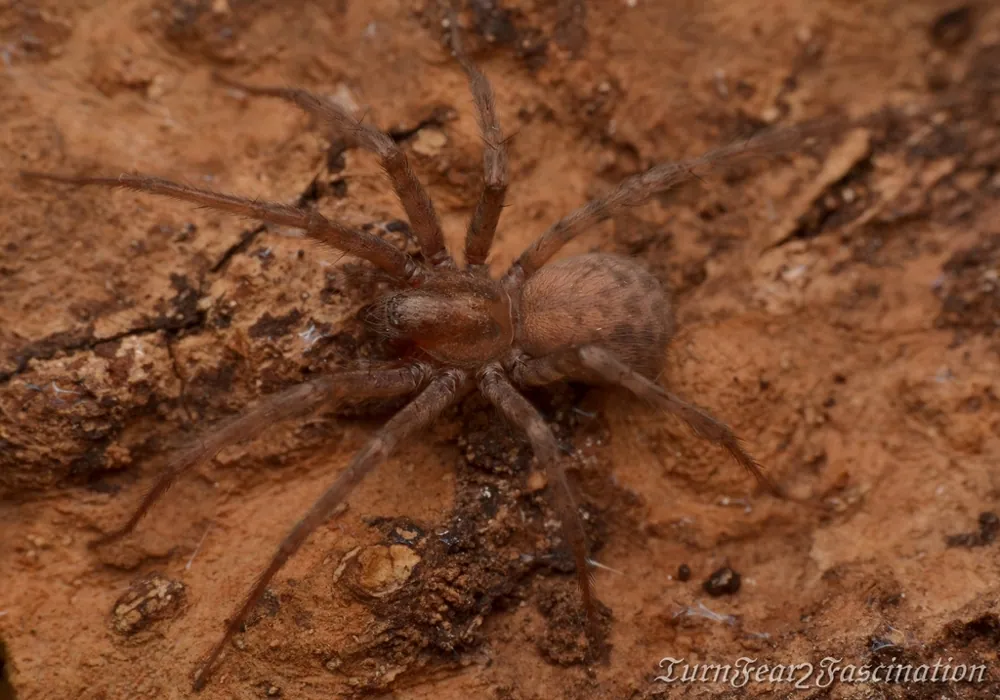
 Ni ngay ko xàmmee
- Adults are typically dark orange to brown or beige, sometimes greyish.1
- Its legs are striped.1
- It has two dull, black stripes running along the top of the front part of its body.1
- Its abdomen is mottled in brown, beige and grey, with a chevron pattern across the top, like an argyle pattern.1
- Females are about 7.5 to 11.5 mm long. Males are smaller, about 6 to 9 mm, with longer, more agile legs.1
Ñu ngi koy faral di jaxasoo ak: It was once thought to be a close relative of the Giant House Spider. That spider has since been moved to the genus Eratigena and split into three distinct species.1
Kàttanu daŋar
Daŋar bi dafay génn ci bëñam yi su màttee.
Ni mu lore nit ñi?
Musiba ci nit: WoyofNi jamu yamb walla lu ko yées. Lu jege, amul lor ci nit.Spiders of the genus Tegenaria rarely bite. A bite only happens in self-defence, and it is unlikely to break the skin.1
Lan lay def bu tiitee?
When its web is undisturbed, it retreats to the tip of the funnel and stops responding to movement. If the web is damaged, it tries to flee or curls its body into a ball against a wall or nearby object.1
 Su màttee
- Raxas fa mu màtt te teg ci mbuusu galaas ngir metit wi. Wutal ndimbal doktoor su metit wi dëgëree, mu law, walla yaramu nit ki baaxul.
Saa su nekk, woo jëkk sa nimerob urgence (112, 000, 911). Lii ay ndigal yu yaatu ci ndimbal yu jëkk la, du ndigalu doktoor. Li war a xam ci ndimbal yu jëkk
 Sàmmal sa bopp
- Bul laal mukk, bul jàpp, bul sonal ab rab bu àll, doonte bu ndaw la, te doonte dafa mel ni dafa nelaw walla dafa dee.
- May ko bérab. Su nga ko gisee, dalal, dellu ginnaaw ndànk-ndànk te bàyyi ko mu dem yoonam.
- Su benn màttee la: dalal, bul yëngu, woo sa nimerob urgence (112, 000, 911) walla dem lopitaan ci gaaw. Bul fàtte ni mu meloon, ab nataal dina dimbali.
Du la wut. Dafay jëfandikoo daŋaram ngir jàpp lu muy lekk walla ngir aar boppam, te nëbbu moo ko gën a neex. Yeneen ci ni ngay sàmme sa bopp
Ni mu réye?
Ni mu guddoo?
 tuuti ba mën a toog ci sa wewu baaraam
Barn funnel weaver ni mu réye ci wetu YOW?
Ay waññ rekk ci sa navigateur. Dara du denc te dara du yónnee fenn.
Ni mu gaawe?


Xibaar
In a cave between Greece and Albania, thousands of these spiders were found sharing a web over 100 square metres with another species, which is unusual for them.1
Some females living indoors in rarely disturbed places have reportedly lived for as long as seven years.1
Males usually die in autumn, soon after mating, and rarely live for more than a year.1
Its webs can become quite large if they are left undisturbed.1
Most of its eyes face forward, which helps it spot movement and focus on prey.1
Tasukatu léeb
Xalaat bu juum: This spider is aggressive and will attack people.
Dëgg: It is not particularly aggressive and will often retreat when confronted.1
Fa xibaar yi jóge
- Tegenaria domestica (Wikipedia (CC BY-SA 4.0))
- Tegenaria domestica (iNaturalist): tur ak ni ñu leen séddale.
- Venom Wiki: tolluwaayu musiba bi, réyaay bu yem bi ak xalaatu gaawaay bi, nun ñoo leen defar. Seetal ni nu leen waññe: Ni nuy natte musiba.
Xibaar bu nekk ci xët wii am na ab nimero buy won fa mu jóge. Su nu juumee, baal nu, nun ay nit ñu bëgg rab lanu, du ab jurnaalu xam-xam. Wax nu ko ci [email protected] te dinanu ko jubbanti.
 Jiit bi dafa xiif! Venom Wiki ab liggéeyu kenn la: amul pay, amul piblisite te amul traceur. Ab may bu tuuti dafay dimbali ngir mu des ci internet.Leel jiit bi
Yeneen ci mbooloo mi: Jargoñ
 Mediterranean black widow
 Diving bell spider
 European yellow sac spider
 Noble false widow
 Tarantula wolf spider
 Daddy long-legs spider
Dafay dund itam ci: Tugal
 Common European adderVipèreSoxla na doktoor
 Spanish flyYeneen rab yu am daŋar ci seen yaramSoxla na doktoorBul laal
 Common waspYamb, guêpe ak frelonDafay metti rekk
 European hornetYamb, guêpe ak frelonDafay metti rekk
 Fire salamanderMbott yu am daŋar, crapaud ak tritonDafay metti rekkBul laal
 Western honey beeYamb, guêpe ak frelonDafay metti rekk