
 Afrig
Afrig Asi
Asi Tugal
Tugal Amerig gu Bëj-saalum
 Ostarali ak Oseyani
 Antarktig
 Mbàmbulaanu Pasifik
 Mbàmbulaanu Atlantig
 Mbàmbulaanu End
 Mbàmbulaanu Arktik
 Géeju Mediteraane
 Géej gu Xonq
 Géeju Karayib
 Géeju Koraay
 Géeju Siin gu Bëj-saalum
 Géeju Filipin
 Géeju Andaman
 Géeju Bëj-gànnaar
 Géeju Timor ak Arafura
 Golfu Bengal
 Golfu Kaliforni
Common quail
 Am daŋar su ñu ko lekkeeDafay lekk: Tuuti ci léppAm daŋar ci yaram, du màtt walla jam
The common quail is a small, plump ground-nesting bird. It breeds across Europe and North Africa and spends the winter in Africa and southern India. Its meat can be poisonous, so it is a bird where a little knowledge matters.1



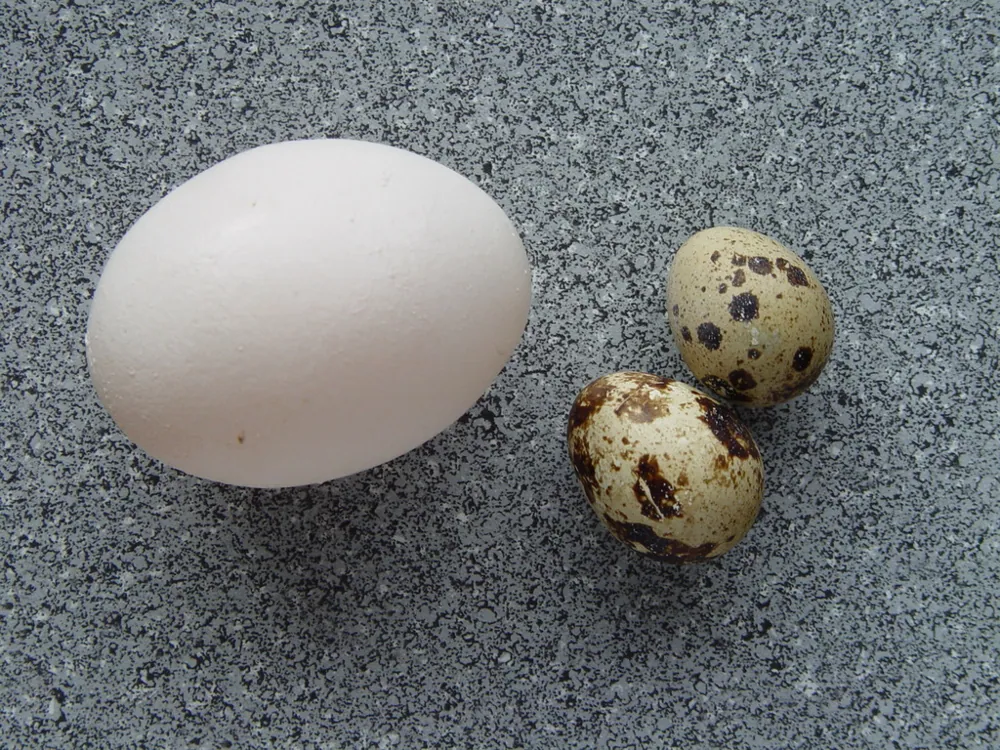
 Ni ngay ko xàmmee
- A small, compact bird about 16 to 18 cm long1
- Streaked brown plumage with a white eyestripe1
- Males have a white chin1
- Long wings, unlike most game birds1
- A call of three repeated chirps, and the male's song sounds like 'wet-my-lips'1
Ñu ngi koy faral di jaxasoo ak: The Japanese quail (Coturnix japonica), native to Asia, looks very similar. Its call is very different from that of the common quail, which is the best way to tell them apart.1
Kàttanu daŋar
Lor na rekk su dara lekkee ko.
Lan la daŋar bi ci yaramam di def?
This bird is not venomous. Its meat can be poisonous if the birds have eaten certain plants, although which plants is still debated. The resulting illness, called coturnism, causes muscle soreness and may lead to kidney failure.1
Ni mu lore nit ñi?
Musiba ci nit: Dafay mettiMën na metti lool, waaye lu bon du faral di am.One in four people who eat poisonous quail meat become ill with coturnism. The illness can lead to kidney failure.1
Lan lay def bu tiitee?
When flushed, it keeps low and soon drops back into cover. It would rather creep away than fly.1
 Su kenn laalee ko walla mu lekk ko
- Su kenn lekkee ko walla mu am ay màndarga ginnaaw bi mu ko lekkee: woo sa nimerob urgence walla centre antipoison ci saa si.
Saa su nekk, woo jëkk sa nimerob urgence (112, 000, 911). Lii ay ndigal yu yaatu ci ndimbal yu jëkk la, du ndigalu doktoor. Li war a xam ci ndimbal yu jëkk
 Sàmmal sa bopp
- Bul laal mukk, bul jàpp, bul sonal ab rab bu àll, doonte bu ndaw la, te doonte dafa mel ni dafa nelaw walla dafa dee.
- May ko bérab. Su nga ko gisee, dalal, dellu ginnaaw ndànk-ndànk te bàyyi ko mu dem yoonam.
- Su nga ko laalee walla nga lekk ko: bul moos say bët walla sa gémmiñ, raxas say loxo te wutal ndimbal doktoor.
Du la wut. Daŋaram nekk na rekk ngir kenn bañ ko lekk. Yeneen ci ni ngay sàmme sa bopp
Ni mu réye?
Ni mu guddoo?
Ni mu diise?

 guddu na ni 6 bloku tabax yu ñu toftale
 mën na naaw ci benn terrain bu futbal bu mat ci 9,5 segond
Common quail ni mu réye ci wetu YOW?
Ay waññ rekk ci sa navigateur. Dara du denc te dara du yónnee fenn.
Ni mu gaawe?


Xibaar
Huge numbers are caught in nets along the Mediterranean coast of Egypt. An estimated 12.9 million birds were caught across Egypt in 2012 during the autumn migration.1
In 1537, Queen Jane Seymour, third wife of Henry VIII, developed a strong craving for quail. Courtiers and diplomats abroad were ordered to find supplies for her.1
The Book of Numbers in the Bible describes a huge mass of quails blown in by a wind, which the Israelites took as meat in the wilderness.1
Common quails are strongly migratory, unlike most game birds.1
The young can leave the nest and feed themselves shortly after hatching, and they stay with the family group for 30 to 50 days.1
Ngir boroom xam-xam ci daŋar
- Turu xam-xam
- Coturnix coturnix
- Mbooloo
- Yeneen rab yu am daŋar ci seen yaram
- Njaboot
- Phasianidae2
- Toftal
- Galliformes
- Kontinaa yi
- Tugal, Asi, Afrig
- Liir yi
- The female lays a clutch of 8 to 13 eggs, one every 24 hours, in a shallow scrape on the ground. The chicks hatch together after 17 to 20 days and can feed themselves soon after hatching.1
- Ni mu nekke ci àll bi
- Least concern (IUCN)1
- Musiba ci nit
- 2 / 5: Dafay metti3
Fa xibaar yi jóge
- Common quail (Wikipedia (CC BY-SA 4.0))
- Coturnix coturnix (iNaturalist): tur ak ni ñu leen séddale.
- Venom Wiki: tolluwaayu musiba bi, réyaay bu yem bi ak xalaatu gaawaay bi, nun ñoo leen defar. Seetal ni nu leen waññe: Ni nuy natte musiba.
Xibaar bu nekk ci xët wii am na ab nimero buy won fa mu jóge. Su nu juumee, baal nu, nun ay nit ñu bëgg rab lanu, du ab jurnaalu xam-xam. Wax nu ko ci [email protected] te dinanu ko jubbanti.
 Jiit bi dafa xiif! Venom Wiki ab liggéeyu kenn la: amul pay, amul piblisite te amul traceur. Ab may bu tuuti dafay dimbali ngir mu des ci internet.Leel jiit bi
Yeneen ci mbooloo mi: Yeneen rab yu am daŋar ci seen yaram
 Spanish flyYeneen rab yu am daŋar ci seen yaramSoxla na doktoorBul laal
 African crested ratYeneen rab yu am daŋar ci seen yaramSoxla na doktoorBul laal
 Green spotted pufferYeneen rab yu am daŋar ci seen yaramSoxla na doktoor
 Spur-winged gooseYeneen rab yu am daŋar ci seen yaramDafay metti rekk
 Cinnabar mothYeneen rab yu am daŋar ci seen yaramAmul lor
 Fahaka pufferfishYeneen rab yu am daŋar ci seen yaramMën na rey
Dafay dund itam ci: Tugal
 Common European adderVipèreSoxla na doktoor
 Common waspYamb, guêpe ak frelonDafay metti rekk
 European hornetYamb, guêpe ak frelonDafay metti rekk
 Fire salamanderMbott yu am daŋar, crapaud ak tritonDafay metti rekkBul laal
 Western honey beeYamb, guêpe ak frelonDafay metti rekk
 Blunt-nosed viperVipèreMën na rey