
 Afrig
Afrig Asi
Asi Tugal
Tugal Amerig gu Bëj-saalum
 Ostarali ak Oseyani
 Antarktig
 Mbàmbulaanu Pasifik
 Mbàmbulaanu Atlantig
 Mbàmbulaanu End
 Mbàmbulaanu Arktik
 Géeju Mediteraane
 Géej gu Xonq
 Géeju Karayib
 Géeju Koraay
 Géeju Siin gu Bëj-saalum
 Géeju Filipin
 Géeju Andaman
 Géeju Bëj-gànnaar
 Géeju Timor ak Arafura
 Golfu Bengal
 Golfu Kaliforni
Matabele ant
 Dafay jam
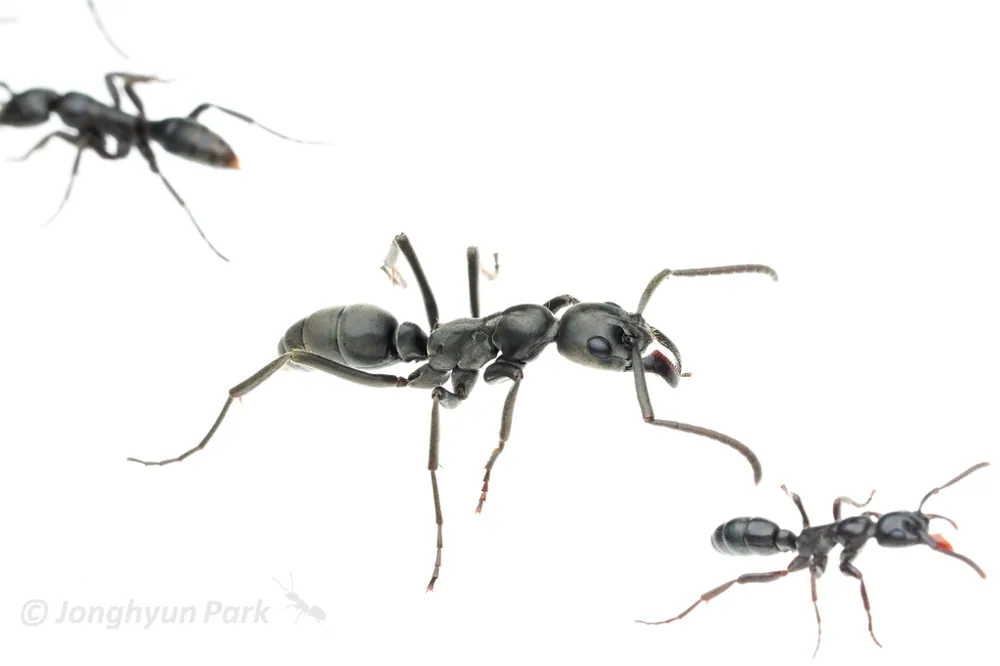
The Matabele ant is one of the largest ants in the world, and it hunts termites in raiding columns. It lives across much of sub-Saharan Africa. It is known for its teamwork, including rescuing and caring for injured nestmates.1

 Ni ngay ko xàmmee
- Worker ants are 5 to 18 millimetres long, and some individuals reach up to 25 millimetres.1
- Larger workers make up to half of the colony.1
- Minor workers have less hair and smoother jaws (mandibles) than major workers.1
- They move in a column-like line when raiding termite sites.1
- Their glands release chemicals that smell like human faeces.1
Kàttanu daŋar
Daŋar bi dafay génn ci ab dag buy jam.
Ni mu lore nit ñi?
Musiba ci nit: Dafay mettiMën na metti lool, waaye lu bon du faral di am.Lan lay def bu tiitee?
When attacked by driver ants outside the nest, they check each other's legs and antennae and remove any enemy ants clinging to them.1
 Su jamee
- Raxas te sedal fa mu jam.
- Su nit ki am jafe-jafe ci noyyi, kanamam walla putam funki, walla mu bëgg a xëm, allergie bu metti la (urgence): woo sa nimerob urgence.
Saa su nekk, woo jëkk sa nimerob urgence (112, 000, 911). Lii ay ndigal yu yaatu ci ndimbal yu jëkk la, du ndigalu doktoor. Li war a xam ci ndimbal yu jëkk
 Sàmmal sa bopp
- Bul laal mukk, bul jàpp, bul sonal ab rab bu àll, doonte bu ndaw la, te doonte dafa mel ni dafa nelaw walla dafa dee.
- May ko bérab. Su nga ko gisee, dalal, dellu ginnaaw ndànk-ndànk te bàyyi ko mu dem yoonam.
- Su benn jamee la: dalal, bul yëngu, woo sa nimerob urgence (112, 000, 911) walla dem lopitaan ci gaaw. Bul fàtte ni mu meloon, ab nataal dina dimbali.
Du la wut. Dafay jëfandikoo daŋaram ngir jàpp lu muy lekk walla ngir aar boppam, te nëbbu moo ko gën a neex. Yeneen ci ni ngay sàmme sa bopp
Ni mu réye?
Ni mu guddoo?
 guddu na lu tollu ci trombone
Matabele ant ni mu réye ci wetu YOW?
Ay waññ rekk ci sa navigateur. Dara du denc te dara du yónnee fenn.
Ni mu gaawe?


Xibaar
They are the first recorded non-human species to treat the wounds of other individuals consistently, by licking them for several minutes.1
Injured ants send out a chemical call for help, and nestmates carry them back to the nest. This reduces the mortality rate of injured ants from 32% to close to zero.1
Injured ants that have lost one or two legs adapt to walking on four or five legs and can reach running speeds similar to healthy ants.1
Some individuals reach up to 25 millimetres, which makes this one of the world's largest ants.1
Frogs of the species Phrynomantis microps are sometimes found in their nests, and these frogs produce a skin secretion that calms the ants' aggression.1
Scout ants lead raids from the front and lay pheromone trails, so the other ants can find their way back to the nest.1
Ngir boroom xam-xam ci daŋar
- Turu xam-xam
- Megaponera analis
- Mbooloo
- Fourmi yi
- Njaboot
- Formicidae2
- Toftal
- Hymenoptera
- Kontinaa yi
- Afrig
- Liir yi
- The nest chamber holds the eggs, larvae, cocoons and the queen. New colonies are thought to form when a new queen leaves with some workers from an established colony.1
- Musiba ci nit
- 2 / 5: Dafay metti3
Fa xibaar yi jóge
- Megaponera (Wikipedia (CC BY-SA 4.0))
- Megaponera analis (iNaturalist): tur ak ni ñu leen séddale.
- Venom Wiki: tolluwaayu musiba bi, réyaay bu yem bi ak xalaatu gaawaay bi, nun ñoo leen defar. Seetal ni nu leen waññe: Ni nuy natte musiba.
Xibaar bu nekk ci xët wii am na ab nimero buy won fa mu jóge. Su nu juumee, baal nu, nun ay nit ñu bëgg rab lanu, du ab jurnaalu xam-xam. Wax nu ko ci [email protected] te dinanu ko jubbanti.
 Jiit bi dafa xiif! Venom Wiki ab liggéeyu kenn la: amul pay, amul piblisite te amul traceur. Ab may bu tuuti dafay dimbali ngir mu des ci internet.Leel jiit bi
 Siafu driver ant
 African stink ant
 Samsum ant
 Bullet ant
 Red imported fire ant
 Bulldog ant
 Black mamba
 Deathstalker
 Egyptian cobra
 Jaan wu ñuul wi (Bitis arietans)
 Boomslang
 Fat-tailed scorpion