
 Afrig
Afrig Asi
Asi Tugal
Tugal Amerig gu Bëj-saalum
 Ostarali ak Oseyani
 Antarktig
 Mbàmbulaanu Pasifik
 Mbàmbulaanu Atlantig
 Mbàmbulaanu End
 Mbàmbulaanu Arktik
 Géeju Mediteraane
 Géej gu Xonq
 Géeju Karayib
 Géeju Koraay
 Géeju Siin gu Bëj-saalum
 Géeju Filipin
 Géeju Andaman
 Géeju Bëj-gànnaar
 Géeju Timor ak Arafura
 Golfu Bengal
 Golfu Kaliforni
Natterjack toad
 Daŋar ci deramDafay lekk: GunóorAm daŋar ci yaram, du màtt walla jam
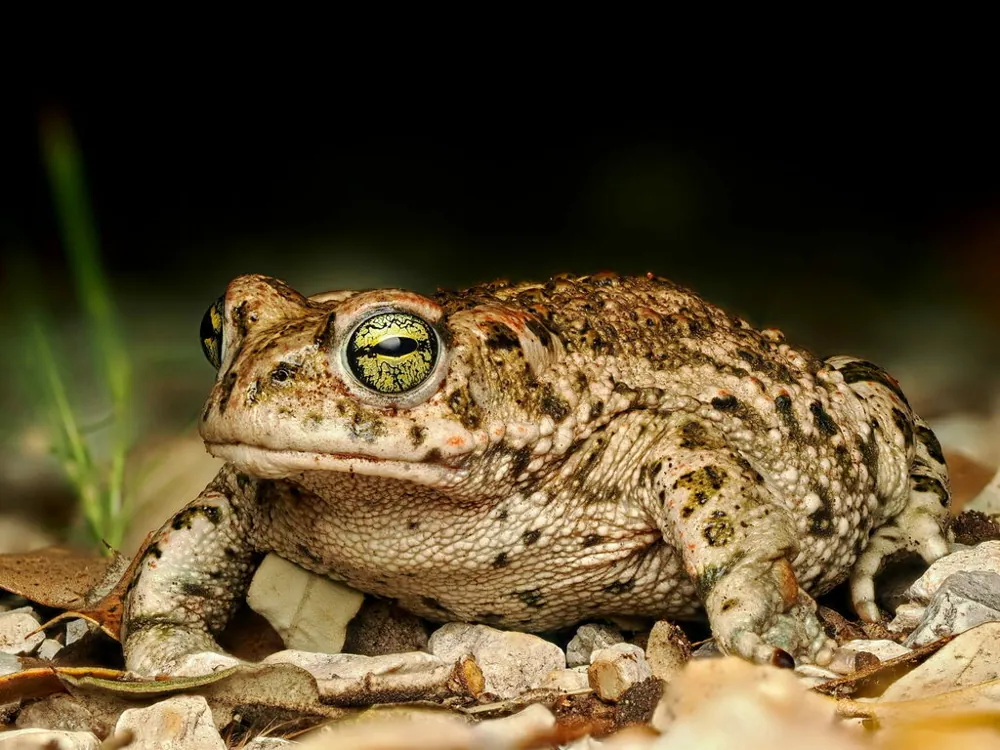
The natterjack toad is a toad that lives on sandy ground and heathland in Europe. It is easy to tell apart from other toads by the yellow line down its back, and it is known for its very loud mating call. In Ireland, it is the only native toad.1


 Ni ngay ko xàmmee
- A yellow line runs down the middle of the back.1
- Parallel paratoid glands (the raised glands behind the eyes) are a key feature.1
- Adults are 60 to 70 mm long.1
- Short legs give it a distinctive walk, unlike the hopping of many other toads.1
- Males have a single vocal sac under the chin that amplifies a very loud, distinctive call.1
Ñu ngi koy faral di jaxasoo ak: It is often confused with common toads. Natterjacks are told apart by the yellow line down the back and the parallel paratoid glands.1
Kàttanu daŋar
Deram am na daŋar. Musiba la ci laal, mar walla lekk.
Ni mu lore nit ñi?
Musiba ci nit: WoyofNi jamu yamb walla lu ko yées. Lu jege, amul lor ci nit. Su kenn laalee ko walla mu lekk ko
- Su kenn laalee benn: raxas loxo yi bu baax te bul laal bët yi walla gémmiñ gi. Su ab xale walla ab mala bu kër maree benn walla mu lekk benn: woo sa centre antipoison walla sa nimerob urgence.
Saa su nekk, woo jëkk sa nimerob urgence (112, 000, 911). Lii ay ndigal yu yaatu ci ndimbal yu jëkk la, du ndigalu doktoor. Li war a xam ci ndimbal yu jëkk
 Sàmmal sa bopp
- Bul laal mukk, bul jàpp, bul sonal ab rab bu àll, doonte bu ndaw la, te doonte dafa mel ni dafa nelaw walla dafa dee.
- May ko bérab. Su nga ko gisee, dalal, dellu ginnaaw ndànk-ndànk te bàyyi ko mu dem yoonam.
- Su nga ko laalee walla nga lekk ko: bul moos say bët walla sa gémmiñ, raxas say loxo te wutal ndimbal doktoor.
Du la wut. Daŋaram nekk na rekk ngir kenn bañ ko lekk. Yeneen ci ni ngay sàmme sa bopp
Ni mu réye?
Ni mu guddoo?
 guddu na ni 2 bloku tabax yu ñu toftale
 mën na daw 100 meetar ci 180 segond (nit ki gën a gaaw soxla na 9,6)
Natterjack toad ni mu réye ci wetu YOW?
Ay waññ rekk ci sa navigateur. Dara du denc te dara du yónnee fenn.
Ni mu gaawe?


Xibaar
Their loud mating calls matter because the toads are often present in low numbers, helping the sexes find each other.1
Natterjacks can live for up to 15 years.1
Natterjacks can only spawn in pools with a very slightly sloping bottom and sparse vegetation.1
They spread their breeding over a long summer period, so some young survive if temporary pools dry out.1
Some females spawn twice in one year.1
Ngir boroom xam-xam ci daŋar
- Turu xam-xam
- Epidalea calamita
- Mbooloo
- Mbott yu am daŋar, crapaud ak triton
- Njaboot
- Bufonidae2
- Toftal
- Anura
- Kontinaa yi
- Tugal
- Liir yi
- It spawns from the end of April to July, laying strings of eggs in shallow, warm pools.1
- Diiru dund
- lu tollu ci 15 at1
- Ni mu nekke ci àll bi
- Endangered in Ireland1
- Musiba ci nit
- 1 / 5: Woyof3
Fa xibaar yi jóge
- Natterjack toad (Wikipedia (CC BY-SA 4.0))
- Epidalea calamita (iNaturalist): tur ak ni ñu leen séddale.
- Venom Wiki: tolluwaayu musiba bi, réyaay bu yem bi ak xalaatu gaawaay bi, nun ñoo leen defar. Seetal ni nu leen waññe: Ni nuy natte musiba.
Xibaar bu nekk ci xët wii am na ab nimero buy won fa mu jóge. Su nu juumee, baal nu, nun ay nit ñu bëgg rab lanu, du ab jurnaalu xam-xam. Wax nu ko ci [email protected] te dinanu ko jubbanti.
 Jiit bi dafa xiif! Venom Wiki ab liggéeyu kenn la: amul pay, amul piblisite te amul traceur. Ab may bu tuuti dafay dimbali ngir mu des ci internet.Leel jiit bi
Yeneen ci mbooloo mi: Mbott yu am daŋar, crapaud ak triton
 Fire salamanderMbott yu am daŋar, crapaud ak tritonDafay metti rekkBul laal
 Common toadMbott yu am daŋar, crapaud ak tritonDafay metti rekkBul laal
 European fire-bellied toadMbott yu am daŋar, crapaud ak tritonAmul lor
 Iberian ribbed newtMbott yu am daŋar, crapaud ak tritonAmul lor
 Alpine salamanderMbott yu am daŋar, crapaud ak tritonAmul lor
 European green toadMbott yu am daŋar, crapaud ak tritonAmul lor
Dafay dund itam ci: Tugal
 Common European adderVipèreSoxla na doktoor
 Spanish flyYeneen rab yu am daŋar ci seen yaramSoxla na doktoorBul laal
 Common waspYamb, guêpe ak frelonDafay metti rekk
 European hornetYamb, guêpe ak frelonDafay metti rekk
 Western honey beeYamb, guêpe ak frelonDafay metti rekk
 Blunt-nosed viperVipèreMën na rey