
 IAfrika
 IAsiya
 IYurophu
 uMzantsi Melika
 IOstreliya neOceania
 IAntarctica
 uLwandlekazi lwePasifiki
 uLwandlekazi lweAtlantiki
 uLwandlekazi lwaseIndiya
 uLwandlekazi lweArctic
 uLwandle lweMeditera
 uLwandle oluBomvu
 uLwandle lweKharibhiya
 uLwandle lweCoral
 uLwandle lwaseMzantsi China
 uLwandle lwePhilippines
 uLwandle lweAndaman
 uLwandle lwaseMntla (North Sea)
 uLwandle lweTimor ne-Arafura
 iBhayi yaseBengal
 iGulf yaseCalifornia
Cane toad
 Ityhefu esikhumbeni sasoSitya: Kancinci kwento nganyeSiyatyhefa, asinatyhefu yokuluma okanye yokuhlaba
The cane toad is a large toad that is very poisonous to many animals. It is native to South and mainland Central America, but people have moved it to islands in Oceania and the Caribbean and to northern Australia. It matters because it spreads quickly and harms native wildlife and pets.1


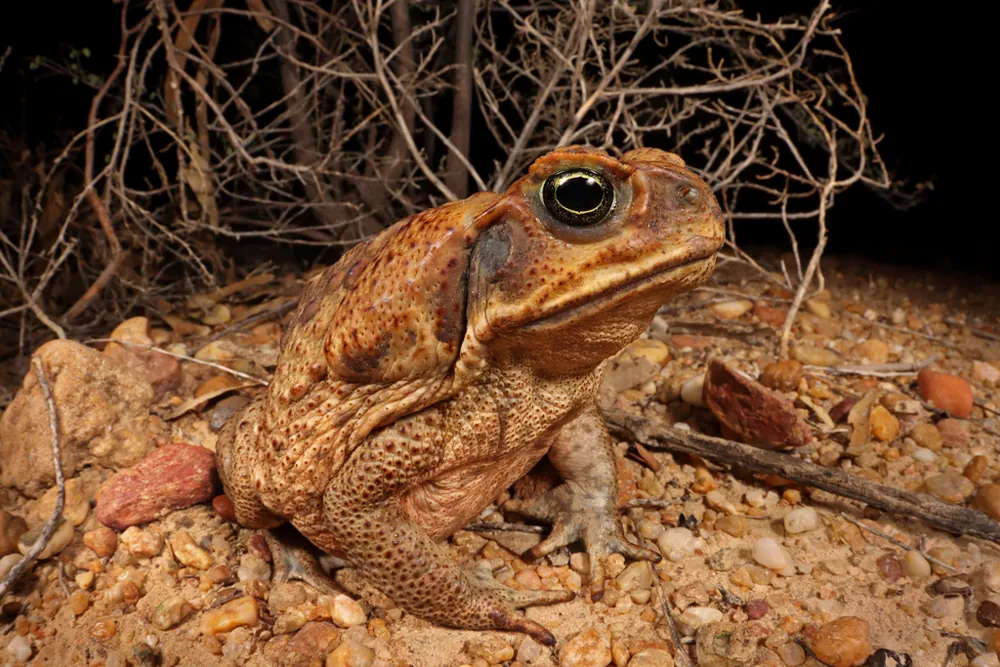
 Indlela yokusiqaphela
- Very large, with adults usually 10 to 15 cm long1
- Dry, warty skin with distinct ridges above the eyes that run down the snout1
- A large parotoid gland (a swollen gland) behind each eye1
- Grey, yellowish, red-brown or olive-brown skin, often with patterns1
- Horizontal pupils and golden irises1
Sidla ngokubhidaniswa no: In Australia, adults can be confused with large native frogs, but these lack the large parotoid glands and the ridge between the nostril and eye. The giant burrowing frog has vertical pupils and silver-grey irises, while the cane toad has horizontal pupils and golden irises. In the United States, the southern toad has two bulbs in front of the parotoid glands.1
Amandla etyhefu
Isikhumba saso siyatyhefa. Kuyingozi ukusichukumisa, ukusikhotha okanye ukusitya.
Ityhefu yaso etyhefayo (xa usichukumisa okanye usitya) yenza ntoni?
The toad's glands secrete a milky-white fluid called bufotoxin when it is threatened. Components of bufotoxin are toxic to many animals. In dogs, signs of poisoning include excessive drooling, extremely red gums, head-shaking, crying and loss of coordination.1
Siyingozi kangakanani ebantwini?
Ingozi ebantwini: Kubi kakhuluUkuba umntu uyasichukumisa okanye uyasitya, yiya kugqirha. Ukufa kunqabe kakhulu.The toxic skin can kill many wild and domestic animals. Dogs are especially at risk from licking or biting the toad. Human deaths have also been recorded after people ate cane toads.1
Senza ntoni xa soyika?
When threatened, it releases bufotoxin from its glands.1
 Ukuba umntu usichukumisile okanye usityile
- Ukuba umntu usichukumisile: hlamba izandla kakuhle kwaye ungachukumisi amehlo okanye umlomo. Ukuba umntwana okanye isilwanyana sasekhaya sisikhothile okanye sisityile: tsalela iziko lezityhefu okanye inombolo kaxakeka.
Soloko utsalela inombolo kaxakeka kuqala (112, 000, 911). Esi sisikhokelo soncedo lokuqala ngokubanzi, asilocebiso lwezonyango. Iziseko zoncedo lokuqala
 Hlala ukhuselekile
- Ungaze uchukumise, ubambe okanye uqhule isilwanyana sasendle, nokuba sincinci, kwaye nokuba sibonakala silele okanye sifile.
- Sinike indawo. Ukuba udibana naso, hlala uzolile, buyela umva kancinci kwaye usiyeke sihambe ngendlela yaso.
- Ukuba usichukumisile okanye usityile: musa ukukhuhla amehlo okanye umlomo wakho, hlamba izandla zakho kwaye ufumane uncedo lwezonyango.
Asikuzingeli. Ityhefu yaso ikhona nje ukuze kungabikho nto isityayo. Okungakumbi malunga nokuhlala ukhuselekile
Sikhulu kangakanani?
Side kangakanani?
 ubude obulingana neebhloko zokudlala zokwakha eziyi-8 zilandelelana
 singagqiba iimitha ezili-100 ngemizuzwana eyi-180 (owona mntu ukhawulezayo udinga i-9,6)
U-Cane toad mkhulu kangakanani xa uthelekisa NAWE?
Zizibalo nje kwibhrawuza yakho. Akukho nto igcinwayo okanye ithunyelwa naphi na.
Sikhawuleza kangakanani?


Iinyaniso
Young toads lose the toxicity they had as eggs and tadpoles, and they only develop their poison glands later. Only an estimated 0.5% of cane toads reach adulthood.1
In Australia, tadpoles have evolved to be more likely to eat their siblings than tadpoles in South America.1
A female can lay thousands of eggs in one spawn, in strings up to 20 metres long.1
In the wild, cane toads can live 10 to 15 years, and one captive toad was reported to have lived 35 years.1
The cane toad is considered the largest species in the Bufonidae, the toad family.1
Cane toads eat both living and dead matter, which is unusual among frogs and toads.1
Umqhekezi weentsomi
Intsomi: The name 'marine toad' suggests that cane toads live in the sea.
Inyaniso: Cane toads do not live in the sea. The name came from a mistaken belief by an early naturalist.1
Kwiingcali zetyhefu
- Igama lenzululwazi
- Rhinella marina
- Iqela
- Amasele atyhefayo, amaxoxo nee-newt
- Usapho
- Bufonidae2
- Ucwangco
- Anura
- Amazwekazi
- uMntla Melika, uMzantsi Melika
- Iintsana
- A female lays 8,000 to 25,000 eggs at once, in long jelly strings that can stretch up to 20 metres.1
- Ixesha lobomi
- malunga neminyaka eyi-151
- Ingozi ebantwini
- 3 / 5: Kubi kakhulu3
Apho iinyaniso zivela khona
- Cane toad (Wikipedia (CC BY-SA 4.0))
- Rhinella marina (iNaturalist): amagama nokuhlelwa.
- Venom Wiki: inqanaba lengozi, ubungakanani obuqhelekileyo noqikelelo lwesantya zezethu. Bona indlela esizifumana ngayo: Indlela esilinganisa ngayo ingozi.
Inyaniso nganye kweli phepha inenombolo ebonisa umthombo wayo. Ukuba senze impazamo, uxolo, sithanda izilwanyana, asiyomagazini yenzululwazi. Sixelele ku-[email protected] kwaye siza kuyilungisa.
 Unomadudwane ulambile! I-Venom Wiki yiprojekthi yomntu omnye: isimahla, ayinazibhengezo kwaye ayinazilandeli. Isipho esincinci sinceda ukuyigcina ikwi-intanethi.Yondla unomadudwane
Okungakumbi kwiqela elinye: Amasele atyhefayo, amaxoxo nee-newt
 Golden poison frogAmasele atyhefayo, amaxoxo nee-newtSiyabulalaMusa ukuchukumisa
 Dyeing poison dart frogAmasele atyhefayo, amaxoxo nee-newtKubuhlungu njeMusa ukuchukumisa
 Strawberry poison-dart frogAmasele atyhefayo, amaxoxo nee-newtKubuhlungu njeMusa ukuchukumisa
 Black-legged poison frogAmasele atyhefayo, amaxoxo nee-newtSinokubulalaMusa ukuchukumisa
 California newtAmasele atyhefayo, amaxoxo nee-newtSinokubulalaMusa ukuchukumisa
 Rough-skinned newtAmasele atyhefayo, amaxoxo nee-newtSinokubulalaMusa ukuchukumisa
 Terciopelo
 Eastern coral snake
 Eastern diamondback rattlesnake
 Eyelash viper
 Timber rattlesnake
 Western diamondback rattlesnake