
 IAfrika
 IAsiya
 IYurophu
 uMzantsi Melika
 IOstreliya neOceania
 IAntarctica
 uLwandlekazi lwePasifiki
 uLwandlekazi lweAtlantiki
 uLwandlekazi lwaseIndiya
 uLwandlekazi lweArctic
 uLwandle lweMeditera
 uLwandle oluBomvu
 uLwandle lweKharibhiya
 uLwandle lweCoral
 uLwandle lwaseMzantsi China
 uLwandle lwePhilippines
 uLwandle lweAndaman
 uLwandle lwaseMntla (North Sea)
 uLwandle lweTimor ne-Arafura
 iBhayi yaseBengal
 iGulf yaseCalifornia
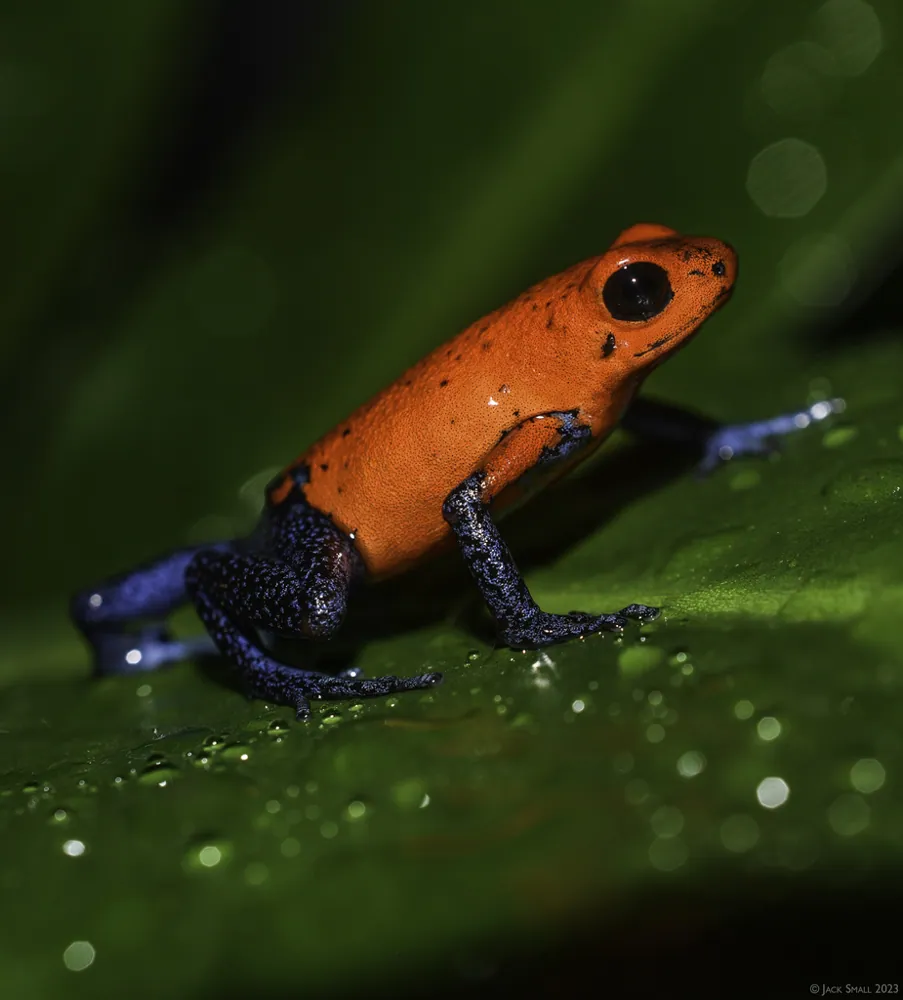
Strawberry poison-dart frog
 Ityhefu esikhumbeni sasoSitya: IzinambuzaneSiyatyhefa, asinatyhefu yokuluma okanye yokuhlaba
The strawberry poison frog is a small, brightly coloured frog that lives in Central America, from eastern central Nicaragua through Costa Rica to northwestern Panama. Its skin contains toxins it gets from the mites and ants it eats, so it is poisonous to touch or eat. It is famous for having 15 to 30 different colour patterns.1

 Indlela yokusiqaphela
Amandla etyhefu
Isikhumba saso siyatyhefa. Kuyingozi ukusichukumisa, ukusikhotha okanye ukusitya.
Ityhefu yaso etyhefayo (xa usichukumisa okanye usitya) yenza ntoni?
The frog has no venom and does not inject anything. Its skin holds alkaloid toxins, mainly pumiliotoxin 251D, which affects the heart and disrupts the sodium and potassium channels in cells. Predators that eat the frog can suffer convulsions, paralysis and death.1
Siyingozi kangakanani ebantwini?
Ingozi ebantwini: KubuhlunguKunokuba buhlungu ngokwenene, kodwa phantse akusoze kube kubi kakhulu.Its toxins are harmful to animals that eat it, causing convulsions, paralysis and death.1
Senza ntoni xa soyika?
Its bright warning colours signal that it is toxic to predators.1
 Ukuba umntu usichukumisile okanye usityile
- Ukuba umntu usichukumisile: hlamba izandla kakuhle kwaye ungachukumisi amehlo okanye umlomo. Ukuba umntwana okanye isilwanyana sasekhaya sisikhothile okanye sisityile: tsalela iziko lezityhefu okanye inombolo kaxakeka.
Soloko utsalela inombolo kaxakeka kuqala (112, 000, 911). Esi sisikhokelo soncedo lokuqala ngokubanzi, asilocebiso lwezonyango. Iziseko zoncedo lokuqala
 Hlala ukhuselekile
- Ungaze uchukumise, ubambe okanye uqhule isilwanyana sasendle, nokuba sincinci, kwaye nokuba sibonakala silele okanye sifile.
- Sinike indawo. Ukuba udibana naso, hlala uzolile, buyela umva kancinci kwaye usiyeke sihambe ngendlela yaso.
- Ukuba usichukumisile okanye usityile: musa ukukhuhla amehlo okanye umlomo wakho, hlamba izandla zakho kwaye ufumane uncedo lwezonyango.
Asikuzingeli. Ityhefu yaso ikhona nje ukuze kungabikho nto isityayo. Okungakumbi malunga nokuhlala ukhuselekile
Sikhulu kangakanani?
Side kangakanani?
 malunga nobude besiqhobosho sephepha
 singagqiba iimitha ezili-100 ngemizuzwana eyi-110 (owona mntu ukhawulezayo udinga i-9,6)
U-Strawberry poison-dart frog mkhulu kangakanani xa uthelekisa NAWE?
Zizibalo nje kwibhrawuza yakho. Akukho nto igcinwayo okanye ithunyelwa naphi na.
Sikhawuleza kangakanani?


Iinyaniso
Mothers feed their tadpoles unfertilised eggs, and the tadpoles need this diet to take in the toxins that protect them.1
Adult females carry about 53% more alkaloid toxins than adult males.1
Although it is the most toxic member of its genus, it is not the most poisonous of all poison dart frogs.1
Populations separated for more than 10,000 years can develop very different colour patterns.1
Only 5 to 12% of each clutch of eggs develops into tadpoles, which is why mothers invest so heavily in them.1
Umqhekezi weentsomi
Intsomi: It is the most poisonous of all poison dart frogs.
Inyaniso: It is the most toxic member of its genus, Oophaga, but it is not the most poisonous of the dendrobatids.1
Kwiingcali zetyhefu
- Igama lenzululwazi
- Oophaga pumilio
- Iqela
- Amasele atyhefayo, amaxoxo nee-newt
- Usapho
- Dendrobatidae2
- Ucwangco
- Anura
- Amazwekazi
- uMntla Melika
- Iintsana
- The female lays three to five eggs on a leaf or in a bromeliad. The male keeps the eggs moist, and the female carries the hatched tadpoles one at a time to small pools of water, then feeds each one unfertilised eggs.1
- Ingozi ebantwini
- 2 / 5: Kubuhlungu3
Apho iinyaniso zivela khona
- Strawberry poison dart frog (Wikipedia (CC BY-SA 4.0))
- Oophaga pumilio (iNaturalist): amagama nokuhlelwa.
- Venom Wiki: inqanaba lengozi, ubungakanani obuqhelekileyo noqikelelo lwesantya zezethu. Bona indlela esizifumana ngayo: Indlela esilinganisa ngayo ingozi.
Inyaniso nganye kweli phepha inenombolo ebonisa umthombo wayo. Ukuba senze impazamo, uxolo, sithanda izilwanyana, asiyomagazini yenzululwazi. Sixelele ku-[email protected] kwaye siza kuyilungisa.
 Unomadudwane ulambile! I-Venom Wiki yiprojekthi yomntu omnye: isimahla, ayinazibhengezo kwaye ayinazilandeli. Isipho esincinci sinceda ukuyigcina ikwi-intanethi.Yondla unomadudwane
Okungakumbi kwiqela elinye: Amasele atyhefayo, amaxoxo nee-newt
 Cane toadAmasele atyhefayo, amaxoxo nee-newtKufuna ugqirhaMusa ukuchukumisa
 California newtAmasele atyhefayo, amaxoxo nee-newtSinokubulalaMusa ukuchukumisa
 Rough-skinned newtAmasele atyhefayo, amaxoxo nee-newtSinokubulalaMusa ukuchukumisa
 Colorado River toadAmasele atyhefayo, amaxoxo nee-newtKufuna ugqirhaMusa ukuchukumisa
 Panamanian golden frogAmasele atyhefayo, amaxoxo nee-newtKufuna ugqirhaMusa ukuchukumisa
 Eastern newtAmasele atyhefayo, amaxoxo nee-newtKubuhlungu njeMusa ukuchukumisa
 Terciopelo
 Eastern coral snake
 Eastern diamondback rattlesnake
 Eyelash viper
 Timber rattlesnake
 Western diamondback rattlesnake