
 IAfrika
 IAsiya
 IYurophu
 uMzantsi Melika
 IOstreliya neOceania
 IAntarctica
 uLwandlekazi lwePasifiki
 uLwandlekazi lweAtlantiki
 uLwandlekazi lwaseIndiya
 uLwandlekazi lweArctic
 uLwandle lweMeditera
 uLwandle oluBomvu
 uLwandle lweKharibhiya
 uLwandle lweCoral
 uLwandle lwaseMzantsi China
 uLwandle lwePhilippines
 uLwandle lweAndaman
 uLwandle lwaseMntla (North Sea)
 uLwandle lweTimor ne-Arafura
 iBhayi yaseBengal
 iGulf yaseCalifornia
Moroccan flic-flac spider
 Ukuluma
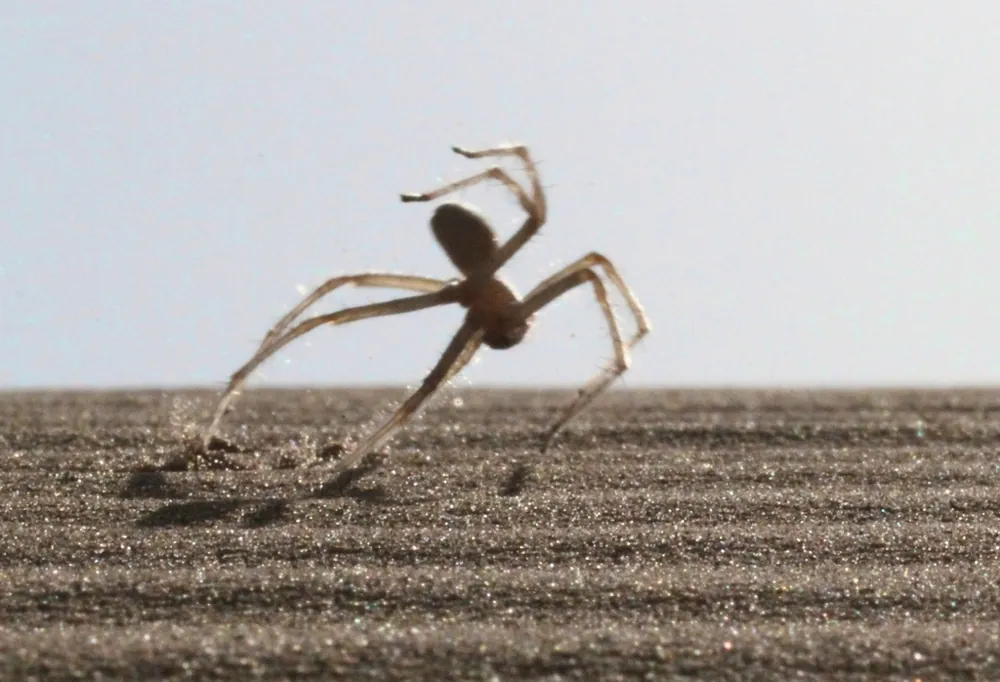
The Moroccan flic-flac spider is a medium-sized huntsman spider that lives in the sand dunes of the Erg Chebbi desert in Morocco. When threatened, it escapes by doing forward or backward flips, like a gymnast's cartwheel. It is the only spider known to move this way.1

 Indlela yokusiqaphela
- Medium-sized huntsman spider, with males 13.8 to 19.0 mm long and females 19 to 19.5 mm long1
- White body with black scopulae (hair pads) on the underside of its legs1
- Yellow colouring on the upper part of the abdomen and on the femora (the thigh segments of the legs)1
- Active at night, and escapes by flipping forward or backward1
Sidla ngokubhidaniswa no: It was first confused with the Tunisian spider Cebrennus villosus. Scientists later found small differences in the genitalia of the two species, and the flic-flac movement is distinctive to the Moroccan spider.1
Amandla etyhefu yokuluma nokuhlaba
Ityhefu iphuma ngamazinyo aso etyhefu okanye ngamazinyo aso xa siluma.
Siyingozi kangakanani ebantwini?
Ingozi ebantwini: KuthambileNjengokuhlatywa yinyosi okanye ngaphantsi. Phantse asinangozi ebantwini.Senza ntoni xa soyika?
When provoked or threatened, it flips forward or backward and can double its normal walking speed to escape.1
 Ukuba siyaluma
- Hlamba indawo elunyiweyo uze ubeke ipakethi yomkhenkce kuyo ngenxa yeentlungu. Fumana uncedo lwezonyango ukuba iintlungu zinamandla, ziyasasazeka okanye umntu uziva engaphilanga kakuhle.
Soloko utsalela inombolo kaxakeka kuqala (112, 000, 911). Esi sisikhokelo soncedo lokuqala ngokubanzi, asilocebiso lwezonyango. Iziseko zoncedo lokuqala
 Hlala ukhuselekile
- Ungaze uchukumise, ubambe okanye uqhule isilwanyana sasendle, nokuba sincinci, kwaye nokuba sibonakala silele okanye sifile.
- Sinike indawo. Ukuba udibana naso, hlala uzolile, buyela umva kancinci kwaye usiyeke sihambe ngendlela yaso.
- Ukuba siyakuluma: hlala uzolile, musa ukushukuma, tsalela inombolo kaxakeka (112, 000, 911) okanye uye esibhedlele ngokukhawuleza. Khumbula ukuba sasikhangeleka njani, ifoto iyanceda.
Asikuzingeli. Sisebenzisa ityhefu yaso ukubamba ukutya okanye ukuzikhusela, kwaye singakhetha ukuzimela. Okungakumbi malunga nokuhlala ukhuselekile
Sikhulu kangakanani?
Side kangakanani?
 mfutshane kunomnwe wakho omncinci
 singagqiba iimitha ezili-100 ngemizuzwana eyi-50 (owona mntu ukhawulezayo udinga i-9,6)
U-Moroccan flic-flac spider mkhulu kangakanani xa uthelekisa NAWE?
Zizibalo nje kwibhrawuza yakho. Akukho nto igcinwayo okanye ithunyelwa naphi na.
Sikhawuleza kangakanani?


Iinyaniso
It is the only spider known to use this unusual rolling, flic-flac style of movement.1
It actively flips itself off the ground, so it can move both uphill and downhill, even on a 40 percent incline. Another huntsman spider from the Namib Desert moves by passive cartwheeling instead.1
Its movement inspired a biomimetic robot called Tabbot, about 25 cm long. The name comes from the Berber word 'tabacha', meaning spider.1
It builds long vertical tubes of sand and silk, using its feelers (pedipalps) and bristles.1
Apho iinyaniso zivela khona
- Cebrennus rechenbergi (Wikipedia (CC BY-SA 4.0))
- Cebrennus rechenbergi (iNaturalist): amagama nokuhlelwa.
- Venom Wiki: inqanaba lengozi, ubungakanani obuqhelekileyo noqikelelo lwesantya zezethu. Bona indlela esizifumana ngayo: Indlela esilinganisa ngayo ingozi.
Inyaniso nganye kweli phepha inenombolo ebonisa umthombo wayo. Ukuba senze impazamo, uxolo, sithanda izilwanyana, asiyomagazini yenzululwazi. Sixelele ku-[email protected] kwaye siza kuyilungisa.
 Unomadudwane ulambile! I-Venom Wiki yiprojekthi yomntu omnye: isimahla, ayinazibhengezo kwaye ayinazilandeli. Isipho esincinci sinceda ukuyigcina ikwi-intanethi.Yondla unomadudwane
 Mediterranean black widow
 Six-eyed sand spider
 Brown widow
 Noble false widow
 Darwin's bark spider
 Wasp spider
 Black mamba
 Deathstalker
 Egyptian cobra
 Puff adder
 Boomslang
 Fat-tailed scorpion