
 IAfrika
 IAsiya
 IYurophu
 uMzantsi Melika
 IOstreliya neOceania
 IAntarctica
 uLwandlekazi lwePasifiki
 uLwandlekazi lweAtlantiki
 uLwandlekazi lwaseIndiya
 uLwandlekazi lweArctic
 uLwandle lweMeditera
 uLwandle oluBomvu
 uLwandle lweKharibhiya
 uLwandle lweCoral
 uLwandle lwaseMzantsi China
 uLwandle lwePhilippines
 uLwandle lweAndaman
 uLwandle lwaseMntla (North Sea)
 uLwandle lweTimor ne-Arafura
 iBhayi yaseBengal
 iGulf yaseCalifornia
Red harvester ant
 Ukuhlaba
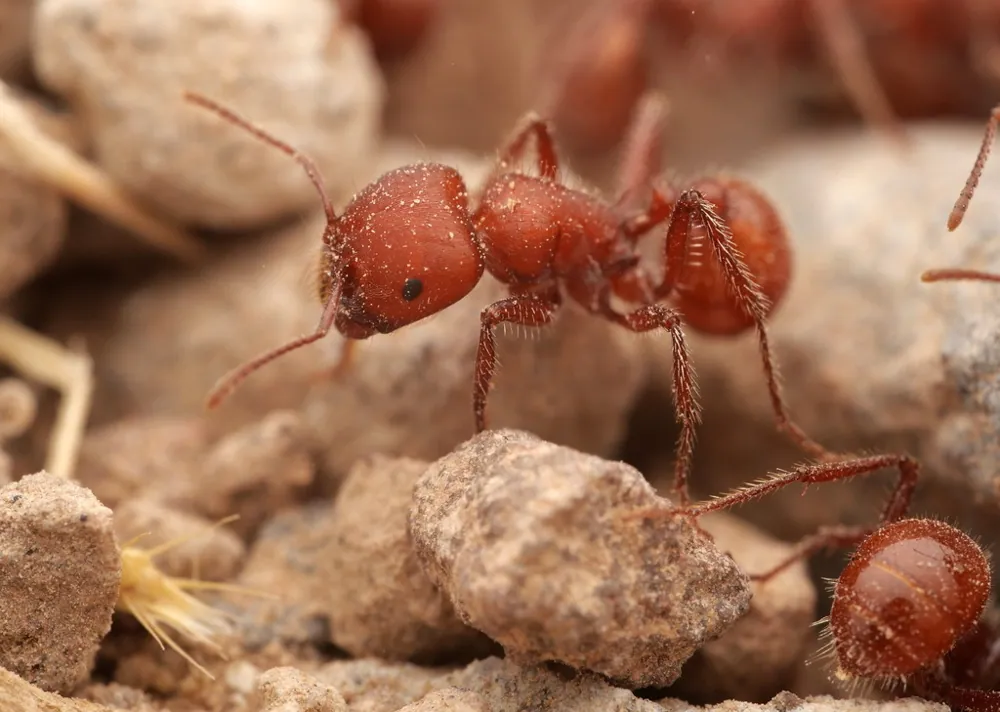
The red harvester ant is a large ant that lives in the dry, scrubby land of the southwestern United States. Its nests are dug underground, and the bare patches around them are easy to spot in open grassland. It matters because these ants gather seeds and help spread plants across the land.1


 Indlela yokusiqaphela
- Large ant, about 5 to 7 mm long1
- Mound is flat and broad, up to 100 mm high and 300 to 1,200 mm across1
- Bare ground with no plants, and small pebbles around the tunnel entrance1
- Three to eight trails lead out from the mound, like arms1
- Seed hulls are often scattered around the nest1
Sidla ngokubhidaniswa no: Red harvester ants are often mistaken for fire ants. They are not closely related to any fire ant species, native or introduced.1
Amandla etyhefu yokuluma nokuhlaba
Ityhefu iphuma ngenaliti yokuhlaba.
Siyingozi kangakanani ebantwini?
Ingozi ebantwini: KubuhlunguKunokuba buhlungu ngokwenene, kodwa phantse akusoze kube kubi kakhulu. Ukuba siyahlaba
- Hlamba uze upholise iindawo ezihlatyiweyo.
- Ukuba umntu uphefumla kanzima, ubuso okanye umqala wakhe uyadumba, okanye uziva ngathi uza kufa isiqaqa, yimeko kaxakeka ye-aleji: tsalela inombolo kaxakeka.
Soloko utsalela inombolo kaxakeka kuqala (112, 000, 911). Esi sisikhokelo soncedo lokuqala ngokubanzi, asilocebiso lwezonyango. Iziseko zoncedo lokuqala
 Hlala ukhuselekile
- Ungaze uchukumise, ubambe okanye uqhule isilwanyana sasendle, nokuba sincinci, kwaye nokuba sibonakala silele okanye sifile.
- Sinike indawo. Ukuba udibana naso, hlala uzolile, buyela umva kancinci kwaye usiyeke sihambe ngendlela yaso.
- Ukuba siyakuhlaba: hlala uzolile, musa ukushukuma, tsalela inombolo kaxakeka (112, 000, 911) okanye uye esibhedlele ngokukhawuleza. Khumbula ukuba sasikhangeleka njani, ifoto iyanceda.
Asikuzingeli. Sisebenzisa ityhefu yaso ukubamba ukutya okanye ukuzikhusela, kwaye singakhetha ukuzimela. Okungakumbi malunga nokuhlala ukhuselekile
Sikhulu kangakanani?
Side kangakanani?
 sincinci kangangokuba singahlala eluzipheni lwakho
U-Red harvester ant mkhulu kangakanani xa uthelekisa NAWE?
Zizibalo nje kwibhrawuza yakho. Akukho nto igcinwayo okanye ithunyelwa naphi na.
Sikhawuleza kangakanani?


Iinyaniso
Some queens have been known to live up to 30 years in the wild.1
Colonies have no central control. They adjust how much they forage using feedback from returning ants, which can take only seconds.1
Rival Novomessor cockerelli ants block nest entrances with sand and small rocks, delaying the red harvester ants' activity by one to three hours.1
Seeds are stored in the nest for months, and sometimes several years, so the colony has food during lean times.1
The plants benefit too. Ants carry seeds while foraging, which spreads the plants over a wider area.1
Ant foraging is guided by chemical signals, and foragers can travel up to 50 to 60 m from the nest.1
Umqhekezi weentsomi
Intsomi: Red harvester ants are fire ants.
Inyaniso: They are often mistaken for fire ants but are not closely related to any fire ant species.1
Kwiingcali zetyhefu
- Igama lenzululwazi
- Pogonomyrmex barbatus
- Iqela
- Iimbovane
- Usapho
- Formicidae2
- Ucwangco
- Hymenoptera
- Amazwekazi
- uMntla Melika
- Iintsana
- A single queen starts each new colony by sealing herself in a soil nest and laying eggs. The first workers emerge over six to eight weeks.1
- Ixesha lobomi
- malunga neminyaka eyi-301
- Ingozi ebantwini
- 2 / 5: Kubuhlungu3
Apho iinyaniso zivela khona
- Red harvester ant (Wikipedia (CC BY-SA 4.0))
- Pogonomyrmex barbatus (iNaturalist): amagama nokuhlelwa.
- Venom Wiki: inqanaba lengozi, ubungakanani obuqhelekileyo noqikelelo lwesantya zezethu. Bona indlela esizifumana ngayo: Indlela esilinganisa ngayo ingozi.
Inyaniso nganye kweli phepha inenombolo ebonisa umthombo wayo. Ukuba senze impazamo, uxolo, sithanda izilwanyana, asiyomagazini yenzululwazi. Sixelele ku-[email protected] kwaye siza kuyilungisa.
 Unomadudwane ulambile! I-Venom Wiki yiprojekthi yomntu omnye: isimahla, ayinazibhengezo kwaye ayinazilandeli. Isipho esincinci sinceda ukuyigcina ikwi-intanethi.Yondla unomadudwane
 Bullet ant
 Army ant
 Maricopa harvester ant
 Trap-jaw ant
 Acacia ant
 California harvester ant
 Terciopelo
 Eastern coral snake
 Eastern diamondback rattlesnake
 Eyelash viper
 Timber rattlesnake
 Western diamondback rattlesnake