
 IAfrika
 IAsiya
 IYurophu
 uMzantsi Melika
 IOstreliya neOceania
 IAntarctica
 uLwandlekazi lwePasifiki
 uLwandlekazi lweAtlantiki
 uLwandlekazi lwaseIndiya
 uLwandlekazi lweArctic
 uLwandle lweMeditera
 uLwandle oluBomvu
 uLwandle lweKharibhiya
 uLwandle lweCoral
 uLwandle lwaseMzantsi China
 uLwandle lwePhilippines
 uLwandle lweAndaman
 uLwandle lwaseMntla (North Sea)
 uLwandle lweTimor ne-Arafura
 iBhayi yaseBengal
 iGulf yaseCalifornia
Red imported fire ant
 Ukuhlaba
The red imported fire ant is an ant that comes from South America. It has spread to Australia, New Zealand, parts of Asia, the Caribbean, Europe and the United States, where it is seen as a serious pest. Its sting burns, and in some people it causes a dangerous allergic reaction.1



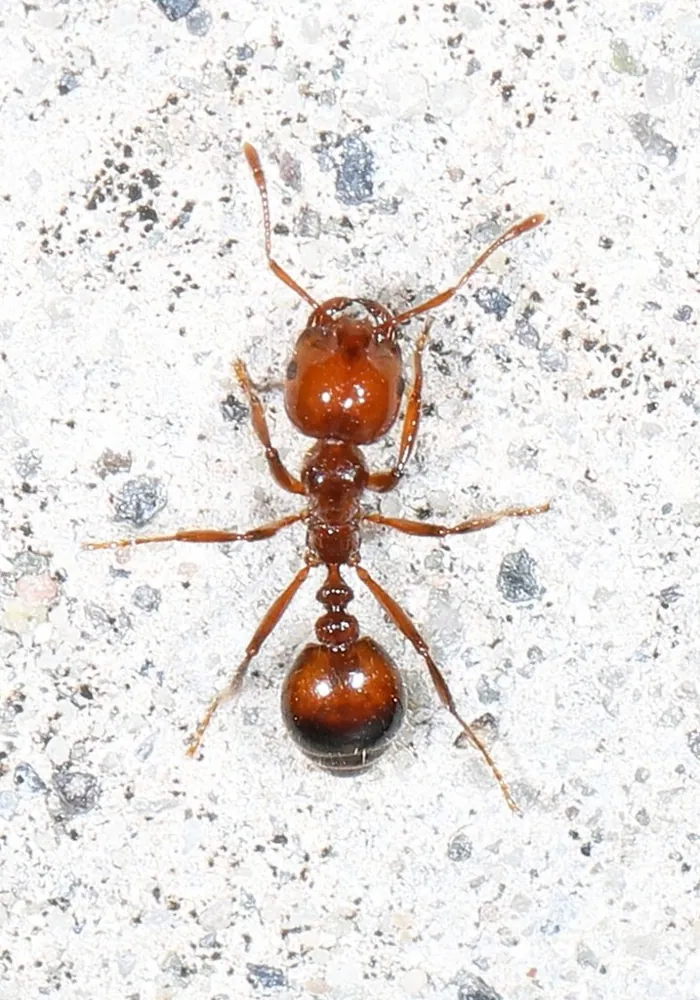
 Indlela yokusiqaphela
Amandla etyhefu yokuluma nokuhlaba
Ityhefu iphuma ngenaliti yokuhlaba.
Ityhefu yaso yokuluma okanye yokuhlaba yenza ntoni?
About 95% of its venom is made of water-insoluble piperidine alkaloids called solenopsins, and the rest is a mixture of toxic proteins that can be especially strong in sensitive people. Most stings cause intense burning and swelling, followed by sterile pustules (small fluid-filled bumps) that can last several days. In some people, a severe allergic reaction called anaphylaxis can occur, with dizziness, chest pain, nausea, severe sweating, low blood pressure, shortness of breath and slurred speech.1
Siyingozi kangakanani ebantwini?
Ingozi ebantwini: KubuhlunguKunokuba buhlungu ngokwenene, kodwa phantse akusoze kube kubi kakhulu.More than 14 million people are stung by these ants each year in the United States, and many are expected to develop allergies to the venom. Between 0.6% and 6.0% of people may suffer anaphylaxis, which can be fatal if left untreated. More than 80 deaths have been recorded from attacks by this ant.1
 Iindaba ezimnandi: oogqirha banamayeza (i-antivenom) okanye unyango lwale nto.1
Senza ntoni xa soyika?
It uses its venom and chemical signals (pheromones) to defend itself and its nest.1
 Ukuba siyahlaba
- People who only have pain and pustules need no medical attention. People who develop anaphylaxis need emergency treatment with adrenaline. Whole body extract immunotherapy is used to treat people who are allergic and is regarded as highly effective.1
- Hlamba uze upholise iindawo ezihlatyiweyo.
- Ukuba umntu uphefumla kanzima, ubuso okanye umqala wakhe uyadumba, okanye uziva ngathi uza kufa isiqaqa, yimeko kaxakeka ye-aleji: tsalela inombolo kaxakeka.
Soloko utsalela inombolo kaxakeka kuqala (112, 000, 911). Esi sisikhokelo soncedo lokuqala ngokubanzi, asilocebiso lwezonyango. Iziseko zoncedo lokuqala
 Hlala ukhuselekile
- Ungaze uchukumise, ubambe okanye uqhule isilwanyana sasendle, nokuba sincinci, kwaye nokuba sibonakala silele okanye sifile.
- Sinike indawo. Ukuba udibana naso, hlala uzolile, buyela umva kancinci kwaye usiyeke sihambe ngendlela yaso.
- Ukuba siyakuhlaba: hlala uzolile, musa ukushukuma, tsalela inombolo kaxakeka (112, 000, 911) okanye uye esibhedlele ngokukhawuleza. Khumbula ukuba sasikhangeleka njani, ifoto iyanceda.
Asikuzingeli. Sisebenzisa ityhefu yaso ukubamba ukutya okanye ukuzikhusela, kwaye singakhetha ukuzimela. Okungakumbi malunga nokuhlala ukhuselekile
Sikhulu kangakanani?
Side kangakanani?
 sincinci kangangokuba singahlala eluzipheni lwakho
U-Red imported fire ant mkhulu kangakanani xa uthelekisa NAWE?
Zizibalo nje kwibhrawuza yakho. Akukho nto igcinwayo okanye ithunyelwa naphi na.
Sikhawuleza kangakanani?


Iinyaniso
When water levels rise, these ants build rafts to float on.1
A single mature colony can contain between 500,000 and 2,000,000 individuals.1
Over 1,800 scientific papers have been published using its name, and it is one of the most studied insects on the planet, rivalling the western honey bee.1
Workers dispose of scraps and dead ants on refuse piles outside the nest, a behaviour called necrophoric behaviour.1
Workers can live for several months, while queens can live for years.1
Umqhekezi weentsomi
Intsomi: The name "fire ant" comes from fire or burning nests.
Inyaniso: The name comes from the burning sensation caused by its sting.1
Kwiingcali zetyhefu
- Igama lenzululwazi
- Solenopsis invicta
- Iqela
- Iimbovane
- Usapho
- Formicidae2
- Ucwangco
- Hymenoptera
- Amazwekazi
- uMzantsi Melika
- Iintsana
- Winged males and queens mate during a nuptial flight in the warm seasons. A colony can be started by a single queen or by a group of queens, which later compete for dominance once the first workers emerge.1
- Ingozi ebantwini
- 2 / 5: Kubuhlungu3
Apho iinyaniso zivela khona
- Red imported fire ant (Wikipedia (CC BY-SA 4.0))
- Solenopsis invicta (iNaturalist): amagama nokuhlelwa.
- Venom Wiki: inqanaba lengozi, ubungakanani obuqhelekileyo noqikelelo lwesantya zezethu. Bona indlela esizifumana ngayo: Indlela esilinganisa ngayo ingozi.
Inyaniso nganye kweli phepha inenombolo ebonisa umthombo wayo. Ukuba senze impazamo, uxolo, sithanda izilwanyana, asiyomagazini yenzululwazi. Sixelele ku-[email protected] kwaye siza kuyilungisa.
 Unomadudwane ulambile! I-Venom Wiki yiprojekthi yomntu omnye: isimahla, ayinazibhengezo kwaye ayinazilandeli. Isipho esincinci sinceda ukuyigcina ikwi-intanethi.Yondla unomadudwane
 Bullet ant
 Army ant
 Giant Amazonian ant
 Trap-jaw ant
 Black imported fire ant
 Dinosaur ant of Brazil
 Golden poison frog
 Terciopelo
 Brazilian wandering spider
 Eyelash viper
 Golden lancehead
 South American bushmaster