
 IAfrika
 IAsiya
 IYurophu
 uMzantsi Melika
 IOstreliya neOceania
 IAntarctica
 uLwandlekazi lwePasifiki
 uLwandlekazi lweAtlantiki
 uLwandlekazi lwaseIndiya
 uLwandlekazi lweArctic
 uLwandle lweMeditera
 uLwandle oluBomvu
 uLwandle lweKharibhiya
 uLwandle lweCoral
 uLwandle lwaseMzantsi China
 uLwandle lwePhilippines
 uLwandle lweAndaman
 uLwandle lwaseMntla (North Sea)
 uLwandle lweTimor ne-Arafura
 iBhayi yaseBengal
 iGulf yaseCalifornia
Thistledown velvet ant
 Ukuhlaba
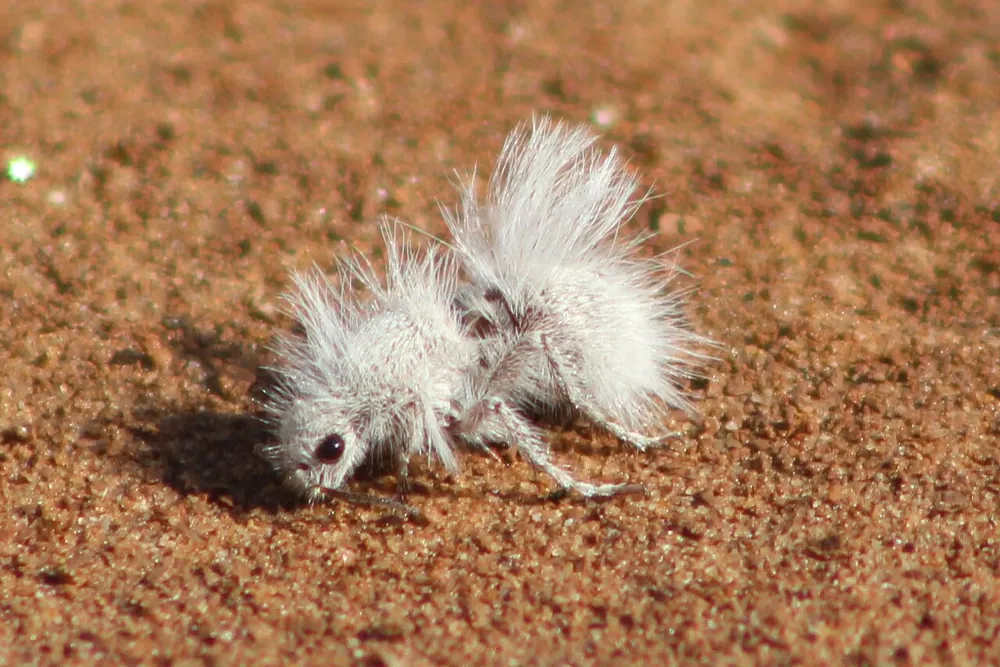
The thistledown velvet ant is a mid-sized member of the Dasymutilla genus, a group known as velvet ants. Its females have no wings and live in hot deserts in the south-western United States and northern Mexico. Females can deliver a very painful sting, so it is best to leave them alone.1
 Indlela yokusiqaphela
- Only the females are wingless.1
- It is mid-sized for a velvet ant, larger than some of the smallest species but smaller than some of the largest.1
- Females are camouflaged. They look like the fruit of the Creosotebush rather than having the bright warning colours seen in many other velvet ants.1
Sidla ngokubhidaniswa no: Unlike the orange Dasymutilla species found in the same habitat, this species does not use bright orange or warning colours. Its camouflage helps it blend into the desert plants around it.1
Amandla etyhefu yokuluma nokuhlaba
Ityhefu iphuma ngenaliti yokuhlaba.
Siyingozi kangakanani ebantwini?
Ingozi ebantwini: KubuhlunguKunokuba buhlungu ngokwenene, kodwa phantse akusoze kube kubi kakhulu.Females can deliver a very painful sting when threatened. Its sting is more powerful than those of most smaller velvet ants, but weaker than those of most larger ones.1
Senza ntoni xa soyika?
Females use their sting to defend themselves when threatened.1
 Ukuba siyahlaba
- Krwela inaliti yenyosi uyikhuphe uze upholise indawo.
- Ukuba umntu uphefumla kanzima, ubuso okanye umqala wakhe uyadumba, okanye uziva ngathi uza kufa isiqaqa, yimeko kaxakeka ye-aleji: tsalela inombolo kaxakeka kwaye usebenzise ipeni yakhe ye-adrenaline ukuba unayo.
Soloko utsalela inombolo kaxakeka kuqala (112, 000, 911). Esi sisikhokelo soncedo lokuqala ngokubanzi, asilocebiso lwezonyango. Iziseko zoncedo lokuqala
 Hlala ukhuselekile
- Ungaze uchukumise, ubambe okanye uqhule isilwanyana sasendle, nokuba sincinci, kwaye nokuba sibonakala silele okanye sifile.
- Sinike indawo. Ukuba udibana naso, hlala uzolile, buyela umva kancinci kwaye usiyeke sihambe ngendlela yaso.
- Ukuba siyakuhlaba: hlala uzolile, musa ukushukuma, tsalela inombolo kaxakeka (112, 000, 911) okanye uye esibhedlele ngokukhawuleza. Khumbula ukuba sasikhangeleka njani, ifoto iyanceda.
Asikuzingeli. Sisebenzisa ityhefu yaso ukubamba ukutya okanye ukuzikhusela, kwaye singakhetha ukuzimela. Okungakumbi malunga nokuhlala ukhuselekile
Sikhulu kangakanani?
Side kangakanani?
 mfutshane kunomnwe wakho omncinci
U-Thistledown velvet ant mkhulu kangakanani xa uthelekisa NAWE?
Zizibalo nje kwibhrawuza yakho. Akukho nto igcinwayo okanye ithunyelwa naphi na.
Sikhawuleza kangakanani?


Iinyaniso
Its females are camouflaged to look like Creosotebush fruit, instead of using the bright warning colours common to other velvet ants.1
Its colouring seems to be mainly an adaptation to hot desert conditions, not a defence against predators.1
Its internal and external body temperatures are lower than those of orange Dasymutilla species living in the same habitat.1
Its sting is stronger than those of most smaller velvet ants, but weaker than those of most larger ones.1
Like other velvet ants, only the wingless females have the sting used for defence.1
Apho iinyaniso zivela khona
- Dasymutilla gloriosa (Wikipedia (CC BY-SA 4.0))
- Dasymutilla gloriosa (iNaturalist): amagama nokuhlelwa.
- Venom Wiki: inqanaba lengozi, ubungakanani obuqhelekileyo noqikelelo lwesantya zezethu. Bona indlela esizifumana ngayo: Indlela esilinganisa ngayo ingozi.
Inyaniso nganye kweli phepha inenombolo ebonisa umthombo wayo. Ukuba senze impazamo, uxolo, sithanda izilwanyana, asiyomagazini yenzululwazi. Sixelele ku-[email protected] kwaye siza kuyilungisa.
 Unomadudwane ulambile! I-Venom Wiki yiprojekthi yomntu omnye: isimahla, ayinazibhengezo kwaye ayinazilandeli. Isipho esincinci sinceda ukuyigcina ikwi-intanethi.Yondla unomadudwane
Okungakumbi kwiqela elinye: Iinyosi, oonomeva nee-hornet
 Tarantula hawkIinyosi, oonomeva nee-hornetKubuhlungu nje
 Executioner waspIinyosi, oonomeva nee-hornetKufuna ugqirha
 Warrior waspIinyosi, oonomeva nee-hornetKufuna ugqirha
 Bald-faced hornetIinyosi, oonomeva nee-hornetKubuhlungu nje
 Cow killer velvet antIinyosi, oonomeva nee-hornetKubuhlungu nje
 Eastern cicada killerIinyosi, oonomeva nee-hornetAsinangozi
 Terciopelo
 Eastern coral snake
 Eastern diamondback rattlesnake
 Eyelash viper
 Timber rattlesnake
 Western diamondback rattlesnake