
 Áfíríkà
 Éṣíà
Éṣíà Yúróòpù
 Gúúsù Amẹ́ríkà
 Ọsirélíà àti Òṣéáníà
 Antáktíkà
 Òkun Pàsífíìkì
 Òkun Àtìláńtíìkì
 Òkun Íńdíà
 Òkun Áktíkì
 Òkun Mẹditaréníà
 Òkun Pupa
 Òkun Káríbíànù
 Òkun Coral
 Òkun Gúúsù Ṣáínà
 Òkun Fílípínì
 Òkun Andaman
 Òkun Àríwá
 Òkun Tímọ̀ àti Òkun Àráfúrà
 Ìyawọlẹ̀ Òkun Bẹ̀ngál
 Ìyawọlẹ̀ Òkun Kalifọ́níà
Amazonian black scorpion
 Ìtani
ÌtaniThe Amazonian black scorpion is one of the largest scorpions in its genus, Tityus. It lives in the rainforests of northern South America and hunts at night. Its sting can be dangerous, and it has caused deaths and serious illness in people.1

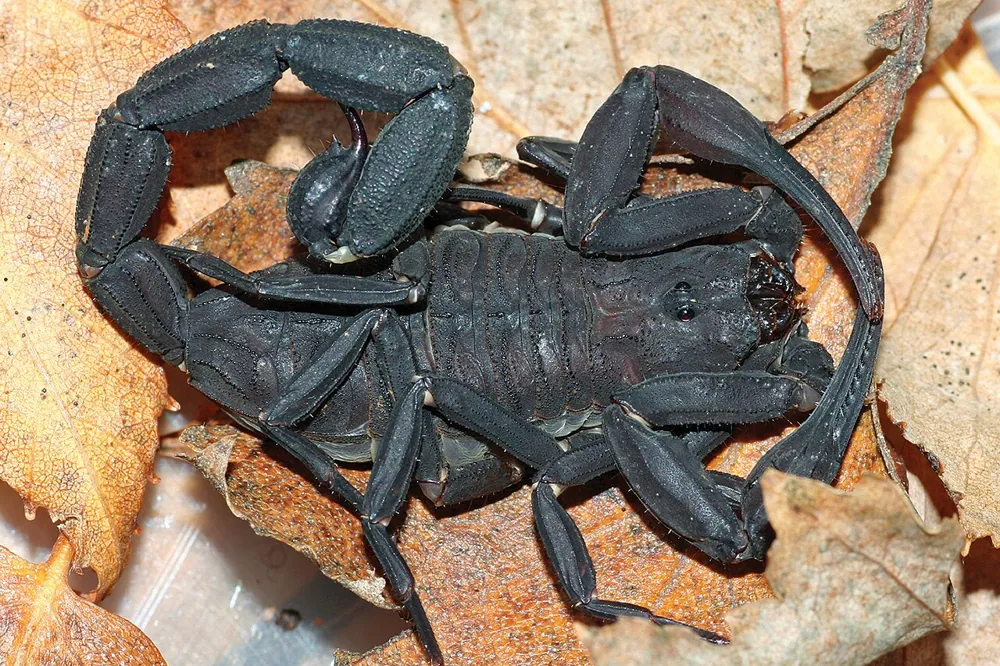
 Bí o ṣe lè dá a mọ̀
Agbára oró
Oró ń jáde láti inú ohun ìtani.
Kí ni oró rẹ̀ máa ń ṣe?
Its venom contains excitatory neurotoxins, which overstimulate the nerves, and cardiotoxins, which damage the heart. Reported symptoms in people include severe local pain, swelling, heavy sweating, vomiting, numbness that spreads, muscle twitching, convulsions, drowsiness, hallucinations, fast breathing, a fast heartbeat and heavy drooling. Symptoms can come on quickly and become severe.1
Báwo ló ṣe léwu tó fún ènìyàn?
Ewu fún ènìyàn: Ó léwu gan-anÓ lè pa ènìyàn tí kò bá rí ìtọ́jú.In Guyana, a 16-year-old boy died 16 hours after being stung. Over a 12-month period in Guyana, three people died: two children and a 30-year-old man. In Santarém, Pará, Brazil, a presumed sting by this species caused acute cerebellar dysfunction in 58 patients, with symptoms lasting up to two days. Two of these patients had intense rhabdomyolysis, a breakdown of muscle tissue, and acute kidney injury.1
 Bí ó bá ta ni
- Fi àpò yìnyín tu ibi tí ó ti ta ni lára, kí o sì jẹ́ kí ẹni náà wà láìmira. Wá ìrànlọ́wọ́ ìṣègùn kíákíá, pàápàá fún àwọn ọmọdé: àwọn àkekèé kan lè pa ọmọdé.
Máa kọ́kọ́ pe nọ́ńbà pàjáwìrì rẹ nígbà gbogbo (112, 000, 911). Èyí jẹ́ ìtọ́sọ́nà ìtọ́jú àkọ́kọ́ gbogbogbò, kì í ṣe ìmọ̀ràn ìṣègùn. Ìpìlẹ̀ ìtọ́jú àkọ́kọ́
 Wà láìléwu
- Má ṣe fọwọ́ kan, mú tàbí yọ ẹranko igbó lẹ́nu láéláé, kódà bí ó bá kéré, kódà bí ó bá dà bí ẹni pé ó ń sùn tàbí ó ti kú.
- Fún un ní àyè. Bí o bá pàdé ọ̀kan, farabalẹ̀, sẹ́yìn díẹ̀díẹ̀ kí o sì jẹ́ kí ó máa bá ọ̀nà rẹ̀ lọ.
- Bí ọ̀kan bá ta ọ́: farabalẹ̀, má ṣe mira, pe nọ́ńbà pàjáwìrì rẹ (112, 000, 911) tàbí lọ sí ilé ìwòsàn kíákíá. Rántí bí ó ṣe rí, fọ́tò máa ń ṣèrànwọ́.
Kò wá ọ kiri láti ṣe ọ́ léṣe. Ó ń lo oró rẹ̀ láti mú oúnjẹ tàbí láti dáàbò bo ara rẹ̀, ó sì fẹ́ràn láti farapamọ́ jù. Sí i nípa wíwà láìléwu
Báwo ló ṣe tóbi tó?
Báwo ló ṣe gùn tó?
 ó gùn tó bíríkì ìṣeré 3 tí a tò sí ìlà kan
 lè sáré mítà 100 ní ìṣẹ́jú-àáyá 200 (ènìyàn tó yára jùlọ nílò 9.6)
Báwo ni Amazonian black scorpion ṣe tóbi tó tí a bá fi wé ÌWỌ?
Ìṣirò nìkan nínú bráwúsà rẹ. A kò fi ohunkóhun pamọ́, a kò sì fi ránṣẹ́ sí ibikíbi.
Báwo ló ṣe yára tó?


Òtítọ́
Deaths from this scorpion have been reported in Guyana, including a 16-year-old boy who died 16 hours after being stung.1
Its venom affects both the nerves and the heart.1
In Santarém, Brazil, a presumed sting by this species affected 58 patients, with symptoms that could last for two days.1
It hides during the day under stones, logs and loose bark, and comes out at night to hunt.1
It is one of the largest species in the genus Tityus.1
Ibi tí àwọn òtítọ́ ti wá
- Tityus obscurus (Wikipedia (CC BY-SA 4.0))
- Tityus obscurus (iNaturalist): orúkọ àti ìpínsísọ̀rí.
- Venom Wiki: ìpele ewu, ìtóbi déédé àti àfojúbù ìyára jẹ́ tiwa. Wo bí a ṣe ń ṣírò wọn: Bí a ṣe ń díwọ̀n ewu.
Gbogbo òtítọ́ ojú-ìwé yìí ní nọ́ńbà tó tọ́ka sí orísun rẹ̀. Bí a bá ṣe àṣìṣe, má bínú, olólùfẹ́ ẹranko ni wá, kì í ṣe ìwé ìròyìn sáyẹ́ǹsì. Sọ fún wa ní [email protected] a ó sì tún un ṣe.
 Ebi ń pa àkekèé! Iṣẹ́ akanṣe ẹnì kan ṣoṣo ni Venom Wiki: ọ̀fẹ́ ni, kò sí ìpolówó, kò sì sí olùtọpinpin. Ẹ̀bùn kékeré ń ràn án lọ́wọ́ láti wà lórí íńtánẹ́ẹ̀tì.Bọ́ àkekèé
 Brazilian yellow scorpion
 Caracas scorpion
 Panamanian black scorpion
 Zulia scorpion
 Amazon forest scorpion
 Argentine striped scorpion
 Golden poison frog
 Terciopelo
 Brazilian wandering spider
 Eyelash viper
 Golden lancehead
 South American bushmaster
_Figure_12.jpg)