
 Áfíríkà
 Éṣíà
Éṣíà Yúróòpù
 Gúúsù Amẹ́ríkà
 Ọsirélíà àti Òṣéáníà
 Antáktíkà
 Òkun Pàsífíìkì
 Òkun Àtìláńtíìkì
 Òkun Íńdíà
 Òkun Áktíkì
 Òkun Mẹditaréníà
 Òkun Pupa
 Òkun Káríbíànù
 Òkun Coral
 Òkun Gúúsù Ṣáínà
 Òkun Fílípínì
 Òkun Andaman
 Òkun Àríwá
 Òkun Tímọ̀ àti Òkun Àráfúrà
 Ìyawọlẹ̀ Òkun Bẹ̀ngál
 Ìyawọlẹ̀ Òkun Kalifọ́níà
Golden poison frog
 Májèlé nínú awọ rẹ̀
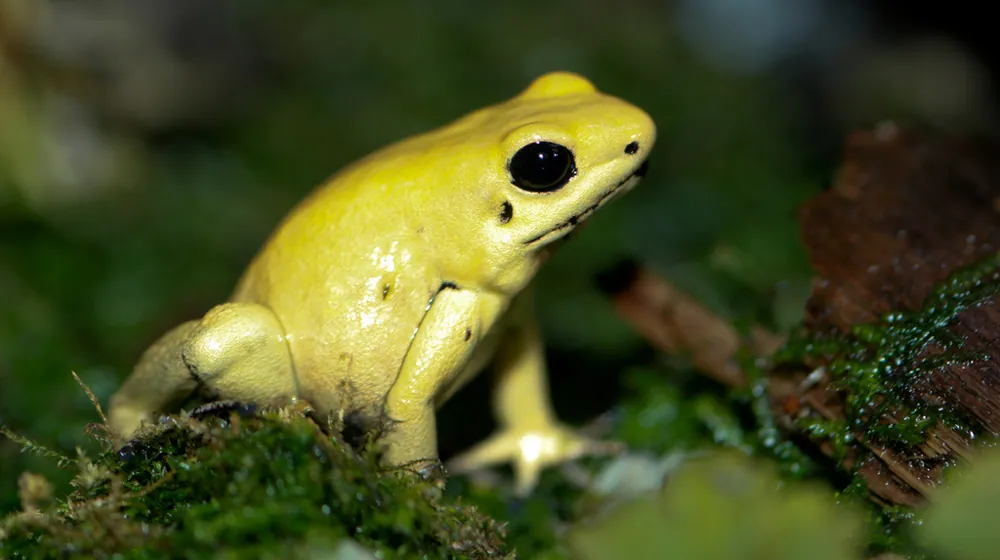
The golden poison frog is a small, bright frog from the rainforests of Colombia. It is considered the most poisonous animal species on Earth, even though it is small. Its bright colours warn predators to stay away.1


 Bí o ṣe lè dá a mọ̀
- Adults are brightly coloured, in yellow, mint green, orange or golden yellow forms.1
- Juveniles are mostly black with two golden-yellow stripes along their backs.1
- Juveniles become fully coloured at about 18 weeks of age.1
- It is the largest species in the poison dart frog family.1
- Females are typically larger than males.1
Agbára májèlé
Awọ rẹ̀ ní májèlé. Ó léwu láti fọwọ́ kàn án, lá a tàbí jẹ ẹ́.
Kí ni májèlé rẹ̀ máa ń ṣe?
The frog's skin glands produce batrachotoxin, a very strong alkaloid poison. It affects the sodium channels of nerve cells, leaving muscles stuck in a contracted state. This can lead to paralysis, heart fibrillation, heart failure and death.1
Báwo ló ṣe léwu tó fún ènìyàn?
Ewu fún ènìyàn: ApaniỌ̀kan lára àwọn ẹranko tó léwu jùlọ ní ayé.An average wild frog is estimated to carry about one milligram of poison, enough to kill 10 to 20 humans. A predator usually has to try to eat the frog to be poisoned, but contact with the skin is also dangerous. Captive-bred frogs are not toxic.1
Kí ni ó máa ń ṣe nígbà tí ẹ̀rù bá bà á?
Its bright colours warn predators of its toxicity, a pattern called aposematic coloration.1
 Bí ẹnìkan bá fọwọ́ kàn án tàbí jẹ ẹ́
- Bí ẹnìkan bá fọwọ́ kan ọ̀kan: fọ ọwọ́ dáadáa, má sì fọwọ́ kan ojú tàbí ẹnu. Bí ọmọdé tàbí ẹran ọ̀sìn bá lá ọ̀kan tàbí jẹ ẹ́: pe ibùdó ìmọ̀ràn májèlé tàbí nọ́ńbà pàjáwìrì.
Máa kọ́kọ́ pe nọ́ńbà pàjáwìrì rẹ nígbà gbogbo (112, 000, 911). Èyí jẹ́ ìtọ́sọ́nà ìtọ́jú àkọ́kọ́ gbogbogbò, kì í ṣe ìmọ̀ràn ìṣègùn. Ìpìlẹ̀ ìtọ́jú àkọ́kọ́
 Wà láìléwu
- Má ṣe fọwọ́ kan, mú tàbí yọ ẹranko igbó lẹ́nu láéláé, kódà bí ó bá kéré, kódà bí ó bá dà bí ẹni pé ó ń sùn tàbí ó ti kú.
- Fún un ní àyè. Bí o bá pàdé ọ̀kan, farabalẹ̀, sẹ́yìn díẹ̀díẹ̀ kí o sì jẹ́ kí ó máa bá ọ̀nà rẹ̀ lọ.
- Bí o bá fọwọ́ kàn án tàbí jẹ ẹ́: má ṣe fọwọ́ pa ojú tàbí ẹnu rẹ, fọ ọwọ́ rẹ kí o sì wá ìrànlọ́wọ́ ìṣègùn.
Kò wá ọ kiri láti ṣe ọ́ léṣe. Májèlé rẹ̀ wà níbẹ̀ kìkì kí ohunkóhun má baà jẹ ẹ́. Sí i nípa wíwà láìléwu
Báwo ló ṣe tóbi tó?
Báwo ló ṣe gùn tó?
Báwo ló ṣe wúwo tó?

 ó gùn tó bíríkì ìṣeré 2 tí a tò sí ìlà kan
 lè sáré mítà 100 ní ìṣẹ́jú-àáyá 90 (ènìyàn tó yára jùlọ nílò 9.6)
Báwo ni Golden poison frog ṣe tóbi tó tí a bá fi wé ÌWỌ?
Ìṣirò nìkan nínú bráwúsà rẹ. A kò fi ohunkóhun pamọ́, a kò sì fi ránṣẹ́ sí ibikíbi.
Báwo ló ṣe yára tó?


Òtítọ́
Local indigenous peoples, such as the Emberá and Cofán, use the frog's poison on the tips of hunting darts and arrows. The poison stays deadly for two years or longer.1
The frog gets its toxicity from its diet. Frogs fed commercial feeder insects in captivity lose their toxicity over time.1
Scientists think a small beetle from the family Melyridae may be a key prey item that supplies the poison.1
The Leimadophis epinephelus snake has shown resistance to several frog toxins and has been seen eating juvenile frogs without harm.1
The frog's colour varies. The yellow form gives it its common name, but the species also has mint green, orange and orange blackfoot forms.1
Olùfọ́ àròsọ
Àròsọ: All golden poison frogs are always poisonous.
Òtítọ́: The frog only becomes toxic when it eats the right prey in the wild. Captive-bred frogs raised without their natural food are non-toxic.1
Fún àwọn amòye oró
- Orúkọ sáyẹ́ǹsì
- Phyllobates terribilis
- Ẹgbẹ́
- Àkèré onímájèlé, ọ̀pọ̀lọ́ àti newt
- Ìdílé
- Dendrobatidae2
- Ètò
- Anura
- Àwọn kọ́ńtínẹ́ńtì
- Gúúsù Amẹ́ríkà
- Àwọn ọmọ
- The eggs are laid on the ground, hidden under leaf litter. Tadpoles stick to the mucus on the parent's back, and the parent carries them to water pools in the canopy.1
- Bí ó ṣe ń ṣe nínú igbó
- Endangered1
- Ewu fún ènìyàn
- 5 / 5: Apani3
Ibi tí àwọn òtítọ́ ti wá
- Golden poison frog (Wikipedia (CC BY-SA 4.0))
- Phyllobates terribilis (iNaturalist): orúkọ àti ìpínsísọ̀rí.
- Venom Wiki: ìpele ewu, ìtóbi déédé àti àfojúbù ìyára jẹ́ tiwa. Wo bí a ṣe ń ṣírò wọn: Bí a ṣe ń díwọ̀n ewu.
Gbogbo òtítọ́ ojú-ìwé yìí ní nọ́ńbà tó tọ́ka sí orísun rẹ̀. Bí a bá ṣe àṣìṣe, má bínú, olólùfẹ́ ẹranko ni wá, kì í ṣe ìwé ìròyìn sáyẹ́ǹsì. Sọ fún wa ní [email protected] a ó sì tún un ṣe.
 Ebi ń pa àkekèé! Iṣẹ́ akanṣe ẹnì kan ṣoṣo ni Venom Wiki: ọ̀fẹ́ ni, kò sí ìpolówó, kò sì sí olùtọpinpin. Ẹ̀bùn kékeré ń ràn án lọ́wọ́ láti wà lórí íńtánẹ́ẹ̀tì.Bọ́ àkekèé
Sí i láti inú ẹgbẹ́ kan náà: Àkèré onímájèlé, ọ̀pọ̀lọ́ àti newt
 Cane toadÀkèré onímájèlé, ọ̀pọ̀lọ́ àti newtÓ nílò dókítàMá ṣe fọwọ́ kàn án
 Dyeing poison dart frogÀkèré onímájèlé, ọ̀pọ̀lọ́ àti newtÓ kàn ń dunniMá ṣe fọwọ́ kàn án
 Black-legged poison frogÀkèré onímájèlé, ọ̀pọ̀lọ́ àti newtÓ lè paniMá ṣe fọwọ́ kàn án
 Bruno's casque-headed frogÀkèré onímájèlé, ọ̀pọ̀lọ́ àti newtÓ nílò dókítàMá ṣe fọwọ́ kàn án
 Harlequin poison frogÀkèré onímájèlé, ọ̀pọ̀lọ́ àti newtÓ nílò dókítàMá ṣe fọwọ́ kàn án
 Giant leaf frogÀkèré onímájèlé, ọ̀pọ̀lọ́ àti newtÓ kàn ń dunniMá ṣe fọwọ́ kàn án
 Terciopelo
 Brazilian wandering spider
 Eyelash viper
 Golden lancehead
 South American bushmaster
 Peruvian giant centipede