
 Áfíríkà
 Éṣíà
Éṣíà Yúróòpù
 Gúúsù Amẹ́ríkà
 Ọsirélíà àti Òṣéáníà
 Antáktíkà
 Òkun Pàsífíìkì
 Òkun Àtìláńtíìkì
 Òkun Íńdíà
 Òkun Áktíkì
 Òkun Mẹditaréníà
 Òkun Pupa
 Òkun Káríbíànù
 Òkun Coral
 Òkun Gúúsù Ṣáínà
 Òkun Fílípínì
 Òkun Andaman
 Òkun Àríwá
 Òkun Tímọ̀ àti Òkun Àráfúrà
 Ìyawọlẹ̀ Òkun Bẹ̀ngál
 Ìyawọlẹ̀ Òkun Kalifọ́níà
Baron's green racer
 Ìbùjẹ
ÌbùjẹBaron's green racer is a long, green tree snake that lives in South America. It has rear fangs at the back of its mouth and its venom can harm people, so it should be treated with caution. It is one of the longest snakes in its genus, Philodryas.1



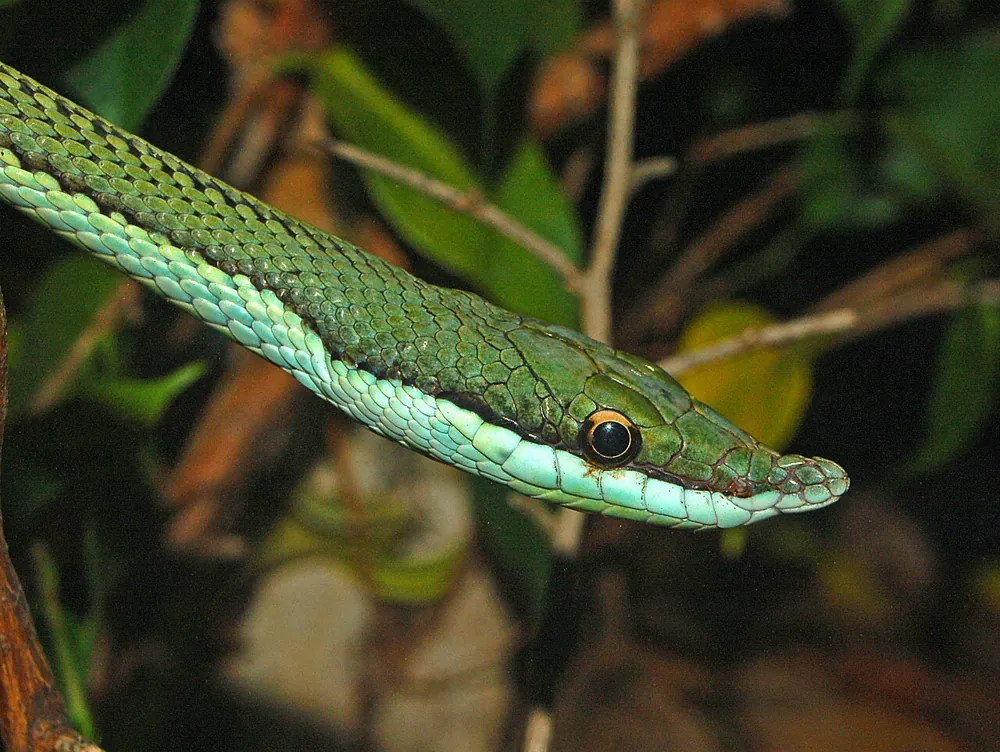
 Bí o ṣe lè dá a mọ̀
- Usually green, but some individuals are blue or brown.1
- The body is either plain or has black stripes running along the back and sides, on the front third of the body.1
- The underside under the black side lines is white or yellowish-white, sometimes with green or blue shades.1
- The head is small and elongated, with a small, flexible nasal point that is more developed in males.1
- Adults can reach 150 to 180 cm, and the tail makes up about 30% of the total length.1
Agbára oró
Oró ń jáde láti inú eyín oró tàbí eyín rẹ̀ nígbà tí ó bá bùjẹ.
Kí ni oró rẹ̀ máa ń ṣe?
It is rear-fanged, which means its fangs sit at the back of the mouth. Its venom has proteolytic activity, meaning it breaks down proteins, and it can stop blood platelets from clumping together, which affects clotting. Local effects include bleeding, muscle death, swelling and inflammation of the tissue.1
Báwo ló ṣe léwu tó fún ènìyàn?
Ewu fún ènìyàn: Ó ń dunniÓ lè dunni gan-an, ṣùgbọ́n kì í fẹ́rẹ̀ẹ́ le rárá.It is considered dangerous to humans and should be treated with caution. No bite numbers or deaths are recorded.1
Kí ni ó máa ń ṣe nígbà tí ẹ̀rù bá bà á?
When frightened, it releases a foul-smelling substance from its cloaca, which is the common opening for its digestive, urinary and reproductive systems. It is generally non-aggressive.1
 Bí ó bá bùjẹ
- Fọ ibi ìbùjẹ náà, jẹ́ kí ẹni náà farabalẹ̀, kí o sì wá ìrànlọ́wọ́ ìṣègùn. Àwọn irú kan (bí boomslang) lè pani ní wákàtí púpọ̀ lẹ́yìn náà.
Máa kọ́kọ́ pe nọ́ńbà pàjáwìrì rẹ nígbà gbogbo (112, 000, 911). Èyí jẹ́ ìtọ́sọ́nà ìtọ́jú àkọ́kọ́ gbogbogbò, kì í ṣe ìmọ̀ràn ìṣègùn. Ìpìlẹ̀ ìtọ́jú àkọ́kọ́
 Wà láìléwu
- Má ṣe fọwọ́ kan, mú tàbí yọ ẹranko igbó lẹ́nu láéláé, kódà bí ó bá kéré, kódà bí ó bá dà bí ẹni pé ó ń sùn tàbí ó ti kú.
- Fún un ní àyè. Bí o bá pàdé ọ̀kan, farabalẹ̀, sẹ́yìn díẹ̀díẹ̀ kí o sì jẹ́ kí ó máa bá ọ̀nà rẹ̀ lọ.
- Bí ọ̀kan bá bù ọ́ jẹ: farabalẹ̀, má ṣe mira, pe nọ́ńbà pàjáwìrì rẹ (112, 000, 911) tàbí lọ sí ilé ìwòsàn kíákíá. Rántí bí ó ṣe rí, fọ́tò máa ń ṣèrànwọ́.
Kò wá ọ kiri láti ṣe ọ́ léṣe. Ó ń lo oró rẹ̀ láti mú oúnjẹ tàbí láti dáàbò bo ara rẹ̀, ó sì fẹ́ràn láti farapamọ́ jù. Sí i nípa wíwà láìléwu
Báwo ló ṣe tóbi tó?
Báwo ló ṣe gùn tó?
 ó gùn tó ológbò ilé 4 láti imú dé ìrù
 ó gùn tó ọ̀gẹ̀dẹ̀ 10 tí a tò tẹ̀léra
 lè sáré mítà 100 ní ìṣẹ́jú-àáyá 60 (ènìyàn tó yára jùlọ nílò 9.6)
Báwo ni Baron's green racer ṣe tóbi tó tí a bá fi wé ÌWỌ?
Ìṣirò nìkan nínú bráwúsà rẹ. A kò fi ohunkóhun pamọ́, a kò sì fi ránṣẹ́ sí ibikíbi.
Báwo ló ṣe yára tó?


Òtítọ́
When frightened, it gives off a foul-smelling liquid from its cloaca.1
Larger members of its species have been reported eating immature individuals.1
Its colour varies, with green being most common but blue and brown individuals also found.1
It is the longest known species in the genus Philodryas.1
Its tail makes up about 30% of its total body length.1
Ibi tí àwọn òtítọ́ ti wá
- Philodryas baroni (Wikipedia (CC BY-SA 4.0))
- Philodryas baroni (iNaturalist): orúkọ àti ìpínsísọ̀rí.
- Venom Wiki: ìpele ewu, ìtóbi déédé àti àfojúbù ìyára jẹ́ tiwa. Wo bí a ṣe ń ṣírò wọn: Bí a ṣe ń díwọ̀n ewu.
Gbogbo òtítọ́ ojú-ìwé yìí ní nọ́ńbà tó tọ́ka sí orísun rẹ̀. Bí a bá ṣe àṣìṣe, má bínú, olólùfẹ́ ẹranko ni wá, kì í ṣe ìwé ìròyìn sáyẹ́ǹsì. Sọ fún wa ní [email protected] a ó sì tún un ṣe.
 Ebi ń pa àkekèé! Iṣẹ́ akanṣe ẹnì kan ṣoṣo ni Venom Wiki: ọ̀fẹ́ ni, kò sí ìpolówó, kò sì sí olùtọpinpin. Ẹ̀bùn kékeré ń ràn án lọ́wọ́ láti wà lórí íńtánẹ́ẹ̀tì.Bọ́ àkekèé
 False water cobra
 Brown vine snake
 Green vine snake
 Lichtenstein's green racer
 Peruvian slender snake
 Chilean green racer
 Golden poison frog
 Terciopelo
 Brazilian wandering spider
 Eyelash viper
 Golden lancehead
 South American bushmaster