
 Áfíríkà
 Éṣíà
Éṣíà Yúróòpù
 Gúúsù Amẹ́ríkà
 Ọsirélíà àti Òṣéáníà
 Antáktíkà
 Òkun Pàsífíìkì
 Òkun Àtìláńtíìkì
 Òkun Íńdíà
 Òkun Áktíkì
 Òkun Mẹditaréníà
 Òkun Pupa
 Òkun Káríbíànù
 Òkun Coral
 Òkun Gúúsù Ṣáínà
 Òkun Fílípínì
 Òkun Andaman
 Òkun Àríwá
 Òkun Tímọ̀ àti Òkun Àráfúrà
 Ìyawọlẹ̀ Òkun Bẹ̀ngál
 Ìyawọlẹ̀ Òkun Kalifọ́níà
Black-footed yellow sac spider
 Ìbùjẹ
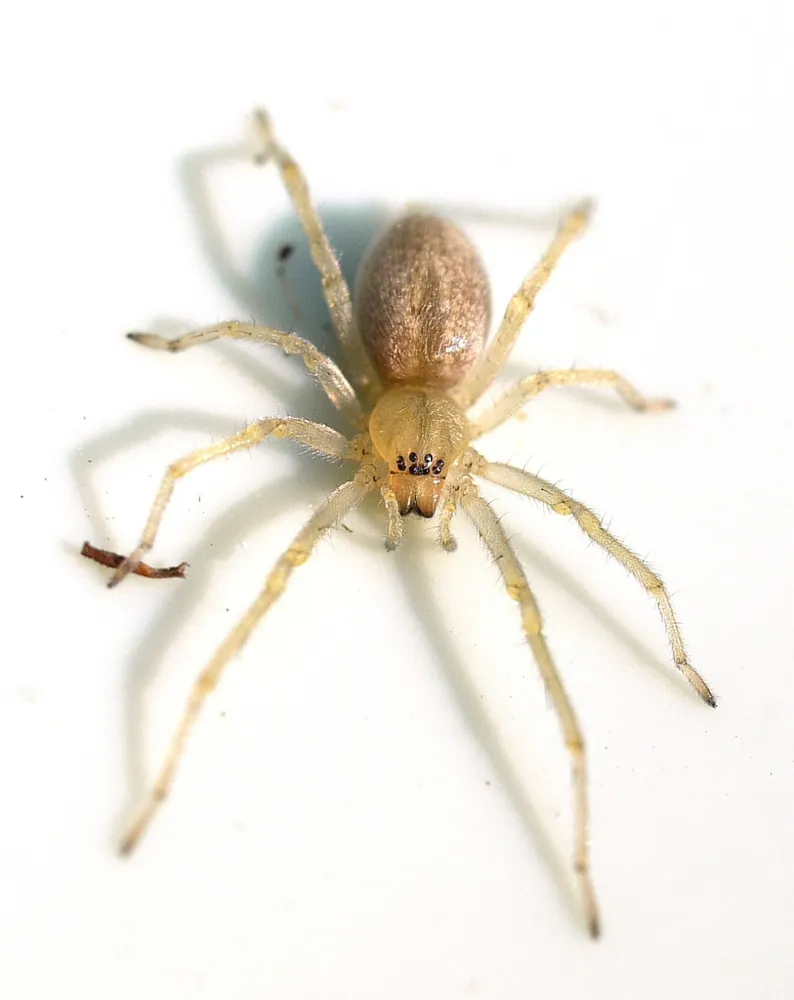
ÌbùjẹThe black-footed yellow sac spider is a small, pale yellow spider native to the Americas. It hunts at night and does not spin webs to catch food. It sometimes lives in homes, but its bites rarely cause more than local symptoms.1

 Bí o ṣe lè dá a mọ̀
- Pale yellow-beige body colour.1
- Dark brown markings on the palps, jaws (chelicerae) and the ends of the feet (tarsi).1
- Often an orange-brown stripe running down the top-centre of the abdomen.1
- Eight similar-sized eyes in two parallel horizontal rows.1
- Females measure 5 to 9 mm in body length and males 4 to 8 mm. The leg span can reach 2.5 cm, and the front pair of legs is longer than the other three pairs.1
A sábà máa ń ṣì í mọ̀ sí: Cheiracanthium mildei, an introduced species from Europe, is similar in appearance and natural history. It can also be found in North American homes.1
Agbára oró
Oró ń jáde láti inú eyín oró tàbí eyín rẹ̀ nígbà tí ó bá bùjẹ.
Kí ni oró rẹ̀ máa ń ṣe?
A bite begins with moderate pain, followed by itching. Symptoms usually clear within 7 to 10 days. The venom rarely causes more than local symptoms.1
Báwo ló ṣe léwu tó fún ènìyàn?
Ewu fún ènìyàn: Ó ń dunniÓ lè dunni gan-an, ṣùgbọ́n kì í fẹ́rẹ̀ẹ́ le rárá.Bites are rare. Females bite more often than wandering males. The venom rarely causes more than local symptoms.1
 Bí ó bá bùjẹ
- Fọ ibi ìbùjẹ náà kí o sì fi àpò yìnyín lé e fún ìrora. Wá ìrànlọ́wọ́ ìṣègùn bí ìrora bá le, tí ó ń tàn kálẹ̀, tàbí tí ara ẹni náà kò bá yá.
Máa kọ́kọ́ pe nọ́ńbà pàjáwìrì rẹ nígbà gbogbo (112, 000, 911). Èyí jẹ́ ìtọ́sọ́nà ìtọ́jú àkọ́kọ́ gbogbogbò, kì í ṣe ìmọ̀ràn ìṣègùn. Ìpìlẹ̀ ìtọ́jú àkọ́kọ́
 Wà láìléwu
- Má ṣe fọwọ́ kan, mú tàbí yọ ẹranko igbó lẹ́nu láéláé, kódà bí ó bá kéré, kódà bí ó bá dà bí ẹni pé ó ń sùn tàbí ó ti kú.
- Fún un ní àyè. Bí o bá pàdé ọ̀kan, farabalẹ̀, sẹ́yìn díẹ̀díẹ̀ kí o sì jẹ́ kí ó máa bá ọ̀nà rẹ̀ lọ.
- Bí ọ̀kan bá bù ọ́ jẹ: farabalẹ̀, má ṣe mira, pe nọ́ńbà pàjáwìrì rẹ (112, 000, 911) tàbí lọ sí ilé ìwòsàn kíákíá. Rántí bí ó ṣe rí, fọ́tò máa ń ṣèrànwọ́.
Kò wá ọ kiri láti ṣe ọ́ léṣe. Ó ń lo oró rẹ̀ láti mú oúnjẹ tàbí láti dáàbò bo ara rẹ̀, ó sì fẹ́ràn láti farapamọ́ jù. Sí i nípa wíwà láìléwu
Báwo ló ṣe tóbi tó?
Báwo ló ṣe gùn tó?
 ó gùn tó pínì ìwé (paper clip)
Báwo ni Black-footed yellow sac spider ṣe tóbi tó tí a bá fi wé ÌWỌ?
Ìṣirò nìkan nínú bráwúsà rẹ. A kò fi ohunkóhun pamọ́, a kò sì fi ránṣẹ́ sí ibikíbi.
Báwo ló ṣe yára tó?


Òtítọ́
It hunts at night and builds a new small silk nest every day, in under 10 minutes.1
It can spread to new trees and shrubs by releasing a long silk thread that the wind carries, or by ballooning through the air on a silk line.1
It does not spin a web to catch prey. It hunts actively instead.1
Females mate only once and produce their first egg mass about 14 days after mating.1
Olùfọ́ àròsọ
Àròsọ: Cheiracanthium bites cause necrosis, the death of skin and tissue.
Òtítọ́: Bites cause only localised swelling.1
Fún àwọn amòye oró
- Orúkọ sáyẹ́ǹsì
- Cheiracanthium inclusum
- Ẹgbẹ́
- Alántakùn
- Ìdílé
- Cheiracanthiidae2
- Ètò
- Araneae
- Àwọn kọ́ńtínẹ́ńtì
- Àríwá Amẹ́ríkà, Gúúsù Amẹ́ríkà
- Àwọn ọmọ
- Females usually lay two egg masses, though they may lay from one to five. Each mass holds 17 to 85 eggs, and up to 112 have been reported. The female guards the eggs and then the young for about 17 days.1
- Ewu fún ènìyàn
- 2 / 5: Ó ń dunni3
Ibi tí àwọn òtítọ́ ti wá
- Cheiracanthium inclusum (Wikipedia (CC BY-SA 4.0))
- Cheiracanthium inclusum (iNaturalist): orúkọ àti ìpínsísọ̀rí.
- Venom Wiki: ìpele ewu, ìtóbi déédé àti àfojúbù ìyára jẹ́ tiwa. Wo bí a ṣe ń ṣírò wọn: Bí a ṣe ń díwọ̀n ewu.
Gbogbo òtítọ́ ojú-ìwé yìí ní nọ́ńbà tó tọ́ka sí orísun rẹ̀. Bí a bá ṣe àṣìṣe, má bínú, olólùfẹ́ ẹranko ni wá, kì í ṣe ìwé ìròyìn sáyẹ́ǹsì. Sọ fún wa ní [email protected] a ó sì tún un ṣe.
 Ebi ń pa àkekèé! Iṣẹ́ akanṣe ẹnì kan ṣoṣo ni Venom Wiki: ọ̀fẹ́ ni, kò sí ìpolówó, kò sì sí olùtọpinpin. Ẹ̀bùn kékeré ń ràn án lọ́wọ́ láti wà lórí íńtánẹ́ẹ̀tì.Bọ́ àkekèé
 Brazilian wandering spider
 Brown recluse
 Southern black widow
 Amazon wandering spider
 Chilean recluse
 Northern black widow
 Terciopelo
 Eastern coral snake
 Eastern diamondback rattlesnake
 Eyelash viper
 Timber rattlesnake
 Western diamondback rattlesnake