
 Áfíríkà
 Éṣíà
Éṣíà Yúróòpù
 Gúúsù Amẹ́ríkà
 Ọsirélíà àti Òṣéáníà
 Antáktíkà
 Òkun Pàsífíìkì
 Òkun Àtìláńtíìkì
 Òkun Íńdíà
 Òkun Áktíkì
 Òkun Mẹditaréníà
 Òkun Pupa
 Òkun Káríbíànù
 Òkun Coral
 Òkun Gúúsù Ṣáínà
 Òkun Fílípínì
 Òkun Andaman
 Òkun Àríwá
 Òkun Tímọ̀ àti Òkun Àráfúrà
 Ìyawọlẹ̀ Òkun Bẹ̀ngál
 Ìyawọlẹ̀ Òkun Kalifọ́níà
Desert night snake
 Ìbùjẹ
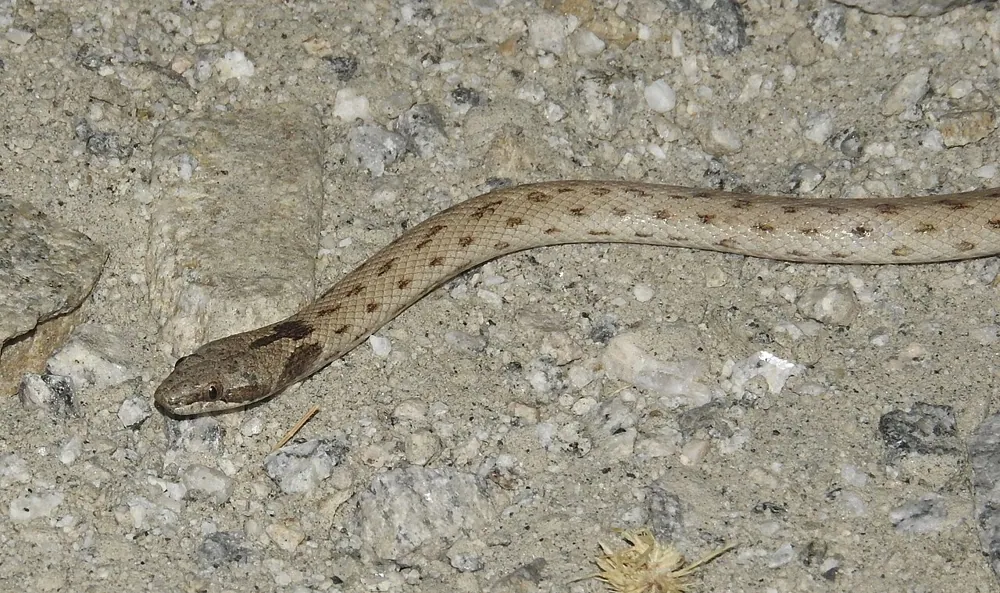
ÌbùjẹThe desert nightsnake is a small, slender snake that hunts at night and spends the day hidden. It lives in dry parts of western North America, from the southwestern United States into northwestern Mexico. It is mildly venomous, but it poses no danger to people.1



 Bí o ṣe lè dá a mọ̀
- Small and slender, usually 30 to 66 cm long in total.1
- Base colour is beige, yellowish or grey, with dark grey-brown blotches that usually form offset pairs down the back.1
- Three long dark blotches on the neck and one behind each eye.1
- Triangular head with vertical pupils.1
- Smooth scales on the back and no rattle at the tail.1
A sábà máa ń ṣì í mọ̀ sí: It is often mistaken for a juvenile rattlesnake because of its triangular head, vertical pupils and blotched pattern. Unlike a rattlesnake, it has no rattle and its back scales are smooth.1
Agbára oró
Oró ń jáde láti inú eyín oró tàbí eyín rẹ̀ nígbà tí ó bá bùjẹ.
Kí ni oró rẹ̀ máa ń ṣe?
It is mildly venomous and uses its venom to subdue prey. It has rear fangs, which are grooved teeth at the back of the upper jaw.1
Báwo ló ṣe léwu tó fún ènìyàn?
Ewu fún ènìyàn: Fúyẹ́Bí ìtani oyin tàbí kò tó bẹ́ẹ̀. Kò fẹ́rẹ̀ẹ́ léwu fún ènìyàn.It is mildly venomous and poses no danger to humans.1
 Bí ó bá bùjẹ
- Fọ ibi ìbùjẹ náà, jẹ́ kí ẹni náà farabalẹ̀, kí o sì wá ìrànlọ́wọ́ ìṣègùn. Àwọn irú kan (bí boomslang) lè pani ní wákàtí púpọ̀ lẹ́yìn náà.
Máa kọ́kọ́ pe nọ́ńbà pàjáwìrì rẹ nígbà gbogbo (112, 000, 911). Èyí jẹ́ ìtọ́sọ́nà ìtọ́jú àkọ́kọ́ gbogbogbò, kì í ṣe ìmọ̀ràn ìṣègùn. Ìpìlẹ̀ ìtọ́jú àkọ́kọ́
 Wà láìléwu
- Má ṣe fọwọ́ kan, mú tàbí yọ ẹranko igbó lẹ́nu láéláé, kódà bí ó bá kéré, kódà bí ó bá dà bí ẹni pé ó ń sùn tàbí ó ti kú.
- Fún un ní àyè. Bí o bá pàdé ọ̀kan, farabalẹ̀, sẹ́yìn díẹ̀díẹ̀ kí o sì jẹ́ kí ó máa bá ọ̀nà rẹ̀ lọ.
- Bí ọ̀kan bá bù ọ́ jẹ: farabalẹ̀, má ṣe mira, pe nọ́ńbà pàjáwìrì rẹ (112, 000, 911) tàbí lọ sí ilé ìwòsàn kíákíá. Rántí bí ó ṣe rí, fọ́tò máa ń ṣèrànwọ́.
Kò wá ọ kiri láti ṣe ọ́ léṣe. Ó ń lo oró rẹ̀ láti mú oúnjẹ tàbí láti dáàbò bo ara rẹ̀, ó sì fẹ́ràn láti farapamọ́ jù. Sí i nípa wíwà láìléwu
Báwo ló ṣe tóbi tó?
Báwo ló ṣe gùn tó?
 ó gùn tó ọ̀gẹ̀dẹ̀ 4 tí a tò tẹ̀léra
 lè sáré mítà 100 ní ìṣẹ́jú-àáyá 80 (ènìyàn tó yára jùlọ nílò 9.6)
Báwo ni Desert night snake ṣe tóbi tó tí a bá fi wé ÌWỌ?
Ìṣirò nìkan nínú bráwúsà rẹ. A kò fi ohunkóhun pamọ́, a kò sì fi ránṣẹ́ sí ibikíbi.
Báwo ló ṣe yára tó?


Òtítọ́
It is a rear-fanged snake, with enlarged grooved teeth at the back of the upper jaw that help it subdue prey.1
In Canada, it is federally listed as Endangered, because its small population is threatened by habitat loss.1
Females are generally longer and heavier than males.1
It is mainly active at night and at dusk, which is why it has the name nightsnake.1
Olùfọ́ àròsọ
Àròsọ: It is a juvenile rattlesnake.
Òtítọ́: It is a separate species. It has no rattle and its back scales are smooth.1
Fún àwọn amòye oró
- Orúkọ sáyẹ́ǹsì
- Hypsiglena chlorophaea
- Ẹgbẹ́
- Ejò oníyín ẹ̀yìn
- Ìdílé
- Colubridae2
- Ètò
- Squamata
- Àwọn kọ́ńtínẹ́ńtì
- Àríwá Amẹ́ríkà
- Àwọn ọmọ
- It lays eggs. Females lay a single clutch of 2 to 9 eggs, usually around 4, between April and July, hidden in rock crevices or abandoned burrows. The eggs hatch in late summer, and the hatchlings are about 17 cm long.1
- Bí ó ṣe ń ṣe nínú igbó
- Least Concern globally (IUCN); Endangered in Canada (COSEWIC)1
- Ewu fún ènìyàn
- 1 / 5: Fúyẹ́3
Ibi tí àwọn òtítọ́ ti wá
- Hypsiglena chlorophaea (Wikipedia (CC BY-SA 4.0))
- Hypsiglena chlorophaea (iNaturalist): orúkọ àti ìpínsísọ̀rí.
- Venom Wiki: ìpele ewu, ìtóbi déédé àti àfojúbù ìyára jẹ́ tiwa. Wo bí a ṣe ń ṣírò wọn: Bí a ṣe ń díwọ̀n ewu.
Gbogbo òtítọ́ ojú-ìwé yìí ní nọ́ńbà tó tọ́ka sí orísun rẹ̀. Bí a bá ṣe àṣìṣe, má bínú, olólùfẹ́ ẹranko ni wá, kì í ṣe ìwé ìròyìn sáyẹ́ǹsì. Sọ fún wa ní [email protected] a ó sì tún un ṣe.
 Ebi ń pa àkekèé! Iṣẹ́ akanṣe ẹnì kan ṣoṣo ni Venom Wiki: ọ̀fẹ́ ni, kò sí ìpolówó, kò sì sí olùtọpinpin. Ẹ̀bùn kékeré ń ràn án lọ́wọ́ láti wà lórí íńtánẹ́ẹ̀tì.Bọ́ àkekèé
 Western hognose snake
 Brown vine snake
 Eastern hognose snake
 Green vine snake
 Night snake
 Sonoran lyre snake
 Terciopelo
 Eastern coral snake
 Eastern diamondback rattlesnake
 Eyelash viper
 Timber rattlesnake
 Western diamondback rattlesnake