
 Áfíríkà
 Éṣíà
Éṣíà Yúróòpù
 Gúúsù Amẹ́ríkà
 Ọsirélíà àti Òṣéáníà
 Antáktíkà
 Òkun Pàsífíìkì
 Òkun Àtìláńtíìkì
 Òkun Íńdíà
 Òkun Áktíkì
 Òkun Mẹditaréníà
 Òkun Pupa
 Òkun Káríbíànù
 Òkun Coral
 Òkun Gúúsù Ṣáínà
 Òkun Fílípínì
 Òkun Andaman
 Òkun Àríwá
 Òkun Tímọ̀ àti Òkun Àráfúrà
 Ìyawọlẹ̀ Òkun Bẹ̀ngál
 Ìyawọlẹ̀ Òkun Kalifọ́níà
Eastern hognose snake
 Ìbùjẹ
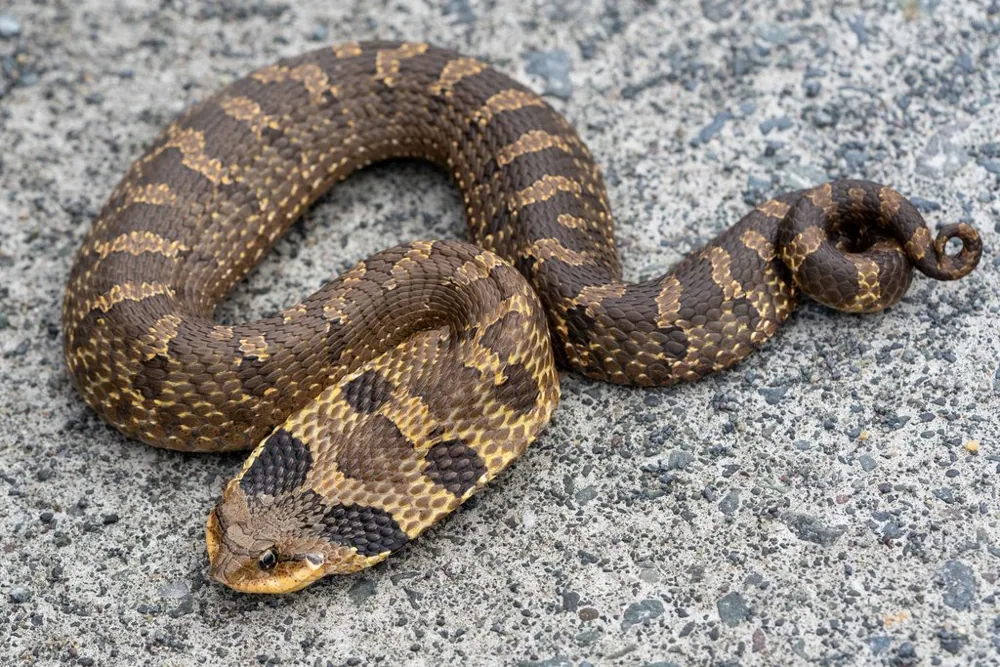
ÌbùjẹThe eastern hognose snake is a stout, rear-fanged snake that lives across eastern and central North America. It has an upturned snout, which it uses for digging in sandy soil. It is mildly venomous, but its venom is aimed at toads and frogs and is not deadly to people.1

 Bí o ṣe lè dá a mọ̀
- Stout body with an upturned snout1
- Colour varies widely by area, from red, green or orange to brown, grey or black, sometimes blotched, checkered or plain1
- Belly is usually a solid grey, yellow or cream colour1
- The underside of the tail is lighter than the belly1
- Adults average 71 cm in total length, and females are larger than males1
Agbára oró
Oró ń jáde láti inú eyín oró tàbí eyín rẹ̀ nígbà tí ó bá bùjẹ.
Kí ni oró rẹ̀ máa ń ṣe?
Its venom is mild and is adapted to amphibian prey. It is delivered through enlarged rear teeth from the Duvernoy's gland. In people who are allergic to the snake's saliva, a bite can cause local swelling, burning, discolouration and bleeding from the wound.1
Báwo ló ṣe léwu tó fún ènìyàn?
Ewu fún ènìyàn: Fúyẹ́Bí ìtani oyin tàbí kò tó bẹ́ẹ̀. Kò fẹ́rẹ̀ẹ́ léwu fún ènìyàn.The venom is harmless to most people, and no human deaths have been documented. People who are allergic to its saliva may have local symptoms such as swelling and bleeding.1
Kí ni ó máa ń ṣe nígbà tí ẹ̀rù bá bà á?
It flattens its neck, raises its head like a cobra, hisses and strikes with a closed mouth to bluff. If that fails, it rolls onto its back, plays dead, releases a foul musk and lets its tongue hang out.1
 Bí ó bá bùjẹ
- Fọ ibi ìbùjẹ náà, jẹ́ kí ẹni náà farabalẹ̀, kí o sì wá ìrànlọ́wọ́ ìṣègùn. Àwọn irú kan (bí boomslang) lè pani ní wákàtí púpọ̀ lẹ́yìn náà.
Máa kọ́kọ́ pe nọ́ńbà pàjáwìrì rẹ nígbà gbogbo (112, 000, 911). Èyí jẹ́ ìtọ́sọ́nà ìtọ́jú àkọ́kọ́ gbogbogbò, kì í ṣe ìmọ̀ràn ìṣègùn. Ìpìlẹ̀ ìtọ́jú àkọ́kọ́
 Wà láìléwu
- Má ṣe fọwọ́ kan, mú tàbí yọ ẹranko igbó lẹ́nu láéláé, kódà bí ó bá kéré, kódà bí ó bá dà bí ẹni pé ó ń sùn tàbí ó ti kú.
- Fún un ní àyè. Bí o bá pàdé ọ̀kan, farabalẹ̀, sẹ́yìn díẹ̀díẹ̀ kí o sì jẹ́ kí ó máa bá ọ̀nà rẹ̀ lọ.
- Bí ọ̀kan bá bù ọ́ jẹ: farabalẹ̀, má ṣe mira, pe nọ́ńbà pàjáwìrì rẹ (112, 000, 911) tàbí lọ sí ilé ìwòsàn kíákíá. Rántí bí ó ṣe rí, fọ́tò máa ń ṣèrànwọ́.
Kò wá ọ kiri láti ṣe ọ́ léṣe. Ó ń lo oró rẹ̀ láti mú oúnjẹ tàbí láti dáàbò bo ara rẹ̀, ó sì fẹ́ràn láti farapamọ́ jù. Sí i nípa wíwà láìléwu
Báwo ló ṣe tóbi tó?
Báwo ló ṣe gùn tó?
 ó gùn tó ológbò ilé 2.5 láti imú dé ìrù
 ó gùn tó ọ̀gẹ̀dẹ̀ 6 tí a tò tẹ̀léra
 lè sáré mítà 100 ní ìṣẹ́jú-àáyá 73 (ènìyàn tó yára jùlọ nílò 9.6)
Báwo ni Eastern hognose snake ṣe tóbi tó tí a bá fi wé ÌWỌ?
Ìṣirò nìkan nínú bráwúsà rẹ. A kò fi ohunkóhun pamọ́, a kò sì fi ránṣẹ́ sí ibikíbi.
Báwo ló ṣe yára tó?


Òtítọ́
One individual was seen playing dead for 45 minutes before moving away.1
It is resistant to the skin poisons of toads, probably because of its enlarged adrenal glands, which release large amounts of hormones to counter the toxins.1
When threatened, it often bluffs by striking with its mouth closed, and it does not try to bite.1
It is a rear-fanged snake, and its enlarged teeth are at the back of the upper jaw.1
Females can store sperm until spring, so they can be fertilised later.1
Olùfọ́ àròsọ
Àròsọ: The eastern hognose snake is a dangerous, deadly snake.
Òtítọ́: It is only mildly venomous, and its venom is aimed at amphibians. No human deaths have been documented, although some people who are allergic to its saliva may have local symptoms.1
Fún àwọn amòye oró
- Orúkọ sáyẹ́ǹsì
- Heterodon platirhinos
- Ẹgbẹ́
- Ejò oníyín ẹ̀yìn
- Ìdílé
- Colubridae2
- Ètò
- Squamata
- Àwọn kọ́ńtínẹ́ńtì
- Àríwá Amẹ́ríkà
- Àwọn ọmọ
- Females lay up to 40 eggs, with an average of about 25, usually in June or early July. The hatchlings are about 16.5 to 21 cm long.1
- Bí ó ṣe ń ṣe nínú igbó
- Least concern (IUCN Red List, assessed 2007). It is a species of increasing conservation concern in the northeastern part of its range.1
- Ewu fún ènìyàn
- 1 / 5: Fúyẹ́3
Ibi tí àwọn òtítọ́ ti wá
- Eastern hognose snake (Wikipedia (CC BY-SA 4.0))
- Heterodon platirhinos (iNaturalist): orúkọ àti ìpínsísọ̀rí.
- Venom Wiki: ìpele ewu, ìtóbi déédé àti àfojúbù ìyára jẹ́ tiwa. Wo bí a ṣe ń ṣírò wọn: Bí a ṣe ń díwọ̀n ewu.
Gbogbo òtítọ́ ojú-ìwé yìí ní nọ́ńbà tó tọ́ka sí orísun rẹ̀. Bí a bá ṣe àṣìṣe, má bínú, olólùfẹ́ ẹranko ni wá, kì í ṣe ìwé ìròyìn sáyẹ́ǹsì. Sọ fún wa ní [email protected] a ó sì tún un ṣe.
 Ebi ń pa àkekèé! Iṣẹ́ akanṣe ẹnì kan ṣoṣo ni Venom Wiki: ọ̀fẹ́ ni, kò sí ìpolówó, kò sì sí olùtọpinpin. Ẹ̀bùn kékeré ń ràn án lọ́wọ́ láti wà lórí íńtánẹ́ẹ̀tì.Bọ́ àkekèé
 Western hognose snake
 Brown vine snake
 Green vine snake
 Desert night snake
 Night snake
 Sonoran lyre snake
 Terciopelo
 Eastern coral snake
 Eastern diamondback rattlesnake
 Eyelash viper
 Timber rattlesnake
 Western diamondback rattlesnake