
 Áfíríkà
 Éṣíà
Éṣíà Yúróòpù
 Gúúsù Amẹ́ríkà
 Ọsirélíà àti Òṣéáníà
 Antáktíkà
 Òkun Pàsífíìkì
 Òkun Àtìláńtíìkì
 Òkun Íńdíà
 Òkun Áktíkì
 Òkun Mẹditaréníà
 Òkun Pupa
 Òkun Káríbíànù
 Òkun Coral
 Òkun Gúúsù Ṣáínà
 Òkun Fílípínì
 Òkun Andaman
 Òkun Àríwá
 Òkun Tímọ̀ àti Òkun Àráfúrà
 Ìyawọlẹ̀ Òkun Bẹ̀ngál
 Ìyawọlẹ̀ Òkun Kalifọ́níà
Eastern lubber grasshopper
 Onímájèlé tí a bá jẹ ẹ́
The Eastern lubber grasshopper is one of the largest grasshoppers in the United States, with bright, easy-to-spot colours. It lives in the southeastern and south-central United States, including all of Florida. It is poisonous rather than venomous: it does not bite or sting, but it can harm animals that eat it.1
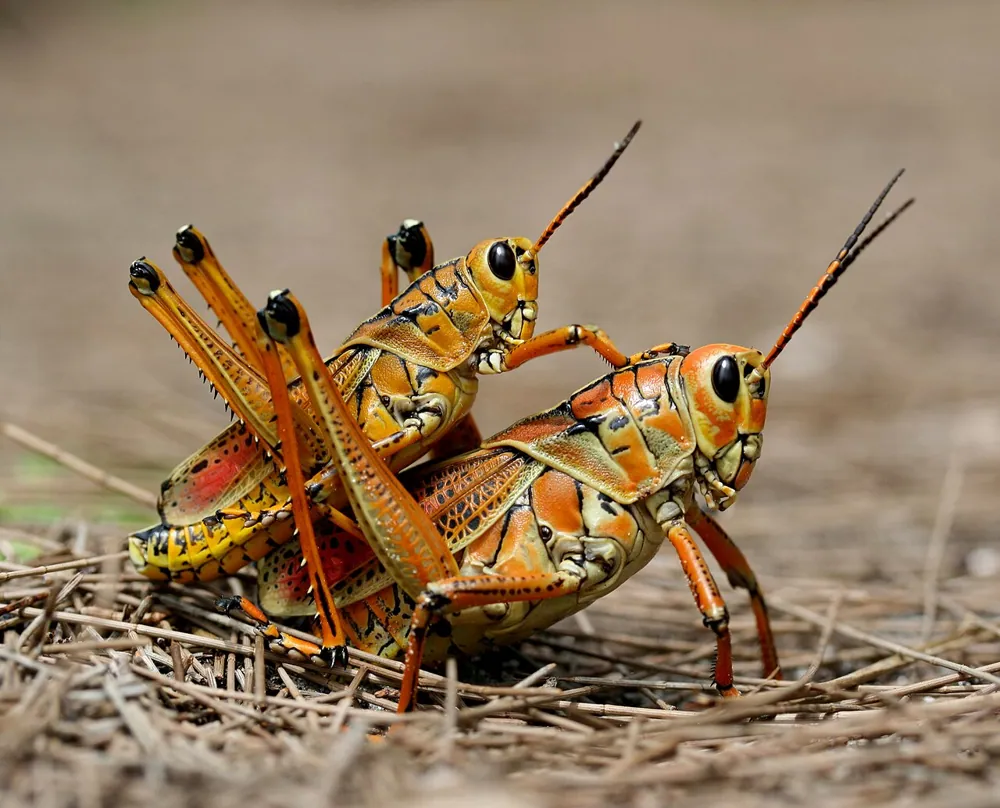
 Bí o ṣe lè dá a mọ̀
- Nymphs are smaller than adults, wingless and completely black, with one or more yellow, orange or red stripes.1
- Adults are dull yellow with black spots and markings, bright orange with black markings, or entirely black with yellow or red striping.1
- Adult wings are usually much shorter than the body and cannot be used for flight.1
- Adult males are typically 4.3–5.5 cm long and females 5–7 cm long, making them very large for a grasshopper.1
Agbára májèlé
Ó léwu kìkì bí ohun kan bá jẹ ẹ́.
Báwo ló ṣe léwu tó fún ènìyàn?
Ewu fún ènìyàn: Fúyẹ́Bí ìtani oyin tàbí kò tó bẹ́ẹ̀. Kò fẹ́rẹ̀ẹ́ léwu fún ènìyàn.Kí ni ó máa ń ṣe nígbà tí ẹ̀rù bá bà á?
When disturbed, it shows its bright colours as a warning, releases a dark, foul-smelling and foul-tasting foamy liquid from its thorax, and gives off a loud hiss to scare would-be attackers.1
 Bí ẹnìkan bá fọwọ́ kàn án tàbí jẹ ẹ́
- Bí ẹnìkan bá jẹ ẹ́ tàbí tí ó ní àmì àìsàn lẹ́yìn tí ó jẹ ẹ́: pe nọ́ńbà pàjáwìrì rẹ tàbí ibùdó ìmọ̀ràn májèlé lẹ́sẹ̀kẹsẹ̀.
Máa kọ́kọ́ pe nọ́ńbà pàjáwìrì rẹ nígbà gbogbo (112, 000, 911). Èyí jẹ́ ìtọ́sọ́nà ìtọ́jú àkọ́kọ́ gbogbogbò, kì í ṣe ìmọ̀ràn ìṣègùn. Ìpìlẹ̀ ìtọ́jú àkọ́kọ́
 Wà láìléwu
- Má ṣe fọwọ́ kan, mú tàbí yọ ẹranko igbó lẹ́nu láéláé, kódà bí ó bá kéré, kódà bí ó bá dà bí ẹni pé ó ń sùn tàbí ó ti kú.
- Fún un ní àyè. Bí o bá pàdé ọ̀kan, farabalẹ̀, sẹ́yìn díẹ̀díẹ̀ kí o sì jẹ́ kí ó máa bá ọ̀nà rẹ̀ lọ.
- Bí o bá fọwọ́ kàn án tàbí jẹ ẹ́: má ṣe fọwọ́ pa ojú tàbí ẹnu rẹ, fọ ọwọ́ rẹ kí o sì wá ìrànlọ́wọ́ ìṣègùn.
Kò wá ọ kiri láti ṣe ọ́ léṣe. Májèlé rẹ̀ wà níbẹ̀ kìkì kí ohunkóhun má baà jẹ ẹ́. Sí i nípa wíwà láìléwu
Báwo ló ṣe tóbi tó?
Báwo ló ṣe gùn tó?
 ó gùn tó bíríkì ìṣeré 3 tí a tò sí ìlà kan
Báwo ni Eastern lubber grasshopper ṣe tóbi tó tí a bá fi wé ÌWỌ?
Ìṣirò nìkan nínú bráwúsà rẹ. A kò fi ohunkóhun pamọ́, a kò sì fi ránṣẹ́ sí ibikíbi.
Báwo ló ṣe yára tó?


Òtítọ́
Most predatory birds and mammals avoid it because of its toxicity, but large predatory insects can still catch and kill adults.1
It is one of the largest grasshoppers in the United States, along with the western horse lubber grasshopper.1
Its wings are too small for flight in most adults, so it relies on its colours and defences instead.1
Adults in the black colour form are widely known as 'diablo' or 'black diablo'.1
In Louisiana it is called the 'devil's horse' or 'cheval-diable', and in Mississippi it is known as the 'giant locust'.1
Olùfọ́ àròsọ
Àròsọ: Its bright colours are just for decoration.
Òtítọ́: The colours are a warning to predators that the grasshopper tastes unpleasant.1
Ibi tí àwọn òtítọ́ ti wá
- Romalea (Wikipedia (CC BY-SA 4.0))
- Romalea microptera (iNaturalist): orúkọ àti ìpínsísọ̀rí.
- Venom Wiki: ìpele ewu, ìtóbi déédé àti àfojúbù ìyára jẹ́ tiwa. Wo bí a ṣe ń ṣírò wọn: Bí a ṣe ń díwọ̀n ewu.
Gbogbo òtítọ́ ojú-ìwé yìí ní nọ́ńbà tó tọ́ka sí orísun rẹ̀. Bí a bá ṣe àṣìṣe, má bínú, olólùfẹ́ ẹranko ni wá, kì í ṣe ìwé ìròyìn sáyẹ́ǹsì. Sọ fún wa ní [email protected] a ó sì tún un ṣe.
 Ebi ń pa àkekèé! Iṣẹ́ akanṣe ẹnì kan ṣoṣo ni Venom Wiki: ọ̀fẹ́ ni, kò sí ìpolówó, kò sì sí olùtọpinpin. Ẹ̀bùn kékeré ń ràn án lọ́wọ́ láti wà lórí íńtánẹ́ẹ̀tì.Bọ́ àkekèé
Sí i láti inú ẹgbẹ́ kan náà: Àwọn ẹranko onímájèlé mìíràn
 Monarch butterflyÀwọn ẹranko onímájèlé mìírànAláìléwu
 Striped blister beetleÀwọn ẹranko onímájèlé mìírànÓ kàn ń dunniMá ṣe fọwọ́ kàn án
 Japanese pufferfishÀwọn ẹranko onímájèlé mìírànApani
 Hawksbill sea turtleÀwọn ẹranko onímájèlé mìírànÓ lè pani
 Spanish flyÀwọn ẹranko onímájèlé mìírànÓ nílò dókítàMá ṣe fọwọ́ kàn án
 Greenland sharkÀwọn ẹranko onímájèlé mìírànÓ kàn ń dunni
 Terciopelo
 Eastern coral snake
 Eastern diamondback rattlesnake
 Eyelash viper
 Timber rattlesnake
 Western diamondback rattlesnake
,_mating.jpg)