
 Áfíríkà
 Éṣíà
Éṣíà Yúróòpù
 Gúúsù Amẹ́ríkà
 Ọsirélíà àti Òṣéáníà
 Antáktíkà
 Òkun Pàsífíìkì
 Òkun Àtìláńtíìkì
 Òkun Íńdíà
 Òkun Áktíkì
 Òkun Mẹditaréníà
 Òkun Pupa
 Òkun Káríbíànù
 Òkun Coral
 Òkun Gúúsù Ṣáínà
 Òkun Fílípínì
 Òkun Andaman
 Òkun Àríwá
 Òkun Tímọ̀ àti Òkun Àráfúrà
 Ìyawọlẹ̀ Òkun Bẹ̀ngál
 Ìyawọlẹ̀ Òkun Kalifọ́níà
Monarch butterfly
 Onímájèlé tí a bá jẹ ẹ́
The monarch is one of the best-known butterflies in North America, with a black, orange and white pattern that is easy to spot. Its wings are poisonous if eaten, so it is a warning to predators. Some monarchs make a huge southward journey each autumn, covering thousands of miles.1


 Bí o ṣe lè dá a mọ̀
- Black, orange and white wing pattern that is easy to recognise.1
- Wingspan of 8.9 to 10.2 cm.1
- Caterpillars are pale green or grey-white when very young, with a large black head.1
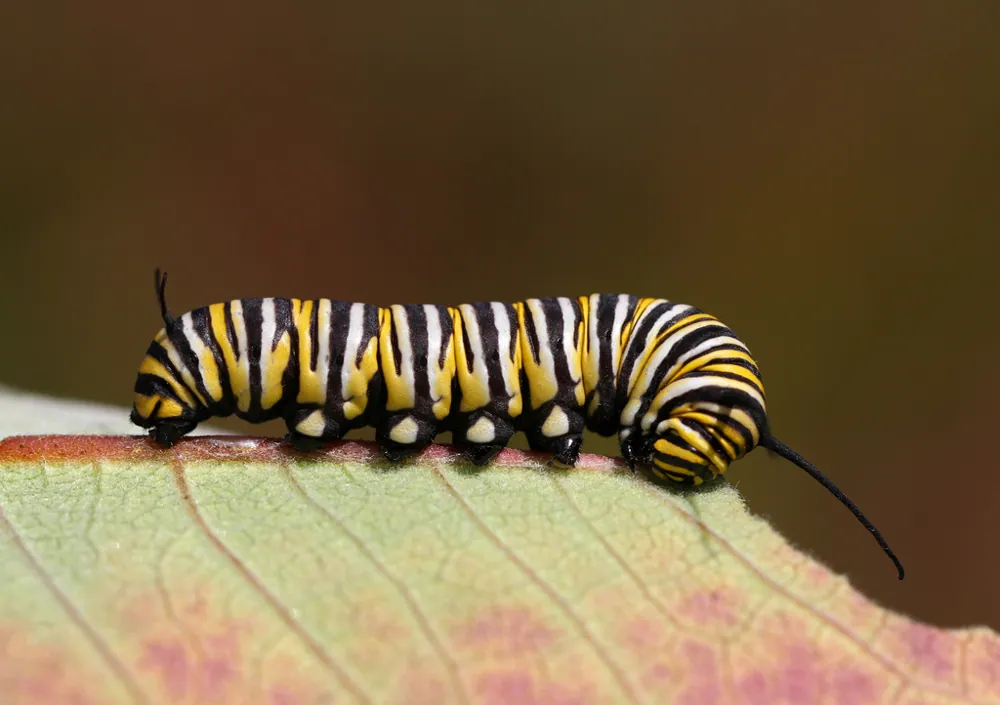
- Older caterpillars have white, yellow and black bands, plus black tentacles.1
A sábà máa ń ṣì í mọ̀ sí: The viceroy butterfly is similar in colour and pattern but is much smaller. It also has an extra black stripe across each hindwing.1
Agbára májèlé
Ó léwu kìkì bí ohun kan bá jẹ ẹ́.
Báwo ló ṣe léwu tó fún ènìyàn?
Ewu fún ènìyàn: Fúyẹ́Bí ìtani oyin tàbí kò tó bẹ́ẹ̀. Kò fẹ́rẹ̀ẹ́ léwu fún ènìyàn.Kí ni ó máa ń ṣe nígbà tí ẹ̀rù bá bà á?
Its bright black, orange and white pattern serves as a warning coloration to predators, and the viceroy butterfly copies it.1
 Bí ẹnìkan bá fọwọ́ kàn án tàbí jẹ ẹ́
- Bí ẹnìkan bá jẹ ẹ́ tàbí tí ó ní àmì àìsàn lẹ́yìn tí ó jẹ ẹ́: pe nọ́ńbà pàjáwìrì rẹ tàbí ibùdó ìmọ̀ràn májèlé lẹ́sẹ̀kẹsẹ̀.
Máa kọ́kọ́ pe nọ́ńbà pàjáwìrì rẹ nígbà gbogbo (112, 000, 911). Èyí jẹ́ ìtọ́sọ́nà ìtọ́jú àkọ́kọ́ gbogbogbò, kì í ṣe ìmọ̀ràn ìṣègùn. Ìpìlẹ̀ ìtọ́jú àkọ́kọ́
 Wà láìléwu
- Má ṣe fọwọ́ kan, mú tàbí yọ ẹranko igbó lẹ́nu láéláé, kódà bí ó bá kéré, kódà bí ó bá dà bí ẹni pé ó ń sùn tàbí ó ti kú.
- Fún un ní àyè. Bí o bá pàdé ọ̀kan, farabalẹ̀, sẹ́yìn díẹ̀díẹ̀ kí o sì jẹ́ kí ó máa bá ọ̀nà rẹ̀ lọ.
- Bí o bá fọwọ́ kàn án tàbí jẹ ẹ́: má ṣe fọwọ́ pa ojú tàbí ẹnu rẹ, fọ ọwọ́ rẹ kí o sì wá ìrànlọ́wọ́ ìṣègùn.
Kò wá ọ kiri láti ṣe ọ́ léṣe. Májèlé rẹ̀ wà níbẹ̀ kìkì kí ohunkóhun má baà jẹ ẹ́. Sí i nípa wíwà láìléwu
Báwo ló ṣe tóbi tó?
Báwo ló ṣe gùn tó?
 ó gùn tó bíríkì ìṣeré 3 tí a tò sí ìlà kan
 lè fò kọjá gbogbo pápá bọ́ọ̀lù ní ìṣẹ́jú-àáyá 42
Báwo ni Monarch butterfly ṣe tóbi tó tí a bá fi wé ÌWỌ?
Ìṣirò nìkan nínú bráwúsà rẹ. A kò fi ohunkóhun pamọ́, a kò sì fi ránṣẹ́ sí ibikíbi.
Báwo ló ṣe yára tó?


Òtítọ́
Eastern North American monarchs migrate south each autumn to Florida and Mexico, covering thousands of miles, and return north in spring over several generations.1
A female monarch can lay eggs weighing up to her own body mass in total, even though each egg is only about 1/1000 of her mass.1
Fewer than 10% of monarch eggs and caterpillars commonly survive to adulthood, because of weather, predators, parasites and disease.1
Monarchs can develop from egg to adult in as little as 25 days in warm summer weather, but may take as long as seven weeks in cool spring conditions.1
A monarch caterpillar can travel up to 10 metres from its milkweed plant to find a safe place to pupate.1
The monarch was the first butterfly to have its genome sequenced, a draft of 273 million base pairs containing 16,866 protein-coding genes.1
Olùfọ́ àròsọ
Àròsọ: Monarch butterflies are genetically modified organisms.
Òtítọ́: A 2015 study found genes from wasp bracoviruses in the North American monarch's genome. This led to articles calling monarchs genetically modified, but they are not genetically modified in the usual sense.1
Fún àwọn amòye oró
- Orúkọ sáyẹ́ǹsì
- Danaus plexippus
- Ẹgbẹ́
- Àwọn ẹranko onímájèlé mìíràn
- Ìdílé
- Nymphalidae2
- Ètò
- Lepidoptera
- Àwọn kọ́ńtínẹ́ńtì
- Àríwá Amẹ́ríkà, Gúúsù Amẹ́ríkà
- Àwọn ọmọ
- Females lay eggs singly, usually on the underside of young milkweed leaves, with 300 to 500 eggs over two to five weeks, and up to 1,180 eggs in total.1
- Ewu fún ènìyàn
- 1 / 5: Fúyẹ́3
Ibi tí àwọn òtítọ́ ti wá
- Monarch butterfly (Wikipedia (CC BY-SA 4.0))
- Danaus plexippus (iNaturalist): orúkọ àti ìpínsísọ̀rí.
- Venom Wiki: ìpele ewu, ìtóbi déédé àti àfojúbù ìyára jẹ́ tiwa. Wo bí a ṣe ń ṣírò wọn: Bí a ṣe ń díwọ̀n ewu.
Gbogbo òtítọ́ ojú-ìwé yìí ní nọ́ńbà tó tọ́ka sí orísun rẹ̀. Bí a bá ṣe àṣìṣe, má bínú, olólùfẹ́ ẹranko ni wá, kì í ṣe ìwé ìròyìn sáyẹ́ǹsì. Sọ fún wa ní [email protected] a ó sì tún un ṣe.
 Ebi ń pa àkekèé! Iṣẹ́ akanṣe ẹnì kan ṣoṣo ni Venom Wiki: ọ̀fẹ́ ni, kò sí ìpolówó, kò sì sí olùtọpinpin. Ẹ̀bùn kékeré ń ràn án lọ́wọ́ láti wà lórí íńtánẹ́ẹ̀tì.Bọ́ àkekèé
Sí i láti inú ẹgbẹ́ kan náà: Àwọn ẹranko onímájèlé mìíràn
 Striped blister beetleÀwọn ẹranko onímájèlé mìírànÓ kàn ń dunniMá ṣe fọwọ́ kàn án
 Eastern lubber grasshopperÀwọn ẹranko onímájèlé mìírànAláìléwu
 Japanese pufferfishÀwọn ẹranko onímájèlé mìírànApani
 Hawksbill sea turtleÀwọn ẹranko onímájèlé mìírànÓ lè pani
 Spanish flyÀwọn ẹranko onímájèlé mìírànÓ nílò dókítàMá ṣe fọwọ́ kàn án
 Greenland sharkÀwọn ẹranko onímájèlé mìírànÓ kàn ń dunni
 Terciopelo
 Eastern coral snake
 Eastern diamondback rattlesnake
 Eyelash viper
 Timber rattlesnake
 Western diamondback rattlesnake