
 Áfíríkà
 Éṣíà
Éṣíà Yúróòpù
 Gúúsù Amẹ́ríkà
 Ọsirélíà àti Òṣéáníà
 Antáktíkà
 Òkun Pàsífíìkì
 Òkun Àtìláńtíìkì
 Òkun Íńdíà
 Òkun Áktíkì
 Òkun Mẹditaréníà
 Òkun Pupa
 Òkun Káríbíànù
 Òkun Coral
 Òkun Gúúsù Ṣáínà
 Òkun Fílípínì
 Òkun Andaman
 Òkun Àríwá
 Òkun Tímọ̀ àti Òkun Àráfúrà
 Ìyawọlẹ̀ Òkun Bẹ̀ngál
 Ìyawọlẹ̀ Òkun Kalifọ́níà
Giant vinegaroon
 Ó ń fọ́n tàbí tu
The giant vinegaroon is a large, harmless-to-people relative of the scorpion, known for the vinegar smell it gives off when threatened. It lives in the southern United States and Mexico, where it hunts insects and other small creatures at night. It is useful to people because it eats scorpions and other pests.1



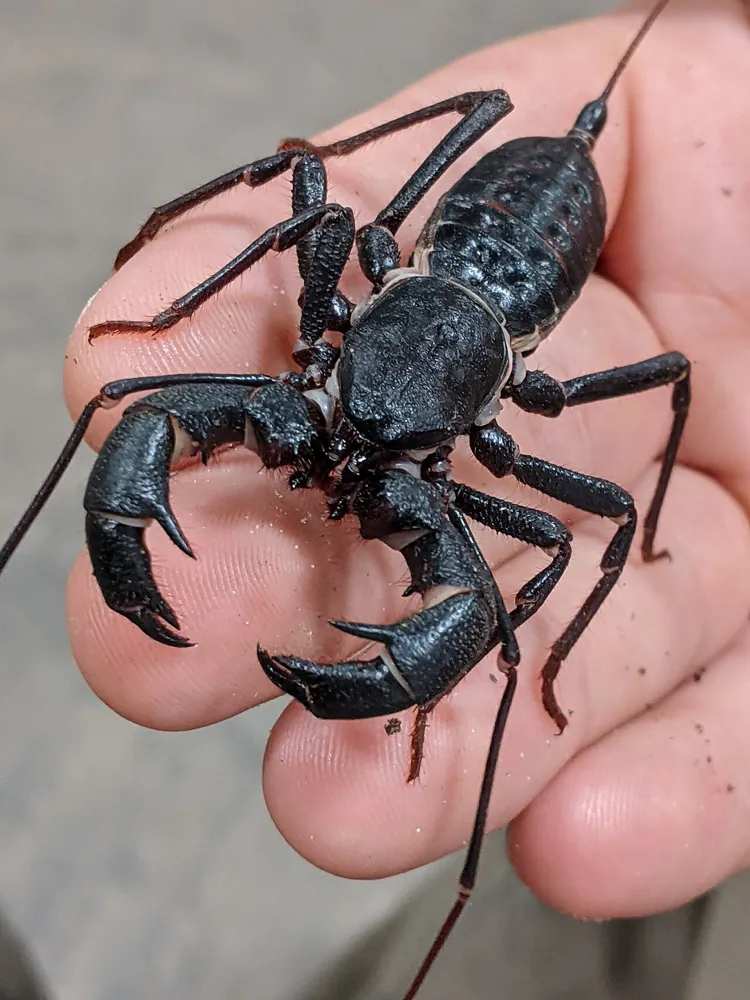
 Bí o ṣe lè dá a mọ̀
- Body length is 40 to 60 millimetres, not counting the tail.1
- Has a long, thin, whip-like tail at the back.1
- Has two long front legs that it uses to feel around and sense vibrations.1
- Has two large pedipalps (front limbs) modified into claws for crushing prey.1
- When sprayed, it smells strongly of vinegar.1
Agbára oró
Ó ń fọ́n tàbí tu omi tó ń ta ni sí àwọn tó bá kọlù ú.
Kí ni oró rẹ̀ máa ń ṣe?
It is not venomous. From the base of its tail it sprays a liquid made of 85% acetic acid, the main component of vinegar. If the spray gets into mucous membranes or cuts, it can sting, and it can irritate the eyes.1
Báwo ló ṣe léwu tó fún ènìyàn?
Ewu fún ènìyàn: Fúyẹ́Bí ìtani oyin tàbí kò tó bẹ́ẹ̀. Kò fẹ́rẹ̀ẹ́ léwu fún ènìyàn.It seldom bites or pinches people. Its main risk is the acid spray, which can sting and cause eye irritation.1
Kí ni ó máa ń ṣe nígbà tí ẹ̀rù bá bà á?
When threatened, it sprays acetic acid from the base of its tail.1
 Bí ó bá fọ́n omi sí ọ
- Fún irun ìdin labalábá tó ń ta ni: fi téèpù aláléẹ̀mọ́ gbé wọn kúrò, lẹ́yìn náà fọ awọ ara. Má ṣe fọwọ́ pa á.
- Fún ìbùjẹ: fọ̀ ọ́, kí o sì tù ú. Wá ìrànlọ́wọ́ ìṣègùn bí ara ẹni náà kò bá yá tàbí tí ẹ̀jẹ̀ bá ń tètè ṣàn lára rẹ̀.
Máa kọ́kọ́ pe nọ́ńbà pàjáwìrì rẹ nígbà gbogbo (112, 000, 911). Èyí jẹ́ ìtọ́sọ́nà ìtọ́jú àkọ́kọ́ gbogbogbò, kì í ṣe ìmọ̀ràn ìṣègùn. Ìpìlẹ̀ ìtọ́jú àkọ́kọ́
 Wà láìléwu
- Má ṣe fọwọ́ kan, mú tàbí yọ ẹranko igbó lẹ́nu láéláé, kódà bí ó bá kéré, kódà bí ó bá dà bí ẹni pé ó ń sùn tàbí ó ti kú.
- Fún un ní àyè. Bí o bá pàdé ọ̀kan, farabalẹ̀, sẹ́yìn díẹ̀díẹ̀ kí o sì jẹ́ kí ó máa bá ọ̀nà rẹ̀ lọ.
- Bí ọ̀kan bá fọ́n omi sí ọ: farabalẹ̀, má ṣe mira, pe nọ́ńbà pàjáwìrì rẹ (112, 000, 911) tàbí lọ sí ilé ìwòsàn kíákíá. Rántí bí ó ṣe rí, fọ́tò máa ń ṣèrànwọ́.
Kò wá ọ kiri láti ṣe ọ́ léṣe. Ó ń lo oró rẹ̀ láti mú oúnjẹ tàbí láti dáàbò bo ara rẹ̀, ó sì fẹ́ràn láti farapamọ́ jù. Sí i nípa wíwà láìléwu
Báwo ló ṣe tóbi tó?
Báwo ló ṣe gùn tó?
 ó gùn tó bíríkì ìṣeré 2 tí a tò sí ìlà kan
Báwo ni Giant vinegaroon ṣe tóbi tó tí a bá fi wé ÌWỌ?
Ìṣirò nìkan nínú bráwúsà rẹ. A kò fi ohunkóhun pamọ́, a kò sì fi ránṣẹ́ sí ibikíbi.
Báwo ló ṣe yára tó?


Òtítọ́
Its common name 'vinegaroon' comes from the vinegar smell of the acid it sprays.1
It is an efficient predator of scorpions, and it is sometimes bought for that purpose.1
Males fight each other at night in fierce battles for the chance to mate with a female.1
It has eight eyes, but they are very weak, so it finds its way mostly by feeling with its front legs, tail and pedipalps.1
Raccoons, coatis, armadillos, skunks, bears, roadrunners, lizards and tarantulas may all eat it.1
It is sold in the exotic animal trade as a pet.1
Olùfọ́ àròsọ
Àròsọ: Giant vinegaroons are dangerous and venomous to people.
Òtítọ́: They are non-venomous and seldom bite or pinch people. The main risk is the acid spray, which can irritate the eyes or sting if it reaches cuts or mucous membranes.1
Fún àwọn amòye oró
- Orúkọ sáyẹ́ǹsì
- Mastigoproctus giganteus
- Ẹgbẹ́
- Ìdin labalábá àti kòkòrò
- Ìdílé
- Thelyphonidae2
- Ètò
- Uropygi
- Àwọn kọ́ńtínẹ́ńtì
- Àríwá Amẹ́ríkà
- Àwọn ọmọ
- The female produces about 40 offspring, which she protects and feeds during their early lives. She reproduces only once.1
- Ọjọ́ ayé
- nǹkan bí ọdún 71
- Ewu fún ènìyàn
- 1 / 5: Fúyẹ́3
Ibi tí àwọn òtítọ́ ti wá
- Mastigoproctus giganteus (Wikipedia (CC BY-SA 4.0))
- Mastigoproctus giganteus (iNaturalist): orúkọ àti ìpínsísọ̀rí.
- Venom Wiki: ìpele ewu, ìtóbi déédé àti àfojúbù ìyára jẹ́ tiwa. Wo bí a ṣe ń ṣírò wọn: Bí a ṣe ń díwọ̀n ewu.
Gbogbo òtítọ́ ojú-ìwé yìí ní nọ́ńbà tó tọ́ka sí orísun rẹ̀. Bí a bá ṣe àṣìṣe, má bínú, olólùfẹ́ ẹranko ni wá, kì í ṣe ìwé ìròyìn sáyẹ́ǹsì. Sọ fún wa ní [email protected] a ó sì tún un ṣe.
 Ebi ń pa àkekèé! Iṣẹ́ akanṣe ẹnì kan ṣoṣo ni Venom Wiki: ọ̀fẹ́ ni, kò sí ìpolówó, kò sì sí olùtọpinpin. Ẹ̀bùn kékeré ń ràn án lọ́wọ́ láti wà lórí íńtánẹ́ẹ̀tì.Bọ́ àkekèé
Sí i láti inú ẹgbẹ́ kan náà: Ìdin labalábá àti kòkòrò
 Giant water bugÌdin labalábá àti kòkòròÓ kàn ń dunni
 Puss caterpillarÌdin labalábá àti kòkòròÓ kàn ń dunniMá ṣe fọwọ́ kàn án
 Saddleback caterpillarÌdin labalábá àti kòkòròÓ kàn ń dunniMá ṣe fọwọ́ kàn án
 Wheel bugÌdin labalábá àti kòkòròÓ kàn ń dunni
 Rhodnius kissing bugÌdin labalábá àti kòkòròÓ nílò dókítà
 Black-waved flannel mothÌdin labalábá àti kòkòròÓ kàn ń dunniMá ṣe fọwọ́ kàn án
 Terciopelo
 Eastern coral snake
 Eastern diamondback rattlesnake
 Eyelash viper
 Timber rattlesnake
 Western diamondback rattlesnake
_face.jpg)