
 Áfíríkà
 Éṣíà
Éṣíà Yúróòpù
 Gúúsù Amẹ́ríkà
 Ọsirélíà àti Òṣéáníà
 Antáktíkà
 Òkun Pàsífíìkì
 Òkun Àtìláńtíìkì
 Òkun Íńdíà
 Òkun Áktíkì
 Òkun Mẹditaréníà
 Òkun Pupa
 Òkun Káríbíànù
 Òkun Coral
 Òkun Gúúsù Ṣáínà
 Òkun Fílípínì
 Òkun Andaman
 Òkun Àríwá
 Òkun Tímọ̀ àti Òkun Àráfúrà
 Ìyawọlẹ̀ Òkun Bẹ̀ngál
 Ìyawọlẹ̀ Òkun Kalifọ́níà
Wheel bug
 Ìbùjẹ
ÌbùjẹThe wheel bug is a large assassin bug with a wheel-shaped crest on its back. It is the only wheel bug found in the United States, and it hunts caterpillars and beetles. Gardeners value it because it helps keep pests down.1
 Bí o ṣe lè dá a mọ̀
- Adults are grey to brownish grey, and black shortly after moulting.1
- Adults have a wheel-shaped or cog-shaped ridge on the back of the thorax. Young nymphs do not have this wheel yet.1
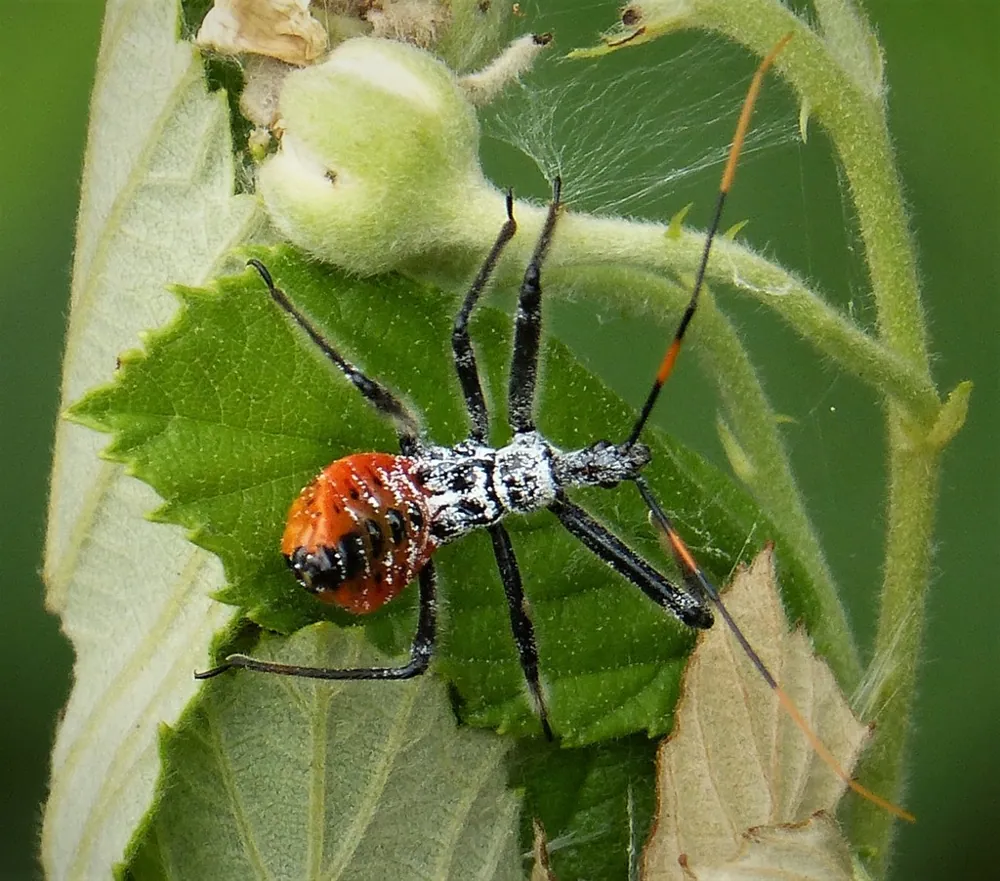
- Nymphs have a bright red or orange abdomen.1
- Adults can grow up to 38 mm long. Females are somewhat larger than males.1
- They move and fly slowly, and make a noisy buzzing sound in flight.1
Agbára oró
Oró ń jáde láti inú eyín oró tàbí eyín rẹ̀ nígbà tí ó bá bùjẹ.
Kí ni oró rẹ̀ máa ń ṣe?
The bug injects enzymes into its prey that paralyse it and dissolve its insides. Its bite is not considered highly venomous. In people, the bite causes a wound that is very painful and lingering, with the area becoming hot and irritated, and numbness that can last for days.1
Báwo ló ṣe léwu tó fún ènìyàn?
Ewu fún ènìyàn: Ó ń dunniÓ lè dunni gan-an, ṣùgbọ́n kì í fẹ́rẹ̀ẹ́ le rárá.The bite is not considered highly venomous, so it is not serious in the short term. Discomfort may last for two weeks, and in some cases up to six months. Longer-lasting problems are often linked to allergic reactions or repeated infections of the wound.1
Kí ni ó máa ń ṣe nígbà tí ẹ̀rù bá bà á?
When threatened, it relies on camouflage, its bite, or unpleasant odours from two scent glands in its abdomen.1
 Bí ó bá bùjẹ
- Fún irun ìdin labalábá tó ń ta ni: fi téèpù aláléẹ̀mọ́ gbé wọn kúrò, lẹ́yìn náà fọ awọ ara. Má ṣe fọwọ́ pa á.
- Fún ìbùjẹ: fọ̀ ọ́, kí o sì tù ú. Wá ìrànlọ́wọ́ ìṣègùn bí ara ẹni náà kò bá yá tàbí tí ẹ̀jẹ̀ bá ń tètè ṣàn lára rẹ̀.
Máa kọ́kọ́ pe nọ́ńbà pàjáwìrì rẹ nígbà gbogbo (112, 000, 911). Èyí jẹ́ ìtọ́sọ́nà ìtọ́jú àkọ́kọ́ gbogbogbò, kì í ṣe ìmọ̀ràn ìṣègùn. Ìpìlẹ̀ ìtọ́jú àkọ́kọ́
 Wà láìléwu
- Má ṣe fọwọ́ kan, mú tàbí yọ ẹranko igbó lẹ́nu láéláé, kódà bí ó bá kéré, kódà bí ó bá dà bí ẹni pé ó ń sùn tàbí ó ti kú.
- Fún un ní àyè. Bí o bá pàdé ọ̀kan, farabalẹ̀, sẹ́yìn díẹ̀díẹ̀ kí o sì jẹ́ kí ó máa bá ọ̀nà rẹ̀ lọ.
- Bí ọ̀kan bá bù ọ́ jẹ: farabalẹ̀, má ṣe mira, pe nọ́ńbà pàjáwìrì rẹ (112, 000, 911) tàbí lọ sí ilé ìwòsàn kíákíá. Rántí bí ó ṣe rí, fọ́tò máa ń ṣèrànwọ́.
Kò wá ọ kiri láti ṣe ọ́ léṣe. Ó ń lo oró rẹ̀ láti mú oúnjẹ tàbí láti dáàbò bo ara rẹ̀, ó sì fẹ́ràn láti farapamọ́ jù. Sí i nípa wíwà láìléwu
Báwo ló ṣe tóbi tó?
Báwo ló ṣe gùn tó?
 ó gùn tó pínì ìwé (paper clip)
Báwo ni Wheel bug ṣe tóbi tó tí a bá fi wé ÌWỌ?
Ìṣirò nìkan nínú bráwúsà rẹ. A kò fi ohunkóhun pamọ́, a kò sì fi ránṣẹ́ sí ibikíbi.
Báwo ló ṣe yára tó?


Òtítọ́
It is cannibalistic. Nymphs may prey on each other, and a female may feed on the male after mating.1
It can make a sound by rubbing the tip of its beak in a groove under its thorax. The purpose is unknown, but it may be a way of communicating.1
Nymphs are predators as soon as they hatch, but the wheel only appears after the final moult into adulthood.1
It can prey on useful insects such as lady beetles and honey bees, as well as pests.1
It is one of the largest true bugs in North America.1
In a laboratory test, parasitic wasps attacked 10 of 12 egg clusters, stopping many eggs from hatching normally.1
Fún àwọn amòye oró
- Orúkọ sáyẹ́ǹsì
- Arilus cristatus
- Ẹgbẹ́
- Ìdin labalábá àti kòkòrò
- Ìdílé
- Reduviidae2
- Ètò
- Hemiptera
- Àwọn kọ́ńtínẹ́ńtì
- Àríwá Amẹ́ríkà
- Àwọn ọmọ
- After mating in autumn, a female lays 40 to 200 small, brown, cylindrical eggs in a glued cluster on trees, bushes, twigs and other objects. The eggs hatch the following spring.1
- Ewu fún ènìyàn
- 2 / 5: Ó ń dunni3
Ibi tí àwọn òtítọ́ ti wá
- Arilus cristatus (Wikipedia (CC BY-SA 4.0))
- Arilus cristatus (iNaturalist): orúkọ àti ìpínsísọ̀rí.
- Venom Wiki: ìpele ewu, ìtóbi déédé àti àfojúbù ìyára jẹ́ tiwa. Wo bí a ṣe ń ṣírò wọn: Bí a ṣe ń díwọ̀n ewu.
Gbogbo òtítọ́ ojú-ìwé yìí ní nọ́ńbà tó tọ́ka sí orísun rẹ̀. Bí a bá ṣe àṣìṣe, má bínú, olólùfẹ́ ẹranko ni wá, kì í ṣe ìwé ìròyìn sáyẹ́ǹsì. Sọ fún wa ní [email protected] a ó sì tún un ṣe.
 Ebi ń pa àkekèé! Iṣẹ́ akanṣe ẹnì kan ṣoṣo ni Venom Wiki: ọ̀fẹ́ ni, kò sí ìpolówó, kò sì sí olùtọpinpin. Ẹ̀bùn kékeré ń ràn án lọ́wọ́ láti wà lórí íńtánẹ́ẹ̀tì.Bọ́ àkekèé
Sí i láti inú ẹgbẹ́ kan náà: Ìdin labalábá àti kòkòrò
 Giant water bugÌdin labalábá àti kòkòròÓ kàn ń dunni
 Puss caterpillarÌdin labalábá àti kòkòròÓ kàn ń dunniMá ṣe fọwọ́ kàn án
 Saddleback caterpillarÌdin labalábá àti kòkòròÓ kàn ń dunniMá ṣe fọwọ́ kàn án
 Giant vinegaroonÌdin labalábá àti kòkòròAláìléwu
 Rhodnius kissing bugÌdin labalábá àti kòkòròÓ nílò dókítà
 Black-waved flannel mothÌdin labalábá àti kòkòròÓ kàn ń dunniMá ṣe fọwọ́ kàn án
 Terciopelo
 Eastern coral snake
 Eastern diamondback rattlesnake
 Eyelash viper
 Timber rattlesnake
 Western diamondback rattlesnake