
 Áfíríkà
 Éṣíà
Éṣíà Yúróòpù
 Gúúsù Amẹ́ríkà
 Ọsirélíà àti Òṣéáníà
 Antáktíkà
 Òkun Pàsífíìkì
 Òkun Àtìláńtíìkì
 Òkun Íńdíà
 Òkun Áktíkì
 Òkun Mẹditaréníà
 Òkun Pupa
 Òkun Káríbíànù
 Òkun Coral
 Òkun Gúúsù Ṣáínà
 Òkun Fílípínì
 Òkun Andaman
 Òkun Àríwá
 Òkun Tímọ̀ àti Òkun Àráfúrà
 Ìyawọlẹ̀ Òkun Bẹ̀ngál
 Ìyawọlẹ̀ Òkun Kalifọ́níà
Irukandji jellyfish
 Okùn-ọwọ́ tó ń ta ni (tentacles)
The Irukandji jellyfish is a tiny box jellyfish with a sting that can cause a serious illness called Irukandji syndrome. It lives in the open water near Australia, and it is hard to spot because it is so small.1



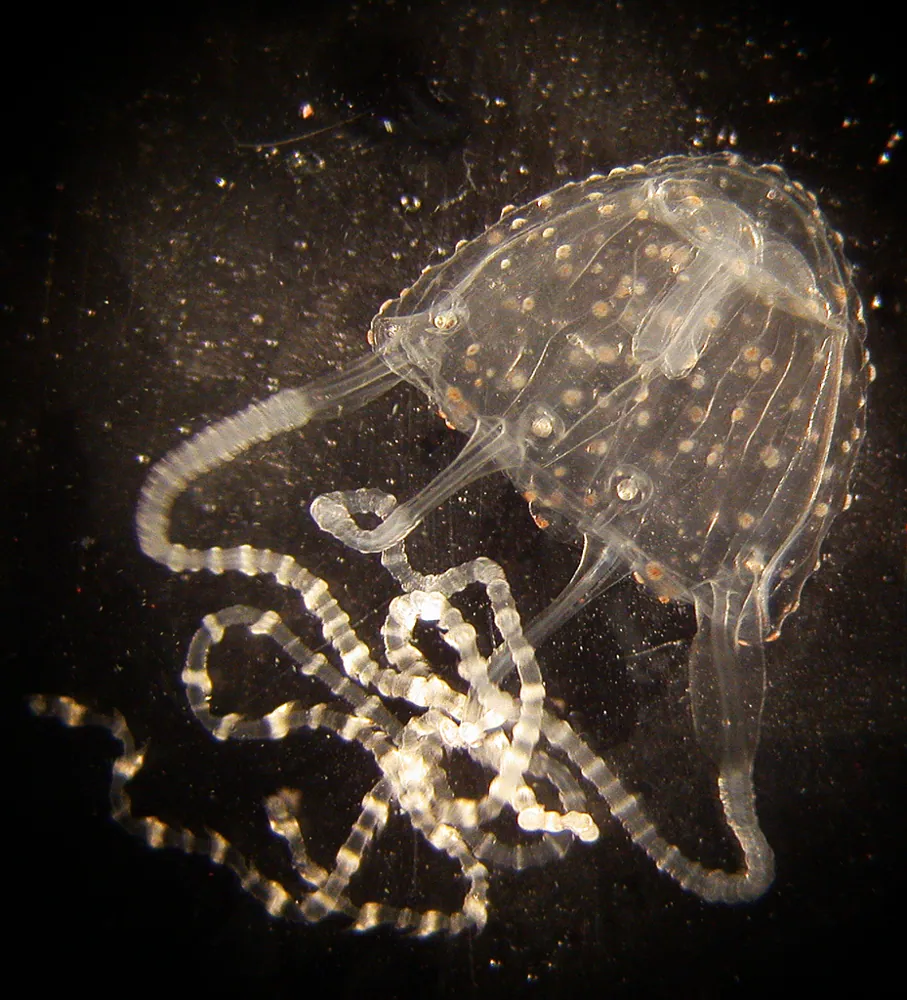
 Bí o ṣe lè dá a mọ̀
- The bell is square-shaped and very small, about 12 mm high and 30 mm across.1
- It has four long tentacles, one from each corner of the bell.1
- The tentacles range from 5 to 50 cm long.1
- Its small size means it often goes unseen in open water.1
A sábà máa ń ṣì í mọ̀ sí: The common name Irukandji jellyfish is also used for other Irukandji jellyfish, such as Malo kingi. The name alone does not tell them apart.1
Agbára oró
Ẹgbẹẹgbẹ̀rún sẹ́ẹ̀lì ìtani kékeré máa ń ta jáde nígbà tí nǹkan bá fọwọ́ kàn wọ́n.
Kí ni oró rẹ̀ máa ń ṣe?
This jellyfish is extremely venomous. Its venom comes from stinging cells called nematocysts in its tentacles and bell, and it changes as the jellyfish matures. A sting can cause Irukandji syndrome, with muscle aches, back pain, nausea, headaches, chest and stomach pains, sweating, high blood pressure and difficulty breathing.1
Báwo ló ṣe léwu tó fún ènìyàn?
Ewu fún ènìyàn: Ó léwu gan-anÓ lè pa ènìyàn tí kò bá rí ìtọ́jú.Irukandji syndrome can be severe, and the symptoms are described in detail in medical accounts. Most reported incidents have been in Australia during the warm summer season. Because the jellyfish is so small, people often do not see it before they are stung.1
 Bí ó bá ta ni
- In hospital, patients are given intravenous morphine, hydromorphone or fentanyl for pain. Pethidine is avoided because of its toxic metabolite norpethidine.1
- Jáde kúrò nínú omi kí o sì yọ gbogbo okùn-ọwọ́ rẹ̀ (tentacles) kúrò (pẹ̀lú ìbọ̀wọ́ tàbí aṣọ).
- Fún box jellyfish ilẹ̀ olóoru: da ọtí kíkan (vinegar) sí ibi tí ó ti ta ni fún ó kéré tán ìṣẹ́jú-àáyá 30, pe fún ìrànlọ́wọ́ kí o sì múra láti ṣe CPR (ìmúsọjí ọkàn àti èémí). Fún bluebottles àti ọ̀pọ̀ àwọn yòókù: fi omi òkun fọ̀ ọ́, lẹ́yìn náà omi gbígbóná fún ìrora náà.
Máa kọ́kọ́ pe nọ́ńbà pàjáwìrì rẹ nígbà gbogbo (112, 000, 911). Èyí jẹ́ ìtọ́sọ́nà ìtọ́jú àkọ́kọ́ gbogbogbò, kì í ṣe ìmọ̀ràn ìṣègùn. Ìpìlẹ̀ ìtọ́jú àkọ́kọ́
 Wà láìléwu
- Má ṣe fọwọ́ kan, mú tàbí yọ ẹranko igbó lẹ́nu láéláé, kódà bí ó bá kéré, kódà bí ó bá dà bí ẹni pé ó ń sùn tàbí ó ti kú.
- Fún un ní àyè. Bí o bá pàdé ọ̀kan, farabalẹ̀, sẹ́yìn díẹ̀díẹ̀ kí o sì jẹ́ kí ó máa bá ọ̀nà rẹ̀ lọ.
- Bí ọ̀kan bá ta ọ́: farabalẹ̀, má ṣe mira, pe nọ́ńbà pàjáwìrì rẹ (112, 000, 911) tàbí lọ sí ilé ìwòsàn kíákíá. Rántí bí ó ṣe rí, fọ́tò máa ń ṣèrànwọ́.
Kò wá ọ kiri láti ṣe ọ́ léṣe. Ó ń lo oró rẹ̀ láti mú oúnjẹ tàbí láti dáàbò bo ara rẹ̀, ó sì fẹ́ràn láti farapamọ́ jù. Sí i nípa wíwà láìléwu
Níbo ní ayé?
Báwo ló ṣe tóbi tó?
Báwo ló ṣe gùn tó?
 ó kúrú ju ọmọdínrín ìka rẹ lọ
 lè lúwẹ̀ẹ́ gígùn adágún ìwẹ̀ ńlá (50 m) ní ìṣẹ́jú-àáyá 36
Báwo ni Irukandji jellyfish ṣe tóbi tó tí a bá fi wé ÌWỌ?
Ìṣirò nìkan nínú bráwúsà rẹ. A kò fi ohunkóhun pamọ́, a kò sì fi ránṣẹ́ sí ibikíbi.
Báwo ló ṣe yára tó?
Òtítọ́
Jack Barnes of Cairns, Australia, discovered the species. During an exploration aimed at finding the cause of Irukandji syndrome, he allowed himself, a lifeguard and his 9-year-old son to be stung.1
Irukandji syndrome, which this jellyfish can cause, was first identified after a group of swimmers were stung in open water near North Queensland, Australia.1
Its venom changes in composition as the jellyfish grows, matching its change in prey from invertebrates to fish.1
Its life cycle alternates between a young form that attaches to a reef or rock and an adult form that swims freely in the water.1
This jellyfish is a type of box jellyfish, a group known for potent venom.1
Fún àwọn amòye oró
- Orúkọ sáyẹ́ǹsì
- Carukia barnesi
- Ẹgbẹ́
- Jellyfish àti àwọn ẹ̀dá òkun tó ń ta ni
- Ìdílé
- Carukiidae2
- Ètò
- Carybdeida
- Àwọn kọ́ńtínẹ́ńtì
- Òkun Íńdíà, Òkun Pàsífíìkì, Òkun Coral, Òkun Tímọ̀ àti Òkun Àráfúrà, Àwọn òkun ńlá
- Àwọn ọmọ
- Young jellyfish begin as a swimming planula larva, which settles on a reef or rock and grows into a polyp. The polyp later forms a colony that develops into an adult medusa.1
- Ewu fún ènìyàn
- 4 / 5: Ó léwu gan-an3
Ibi tí àwọn òtítọ́ ti wá
- Carukia barnesi (Wikipedia (CC BY-SA 4.0))
- Carukia barnesi (iNaturalist): orúkọ àti ìpínsísọ̀rí.
- Venom Wiki: ìpele ewu, ìtóbi déédé àti àfojúbù ìyára jẹ́ tiwa. Wo bí a ṣe ń ṣírò wọn: Bí a ṣe ń díwọ̀n ewu.
Gbogbo òtítọ́ ojú-ìwé yìí ní nọ́ńbà tó tọ́ka sí orísun rẹ̀. Bí a bá ṣe àṣìṣe, má bínú, olólùfẹ́ ẹranko ni wá, kì í ṣe ìwé ìròyìn sáyẹ́ǹsì. Sọ fún wa ní [email protected] a ó sì tún un ṣe.
 Ebi ń pa àkekèé! Iṣẹ́ akanṣe ẹnì kan ṣoṣo ni Venom Wiki: ọ̀fẹ́ ni, kò sí ìpolówó, kò sì sí olùtọpinpin. Ẹ̀bùn kékeré ń ràn án lọ́wọ́ láti wà lórí íńtánẹ́ẹ̀tì.Bọ́ àkekèé
Sí i láti inú ẹgbẹ́ kan náà: Jellyfish àti àwọn ẹ̀dá òkun tó ń ta ni
 Australian box jellyfishJellyfish àti àwọn ẹ̀dá òkun tó ń ta niApaniMá ṣe fọwọ́ kàn án
 Portuguese man o' warJellyfish àti àwọn ẹ̀dá òkun tó ń ta niÓ nílò dókítàMá ṣe fọwọ́ kàn án
 Lion's mane jellyfishJellyfish àti àwọn ẹ̀dá òkun tó ń ta niÓ kàn ń dunniMá ṣe fọwọ́ kàn án
 Moon jellyfishJellyfish àti àwọn ẹ̀dá òkun tó ń ta niAláìléwu
 Common kingslayerJellyfish àti àwọn ẹ̀dá òkun tó ń ta niÓ lè paniMá ṣe fọwọ́ kàn án
 Hell's fire anemoneJellyfish àti àwọn ẹ̀dá òkun tó ń ta niÓ nílò dókítàMá ṣe fọwọ́ kàn án
Ó tún ń gbé ní: Òkun Íńdíà
 Geography coneÌgbín cone àti octopusApani
 Greater blue-ringed octopusÌgbín cone àti octopusApani
 Southern blue-ringed octopusÌgbín cone àti octopusApani
 Hawksbill sea turtleÀwọn ẹranko onímájèlé mìírànÓ lè pani
 Reef stonefishẸja olóróÓ lè paniMá ṣe fọwọ́ kàn án
 Crown-of-thorns starfishSea urchin, ẹja ìràwọ̀ àti kòkòrò inú òkunÓ nílò dókítàMá ṣe fọwọ́ kàn án