
 Áfíríkà
 Éṣíà
Éṣíà Yúróòpù
 Gúúsù Amẹ́ríkà
 Ọsirélíà àti Òṣéáníà
 Antáktíkà
 Òkun Pàsífíìkì
 Òkun Àtìláńtíìkì
 Òkun Íńdíà
 Òkun Áktíkì
 Òkun Mẹditaréníà
 Òkun Pupa
 Òkun Káríbíànù
 Òkun Coral
 Òkun Gúúsù Ṣáínà
 Òkun Fílípínì
 Òkun Andaman
 Òkun Àríwá
 Òkun Tímọ̀ àti Òkun Àráfúrà
 Ìyawọlẹ̀ Òkun Bẹ̀ngál
 Ìyawọlẹ̀ Òkun Kalifọ́níà
Longhorn cowfish
 Májèlé nínú awọ rẹ̀Oúnjẹ rẹ̀: Díẹ̀ nínú ohun gbogboOnímájèlé, kì í ṣe olóró
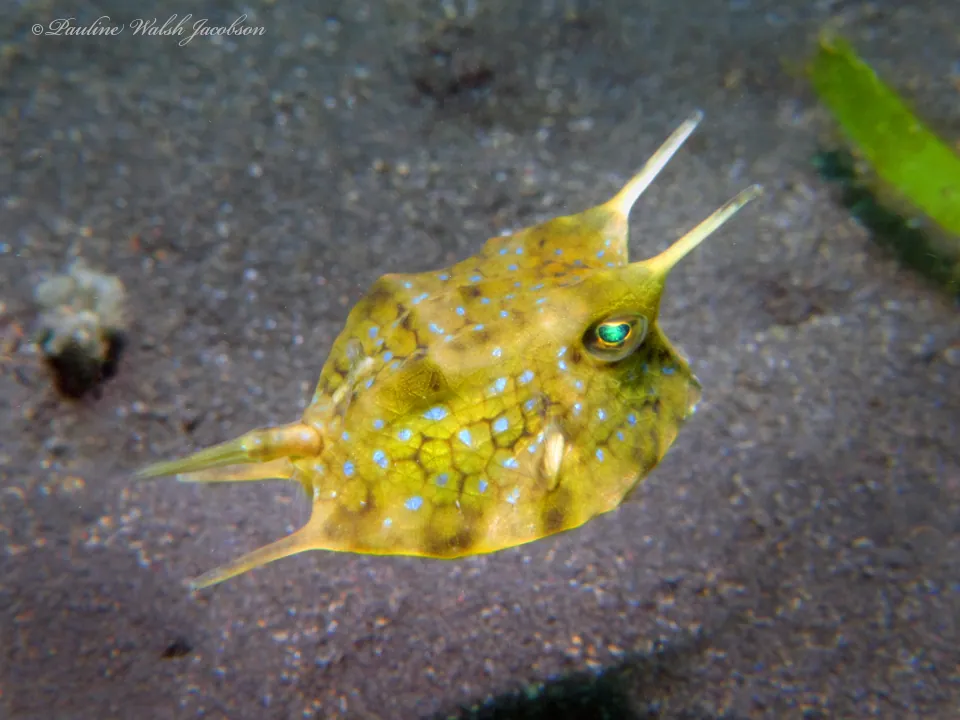
The longhorn cowfish is a small, boxy reef fish with two long horns above its eyes, like a cow's. It lives in warm waters across the Indo-Pacific, from the Red Sea to Japan and Australia. It is a slow swimmer that protects itself with a hard box-like body and a skin poison.1


 Bí o ṣe lè dá a mọ̀
- Two long horns stick out from the front of the head, above the large eyes1
- Its body is a solid, triangular, box-like shell made of fused plate-like scales, with the fins and tail sticking out1
- The base colour is yellow to olive, decorated with white or bluish spots1
- It has no gill cover, only a small slit or hole behind the head1
- It swims slowly with its fins, so it looks as if it is hovering1
Agbára májèlé
Awọ rẹ̀ ní májèlé. Ó léwu láti fọwọ́ kàn án, lá a tàbí jẹ ẹ́.
Kí ni májèlé rẹ̀ máa ń ṣe?
When it is severely stressed, it can release a toxin called pahutoxin from the mucus on its skin. This poison is toxic to other boxfish and has properties similar to sea cucumber toxins.1
Báwo ló ṣe léwu tó fún ènìyàn?
Ewu fún ènìyàn: Fúyẹ́Bí ìtani oyin tàbí kò tó bẹ́ẹ̀. Kò fẹ́rẹ̀ẹ́ léwu fún ènìyàn.Kí ni ó máa ń ṣe nígbà tí ẹ̀rù bá bà á?
Its hard box-like shell, its horns, which can be used to charge at predators, and its skin poison all protect it. If severely stressed, it may release its toxin.1
 Bí ẹnìkan bá fọwọ́ kàn án tàbí jẹ ẹ́
- Bí ẹnìkan bá jẹ ẹ́ tàbí tí ó ní àmì àìsàn lẹ́yìn tí ó jẹ ẹ́: pe nọ́ńbà pàjáwìrì rẹ tàbí ibùdó ìmọ̀ràn májèlé lẹ́sẹ̀kẹsẹ̀.
Máa kọ́kọ́ pe nọ́ńbà pàjáwìrì rẹ nígbà gbogbo (112, 000, 911). Èyí jẹ́ ìtọ́sọ́nà ìtọ́jú àkọ́kọ́ gbogbogbò, kì í ṣe ìmọ̀ràn ìṣègùn. Ìpìlẹ̀ ìtọ́jú àkọ́kọ́
 Wà láìléwu
- Má ṣe fọwọ́ kan, mú tàbí yọ ẹranko igbó lẹ́nu láéláé, kódà bí ó bá kéré, kódà bí ó bá dà bí ẹni pé ó ń sùn tàbí ó ti kú.
- Fún un ní àyè. Bí o bá pàdé ọ̀kan, farabalẹ̀, sẹ́yìn díẹ̀díẹ̀ kí o sì jẹ́ kí ó máa bá ọ̀nà rẹ̀ lọ.
- Bí o bá fọwọ́ kàn án tàbí jẹ ẹ́: má ṣe fọwọ́ pa ojú tàbí ẹnu rẹ, fọ ọwọ́ rẹ kí o sì wá ìrànlọ́wọ́ ìṣègùn.
Kò wá ọ kiri láti ṣe ọ́ léṣe. Májèlé rẹ̀ wà níbẹ̀ kìkì kí ohunkóhun má baà jẹ ẹ́. Sí i nípa wíwà láìléwu
Níbo ní ayé?
Báwo ló ṣe tóbi tó?
Báwo ló ṣe gùn tó?
Báwo ló ṣe wúwo tó?
 ó gùn tó ọ̀gẹ̀dẹ̀ 3 tí a tò tẹ̀léra
 ó gùn tó bíríkì ìṣeré 16 tí a tò sí ìlà kan
 lè lúwẹ̀ẹ́ gígùn adágún ìwẹ̀ ńlá (50 m) ní ìṣẹ́jú-àáyá 45
Báwo ni Longhorn cowfish ṣe tóbi tó tí a bá fi wé ÌWỌ?
Ìṣirò nìkan nínú bráwúsà rẹ. A kò fi ohunkóhun pamọ́, a kò sì fi ránṣẹ́ sí ibikíbi.
Báwo ló ṣe yára tó?
Òtítọ́
Its horns may have evolved to make it harder for predators to swallow it, and if damaged, they can grow back within a few months.1
It can make humming and clicking sounds using muscles connected to its swim bladder.1
It is slow and easy to catch by hand, and it makes a grunting noise when caught.1
On Pamban Island in India, a local belief says cows on the island turned into these fish when the land separated.1
It helps protect coral reefs by eating invertebrates that damage them, and it is also important to reef growth.1
Fún àwọn amòye oró
- Orúkọ sáyẹ́ǹsì
- Lactoria cornuta
- Ẹgbẹ́
- Àwọn ẹranko onímájèlé mìíràn
- Ìdílé
- Ostraciidae2
- Ètò
- Tetraodontiformes
- Àwọn kọ́ńtínẹ́ńtì
- Òkun Pàsífíìkì, Òkun Íńdíà, Òkun Pupa, Òkun Coral, Òkun Fílípínì, Òkun Gúúsù Ṣáínà, Òkun Tímọ̀ àti Òkun Àráfúrà, Ìyawọlẹ̀ Òkun Bẹ̀ngál, Àwọn òkun ńlá
- Àwọn ọmọ
- Females spawn in small groups, with one male and 3 to 4 females in each harem. The oval eggs hatch into larvae that quickly form the box-like armour.1
- Ewu fún ènìyàn
- 1 / 5: Fúyẹ́3
Ibi tí àwọn òtítọ́ ti wá
- Longhorn cowfish (Wikipedia (CC BY-SA 4.0))
- Lactoria cornuta (iNaturalist): orúkọ àti ìpínsísọ̀rí.
- Venom Wiki: ìpele ewu, ìtóbi déédé àti àfojúbù ìyára jẹ́ tiwa. Wo bí a ṣe ń ṣírò wọn: Bí a ṣe ń díwọ̀n ewu.
Gbogbo òtítọ́ ojú-ìwé yìí ní nọ́ńbà tó tọ́ka sí orísun rẹ̀. Bí a bá ṣe àṣìṣe, má bínú, olólùfẹ́ ẹranko ni wá, kì í ṣe ìwé ìròyìn sáyẹ́ǹsì. Sọ fún wa ní [email protected] a ó sì tún un ṣe.
 Ebi ń pa àkekèé! Iṣẹ́ akanṣe ẹnì kan ṣoṣo ni Venom Wiki: ọ̀fẹ́ ni, kò sí ìpolówó, kò sì sí olùtọpinpin. Ẹ̀bùn kékeré ń ràn án lọ́wọ́ láti wà lórí íńtánẹ́ẹ̀tì.Bọ́ àkekèé
Sí i láti inú ẹgbẹ́ kan náà: Àwọn ẹranko onímájèlé mìíràn
 Japanese pufferfishÀwọn ẹranko onímájèlé mìírànApani
 Hawksbill sea turtleÀwọn ẹranko onímájèlé mìírànÓ lè pani
 Greenland sharkÀwọn ẹranko onímájèlé mìírànÓ kàn ń dunni
 Silver-cheeked toadfishÀwọn ẹranko onímájèlé mìírànApani
 Blackspotted pufferÀwọn ẹranko onímájèlé mìírànÓ lè pani
 White-spotted pufferÀwọn ẹranko onímájèlé mìírànÓ lè pani
Ó tún ń gbé ní: Òkun Pàsífíìkì
 Australian box jellyfishJellyfish àti àwọn ẹ̀dá òkun tó ń ta niApaniMá ṣe fọwọ́ kàn án
 Geography coneÌgbín cone àti octopusApani
 Greater blue-ringed octopusÌgbín cone àti octopusApani
 Southern blue-ringed octopusÌgbín cone àti octopusApani
 Irukandji jellyfishJellyfish àti àwọn ẹ̀dá òkun tó ń ta niÓ lè paniMá ṣe fọwọ́ kàn án
 Reef stonefishẸja olóróÓ lè paniMá ṣe fọwọ́ kàn án