
 Áfíríkà
 Éṣíà
Éṣíà Yúróòpù
 Gúúsù Amẹ́ríkà
 Ọsirélíà àti Òṣéáníà
 Antáktíkà
 Òkun Pàsífíìkì
 Òkun Àtìláńtíìkì
 Òkun Íńdíà
 Òkun Áktíkì
 Òkun Mẹditaréníà
 Òkun Pupa
 Òkun Káríbíànù
 Òkun Coral
 Òkun Gúúsù Ṣáínà
 Òkun Fílípínì
 Òkun Andaman
 Òkun Àríwá
 Òkun Tímọ̀ àti Òkun Àráfúrà
 Ìyawọlẹ̀ Òkun Bẹ̀ngál
 Ìyawọlẹ̀ Òkun Kalifọ́níà
Mexican beaded lizard
 Ìbùjẹ
ÌbùjẹThe Mexican beaded lizard is a venomous lizard found mainly in Mexico and southern Guatemala. It is one of only a few lizards known to have evolved a true venom delivery system. Its venom is also being studied for possible medicines.1



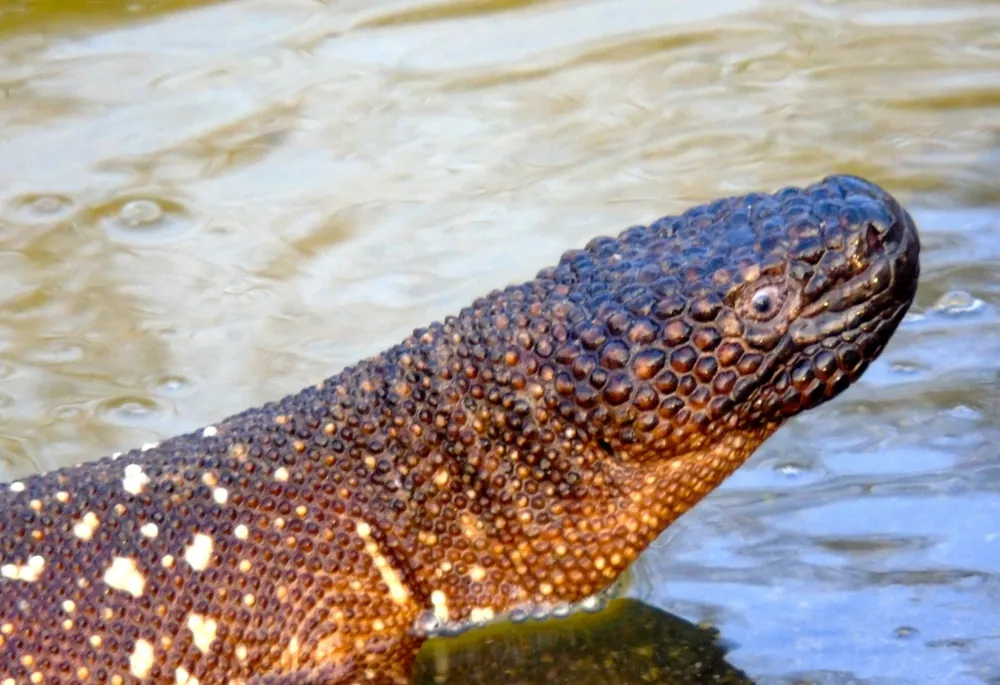
 Bí o ṣe lè dá a mọ̀
- Black with yellowish spots or bands.1
- Small, beadlike scales that do not overlap, which give it its name.1
- Stocky body with a broad head.1
- Short tail that stores fat, and does not regrow if broken.1
- Adults are 57 to 91 cm long.1
A sábà máa ń ṣì í mọ̀ sí: The Gila monster is its closest relative and looks similar. The Mexican beaded lizard is larger, and its colours are duller, black with yellowish bands.1
Agbára oró
Oró ń jáde láti inú eyín oró tàbí eyín rẹ̀ nígbà tí ó bá bùjẹ.
Kí ni oró rẹ̀ máa ń ṣe?
Its venom is a weak hemotoxin, meaning it attacks blood and tissue. It can cause respiratory failure, which is when breathing fails. In humans, bites cause severe pain that can spread well beyond the bite and last up to 24 hours, along with swelling, weakness, sweating and a rapid drop in blood pressure.1
Báwo ló ṣe léwu tó fún ènìyàn?
Ewu fún ènìyàn: Ó le gan-anÌbùjẹ nílò dókítà. Ikú kò wọ́pọ̀ rárá.Human deaths from its bites are rare. Eight human bites were documented in the past century, and almost all happened when people prodded captive lizards with a finger or bare foot.1
 Bí ó bá bùjẹ
- Fọ ọgbẹ́ náà, jẹ́ kí ẹni náà farabalẹ̀, kí o sì wá ìrànlọ́wọ́ ìṣègùn.
Máa kọ́kọ́ pe nọ́ńbà pàjáwìrì rẹ nígbà gbogbo (112, 000, 911). Èyí jẹ́ ìtọ́sọ́nà ìtọ́jú àkọ́kọ́ gbogbogbò, kì í ṣe ìmọ̀ràn ìṣègùn. Ìpìlẹ̀ ìtọ́jú àkọ́kọ́
 Wà láìléwu
- Má ṣe fọwọ́ kan, mú tàbí yọ ẹranko igbó lẹ́nu láéláé, kódà bí ó bá kéré, kódà bí ó bá dà bí ẹni pé ó ń sùn tàbí ó ti kú.
- Fún un ní àyè. Bí o bá pàdé ọ̀kan, farabalẹ̀, sẹ́yìn díẹ̀díẹ̀ kí o sì jẹ́ kí ó máa bá ọ̀nà rẹ̀ lọ.
- Bí ọ̀kan bá bù ọ́ jẹ: farabalẹ̀, má ṣe mira, pe nọ́ńbà pàjáwìrì rẹ (112, 000, 911) tàbí lọ sí ilé ìwòsàn kíákíá. Rántí bí ó ṣe rí, fọ́tò máa ń ṣèrànwọ́.
Kò wá ọ kiri láti ṣe ọ́ léṣe. Ó ń lo oró rẹ̀ láti mú oúnjẹ tàbí láti dáàbò bo ara rẹ̀, ó sì fẹ́ràn láti farapamọ́ jù. Sí i nípa wíwà láìléwu
Báwo ló ṣe tóbi tó?
Báwo ló ṣe gùn tó?
Báwo ló ṣe wúwo tó?
 ó gùn tó ológbò ilé 2 láti imú dé ìrù
 ó gùn tó ọ̀gẹ̀dẹ̀ 5 tí a tò tẹ̀léraó wúwo tó ológbò ilé
 lè sáré mítà 100 ní ìṣẹ́jú-àáyá 140 (ènìyàn tó yára jùlọ nílò 9.6)
Báwo ni Mexican beaded lizard ṣe tóbi tó tí a bá fi wé ÌWỌ?
Ìṣirò nìkan nínú bráwúsà rẹ. A kò fi ohunkóhun pamọ́, a kò sì fi ránṣẹ́ sí ibikíbi.
Báwo ló ṣe yára tó?


Òtítọ́
It is one of only two venomous beaded lizard species, and the only lizards known to have evolved an overt venom delivery system, along with the rest of its genus.1
Some compounds in its venom are being studied for possible treatments of diabetes, Alzheimer's disease and HIV. One of them, exendin-3, is the basis of the drug exenatide.1
The beaded lizard is immune to the effects of its own venom.1
It is larger than the Gila monster, with an average adult weight of 800 g, and large specimens exceed 2,000 g.1
Beaded lizards have forked pink tongues that they use to smell, with the help of a Jacobson's organ.1
Young beaded lizards are rarely seen, as they are believed to spend much of their early lives underground.1
Olùfọ́ àròsọ
Àròsọ: The beaded lizard is more venomous than a rattlesnake, can cause lightning strikes with its tail, or can make a pregnant woman miscarry by looking at her.
Òtítọ́: These beliefs are incorrect. Its venom is weak, and human deaths are rare.1
Fún àwọn amòye oró
- Orúkọ sáyẹ́ǹsì
- Heloderma horridum
- Ẹgbẹ́
- Alángbá olóró
- Ìdílé
- Helodermatidae2
- Ètò
- Squamata
- Àwọn kọ́ńtínẹ́ńtì
- Àríwá Amẹ́ríkà
- Àwọn ọmọ
- It lays clutches of 2 to 30 eggs in late summer or early fall, and the eggs hatch the following spring or summer.1
- Bí ó ṣe ń ṣe nínú igbó
- Threatened (Mexican law, category A). Listed on Appendix II of CITES.1
- Ewu fún ènìyàn
- 3 / 5: Ó le gan-an3
Ibi tí àwọn òtítọ́ ti wá
- Mexican beaded lizard (Wikipedia (CC BY-SA 4.0))
- Heloderma horridum (iNaturalist): orúkọ àti ìpínsísọ̀rí.
- Venom Wiki: ìpele ewu, ìtóbi déédé àti àfojúbù ìyára jẹ́ tiwa. Wo bí a ṣe ń ṣírò wọn: Bí a ṣe ń díwọ̀n ewu.
Gbogbo òtítọ́ ojú-ìwé yìí ní nọ́ńbà tó tọ́ka sí orísun rẹ̀. Bí a bá ṣe àṣìṣe, má bínú, olólùfẹ́ ẹranko ni wá, kì í ṣe ìwé ìròyìn sáyẹ́ǹsì. Sọ fún wa ní [email protected] a ó sì tún un ṣe.
 Ebi ń pa àkekèé! Iṣẹ́ akanṣe ẹnì kan ṣoṣo ni Venom Wiki: ọ̀fẹ́ ni, kò sí ìpolówó, kò sì sí olùtọpinpin. Ẹ̀bùn kékeré ń ràn án lọ́wọ́ láti wà lórí íńtánẹ́ẹ̀tì.Bọ́ àkekèé
 Gila monster
 Chiapan beaded lizard
 Guatemalan beaded lizard
 Rio Fuerte beaded lizard
 Komodo dragon
 Desert monitor
 Terciopelo
 Eastern coral snake
 Eastern diamondback rattlesnake
 Eyelash viper
 Timber rattlesnake
 Western diamondback rattlesnake