
 Áfíríkà
 Éṣíà
Éṣíà Yúróòpù
 Gúúsù Amẹ́ríkà
 Ọsirélíà àti Òṣéáníà
 Antáktíkà
 Òkun Pàsífíìkì
 Òkun Àtìláńtíìkì
 Òkun Íńdíà
 Òkun Áktíkì
 Òkun Mẹditaréníà
 Òkun Pupa
 Òkun Káríbíànù
 Òkun Coral
 Òkun Gúúsù Ṣáínà
 Òkun Fílípínì
 Òkun Andaman
 Òkun Àríwá
 Òkun Tímọ̀ àti Òkun Àráfúrà
 Ìyawọlẹ̀ Òkun Bẹ̀ngál
 Ìyawọlẹ̀ Òkun Kalifọ́níà
Komodo dragon
 Ìbùjẹ
ÌbùjẹThe Komodo dragon is a very large lizard, and it is the biggest lizard alive today. It lives on a few small islands in Eastern Indonesia, where it hunts deer and pigs and sits at the top of its food chain. Adults occasionally attack people, so it is a dangerous animal to keep your distance from.1



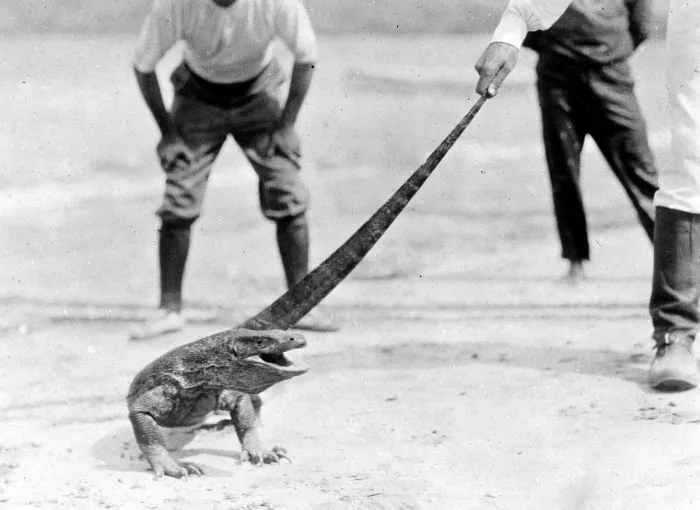
 Bí o ṣe lè dá a mọ̀
- A very large, heavy-bodied lizard. Males can reach 3 m in length.1
- A tail about as long as its body.1
- Armoured, bony scales that give the skin a rugged, chain-mail look.1
- Serrated, saw-like teeth, and saliva that is often tinged with blood.1
- A long, yellow, deeply forked tongue that it flicks like a snake.1
Agbára oró
Oró ń jáde láti inú eyín oró tàbí eyín rẹ̀ nígbà tí ó bá bùjẹ.
Báwo ló ṣe léwu tó fún ènìyàn?
Ewu fún ènìyàn: Ó léwu gan-anÓ lè pa ènìyàn tí kò bá rí ìtọ́jú.Adult Komodo dragons occasionally attack humans, so they should be treated as dangerous. Their size and strength make any attack serious.1
 Bí ó bá bùjẹ
- Fọ ọgbẹ́ náà, jẹ́ kí ẹni náà farabalẹ̀, kí o sì wá ìrànlọ́wọ́ ìṣègùn.
Máa kọ́kọ́ pe nọ́ńbà pàjáwìrì rẹ nígbà gbogbo (112, 000, 911). Èyí jẹ́ ìtọ́sọ́nà ìtọ́jú àkọ́kọ́ gbogbogbò, kì í ṣe ìmọ̀ràn ìṣègùn. Ìpìlẹ̀ ìtọ́jú àkọ́kọ́
 Wà láìléwu
- Má ṣe fọwọ́ kan, mú tàbí yọ ẹranko igbó lẹ́nu láéláé, kódà bí ó bá kéré, kódà bí ó bá dà bí ẹni pé ó ń sùn tàbí ó ti kú.
- Fún un ní àyè. Bí o bá pàdé ọ̀kan, farabalẹ̀, sẹ́yìn díẹ̀díẹ̀ kí o sì jẹ́ kí ó máa bá ọ̀nà rẹ̀ lọ.
- Bí ọ̀kan bá bù ọ́ jẹ: farabalẹ̀, má ṣe mira, pe nọ́ńbà pàjáwìrì rẹ (112, 000, 911) tàbí lọ sí ilé ìwòsàn kíákíá. Rántí bí ó ṣe rí, fọ́tò máa ń ṣèrànwọ́.
Kò wá ọ kiri láti ṣe ọ́ léṣe. Ó ń lo oró rẹ̀ láti mú oúnjẹ tàbí láti dáàbò bo ara rẹ̀, ó sì fẹ́ràn láti farapamọ́ jù. Sí i nípa wíwà láìléwu
Báwo ló ṣe tóbi tó?
Báwo ló ṣe gùn tó?
Báwo ló ṣe wúwo tó?
 ó gùn tó ajá 3 láti imú dé ìrù
 ó gùn tó ọ̀gẹ̀dẹ̀ 17 tí a tò tẹ̀léra
 lè sáré mítà 100 ní ìṣẹ́jú-àáyá 18 (ènìyàn tó yára jùlọ nílò 9.6)
Báwo ni Komodo dragon ṣe tóbi tó tí a bá fi wé ÌWỌ?
Ìṣirò nìkan nínú bráwúsà rẹ. A kò fi ohunkóhun pamọ́, a kò sì fi ránṣẹ́ sí ibikíbi.
Báwo ló ṣe yára tó?

Òtítọ́
The Komodo dragon is the largest living lizard, and its size is unusual among reptiles.1
Its teeth are replaced about every 40 days, and it has up to five replacement teeth for each tooth position at any time.1
Fossils show that Komodo dragons once lived in Australia, where they existed alongside megalania, the largest land lizard ever.1
The 1926 expedition by W. Douglas Burden inspired the 1933 film King Kong.1
Olùfọ́ àròsọ
Àròsọ: Komodo dragons are deaf.
Òtítọ́: They were once thought to be deaf, but a London Zoo keeper trained one to come to her voice even when she was out of sight. They hear low-pitched sounds, roughly between 400 and 2,000 hertz.1
Fún àwọn amòye oró
- Orúkọ sáyẹ́ǹsì
- Varanus komodoensis
- Ẹgbẹ́
- Alángbá olóró
- Ìdílé
- Varanidae2
- Ètò
- Squamata
- Àwọn kọ́ńtínẹ́ńtì
- Éṣíà
- Àwọn ọmọ
- Mating happens between May and August, and females lay up to 20 eggs in September, in an abandoned megapode nest or a hole they dig themselves. The eggs take seven to eight months to hatch, usually in April. Young Komodo dragons take 8 to 11 years to mature.1
- Ọjọ́ ayé
- nǹkan bí ọdún 301
- Bí ó ṣe ń ṣe nínú igbó
- Endangered1
- Ewu fún ènìyàn
- 4 / 5: Ó léwu gan-an3
Ibi tí àwọn òtítọ́ ti wá
- Komodo dragon (Wikipedia (CC BY-SA 4.0))
- Varanus komodoensis (iNaturalist): orúkọ àti ìpínsísọ̀rí.
- Venom Wiki: ìpele ewu, ìtóbi déédé àti àfojúbù ìyára jẹ́ tiwa. Wo bí a ṣe ń ṣírò wọn: Bí a ṣe ń díwọ̀n ewu.
Gbogbo òtítọ́ ojú-ìwé yìí ní nọ́ńbà tó tọ́ka sí orísun rẹ̀. Bí a bá ṣe àṣìṣe, má bínú, olólùfẹ́ ẹranko ni wá, kì í ṣe ìwé ìròyìn sáyẹ́ǹsì. Sọ fún wa ní [email protected] a ó sì tún un ṣe.
 Ebi ń pa àkekèé! Iṣẹ́ akanṣe ẹnì kan ṣoṣo ni Venom Wiki: ọ̀fẹ́ ni, kò sí ìpolówó, kò sì sí olùtọpinpin. Ẹ̀bùn kékeré ń ràn án lọ́wọ́ láti wà lórí íńtánẹ́ẹ̀tì.Bọ́ àkekèé
 Desert monitor
 Gila monster
 Mexican beaded lizard
 Lace monitor
 Perentie
 Spiny-tailed monitor
 Deathstalker
 Indian cobra
 Indian saw-scaled viper
 King cobra
 Puff adder
 Paramọlẹ Russell