
 Áfíríkà
 Éṣíà
Éṣíà Yúróòpù
 Gúúsù Amẹ́ríkà
 Ọsirélíà àti Òṣéáníà
 Antáktíkà
 Òkun Pàsífíìkì
 Òkun Àtìláńtíìkì
 Òkun Íńdíà
 Òkun Áktíkì
 Òkun Mẹditaréníà
 Òkun Pupa
 Òkun Káríbíànù
 Òkun Coral
 Òkun Gúúsù Ṣáínà
 Òkun Fílípínì
 Òkun Andaman
 Òkun Àríwá
 Òkun Tímọ̀ àti Òkun Àráfúrà
 Ìyawọlẹ̀ Òkun Bẹ̀ngál
 Ìyawọlẹ̀ Òkun Kalifọ́níà
Sea apple
 Onímájèlé tí a bá jẹ ẹ́Oúnjẹ rẹ̀: Oúnjẹ òkun kékeréOnímájèlé, kì í ṣe olóró
The sea apple is a round, colourful sea cucumber that lives in the warm waters of the Indo-Pacific. It filters tiny floating food from the water with its feathery tentacles. It is special because it can release a toxin into the water when it is stressed, which can harm other sea creatures nearby.1

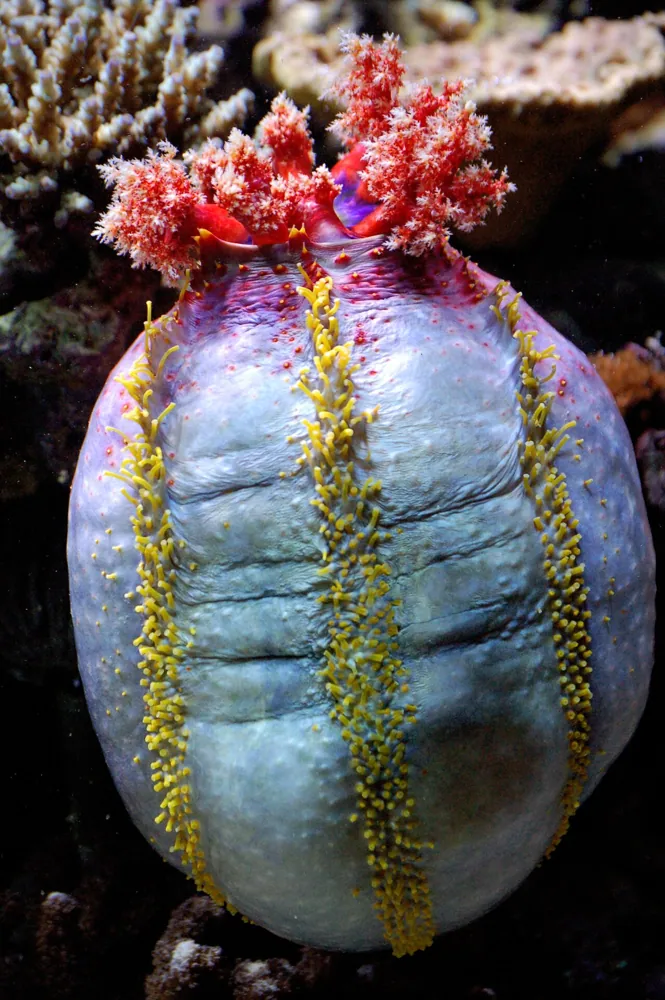
 Bí o ṣe lè dá a mọ̀
Agbára májèlé
Ó léwu kìkì bí ohun kan bá jẹ ẹ́.
Kí ni májèlé rẹ̀ máa ń ṣe?
Sea apples release a toxic saponin called holothurin into the water when they are stressed. Saponin is a chemical that is harmful to other organisms. In aquariums, this toxin can poison other animals living nearby.1
Báwo ló ṣe léwu tó fún ènìyàn?
Ewu fún ènìyàn: Fúyẹ́Bí ìtani oyin tàbí kò tó bẹ́ẹ̀. Kò fẹ́rẹ̀ẹ́ léwu fún ènìyàn.Its toxin can poison other aquarium inhabitants, and this is one reason sea apples are not commonly kept in aquariums.1
Kí ni ó máa ń ṣe nígbà tí ẹ̀rù bá bà á?
When disturbed, sea apples can violently push out their internal organs through their rear end, a process called evisceration. They can also release their toxin into the water.1
 Bí ẹnìkan bá fọwọ́ kàn án tàbí jẹ ẹ́
- Fi ọgbẹ́ náà sínú omi gbígbóná, tó gbóná tó bí ẹni náà ṣe lè fara dà á láìjóná, kí o sì wá ìrànlọ́wọ́ ìṣègùn láti yọ ẹ̀gún náà. Má ṣe gbẹ́ wọn jáde fúnra rẹ.
Máa kọ́kọ́ pe nọ́ńbà pàjáwìrì rẹ nígbà gbogbo (112, 000, 911). Èyí jẹ́ ìtọ́sọ́nà ìtọ́jú àkọ́kọ́ gbogbogbò, kì í ṣe ìmọ̀ràn ìṣègùn. Ìpìlẹ̀ ìtọ́jú àkọ́kọ́
 Wà láìléwu
- Má ṣe fọwọ́ kan, mú tàbí yọ ẹranko igbó lẹ́nu láéláé, kódà bí ó bá kéré, kódà bí ó bá dà bí ẹni pé ó ń sùn tàbí ó ti kú.
- Fún un ní àyè. Bí o bá pàdé ọ̀kan, farabalẹ̀, sẹ́yìn díẹ̀díẹ̀ kí o sì jẹ́ kí ó máa bá ọ̀nà rẹ̀ lọ.
- Bí o bá fọwọ́ kàn án tàbí jẹ ẹ́: má ṣe fọwọ́ pa ojú tàbí ẹnu rẹ, fọ ọwọ́ rẹ kí o sì wá ìrànlọ́wọ́ ìṣègùn.
Kò wá ọ kiri láti ṣe ọ́ léṣe. Májèlé rẹ̀ wà níbẹ̀ kìkì kí ohunkóhun má baà jẹ ẹ́. Sí i nípa wíwà láìléwu
Níbo ní ayé?
Báwo ló ṣe tóbi tó?
Báwo ló ṣe gùn tó?
 ó gùn tó bíríkì ìṣeré 6 tí a tò sí ìlà kan
 ó lọ́ra ju ìgbín inú ọgbà lọ
Báwo ni Sea apple ṣe tóbi tó tí a bá fi wé ÌWỌ?
Ìṣirò nìkan nínú bráwúsà rẹ. A kò fi ohunkóhun pamọ́, a kò sì fi ránṣẹ́ sí ibikíbi.
Báwo ló ṣe yára tó?


Òtítọ́
Sea apples can swell to nearly double their original size by drinking large amounts of seawater when threatened or in an unsuitable environment.1
Their swollen bodies let water currents carry them to a new area, which is much quicker than walking.1
In aquariums, sea apples often starve because plankton levels are lower than they need, and they try to feed in the daytime too.1
Hermit crabs and fish often peck at sea apple tentacles, either to eat them or to steal the food caught in them.1
Sea apples usually feed at night, when their delicate tentacles are less at risk from predators.1
Olùfọ́ àròsọ
Àròsọ: Sea apples are safe for reef aquariums.
Òtítọ́: Sea apples are considered reef safe for their compatibility with other species. However, they are unsafe for reef aquariums for other reasons, including starvation and the toxin they release.1
Ibi tí àwọn òtítọ́ ti wá
- Sea apple (Wikipedia (CC BY-SA 4.0))
- Pseudocolochirus violaceus (iNaturalist): orúkọ àti ìpínsísọ̀rí.
- Venom Wiki: ìpele ewu, ìtóbi déédé àti àfojúbù ìyára jẹ́ tiwa. Wo bí a ṣe ń ṣírò wọn: Bí a ṣe ń díwọ̀n ewu.
Gbogbo òtítọ́ ojú-ìwé yìí ní nọ́ńbà tó tọ́ka sí orísun rẹ̀. Bí a bá ṣe àṣìṣe, má bínú, olólùfẹ́ ẹranko ni wá, kì í ṣe ìwé ìròyìn sáyẹ́ǹsì. Sọ fún wa ní [email protected] a ó sì tún un ṣe.
 Ebi ń pa àkekèé! Iṣẹ́ akanṣe ẹnì kan ṣoṣo ni Venom Wiki: ọ̀fẹ́ ni, kò sí ìpolówó, kò sì sí olùtọpinpin. Ẹ̀bùn kékeré ń ràn án lọ́wọ́ láti wà lórí íńtánẹ́ẹ̀tì.Bọ́ àkekèé
Sí i láti inú ẹgbẹ́ kan náà: Sea urchin, ẹja ìràwọ̀ àti kòkòrò inú òkun
 Crown-of-thorns starfishSea urchin, ẹja ìràwọ̀ àti kòkòrò inú òkunÓ nílò dókítàMá ṣe fọwọ́ kàn án
 Flower urchinSea urchin, ẹja ìràwọ̀ àti kòkòrò inú òkunÓ lè pani
 Fire urchinSea urchin, ẹja ìràwọ̀ àti kòkòrò inú òkunÓ nílò dókítàMá ṣe fọwọ́ kàn án
 Bearded firewormSea urchin, ẹja ìràwọ̀ àti kòkòrò inú òkunÓ kàn ń dunniMá ṣe fọwọ́ kàn án
 Black long-spined urchinSea urchin, ẹja ìràwọ̀ àti kòkòrò inú òkunÓ kàn ń dunniMá ṣe fọwọ́ kàn án
 BloodwormSea urchin, ẹja ìràwọ̀ àti kòkòrò inú òkunÓ kàn ń dunni
Ó tún ń gbé ní: Òkun Pàsífíìkì
 Australian box jellyfishJellyfish àti àwọn ẹ̀dá òkun tó ń ta niApaniMá ṣe fọwọ́ kàn án
 Geography coneÌgbín cone àti octopusApani
 Greater blue-ringed octopusÌgbín cone àti octopusApani
 Japanese pufferfishÀwọn ẹranko onímájèlé mìírànApani
 Southern blue-ringed octopusÌgbín cone àti octopusApani
 Hawksbill sea turtleÀwọn ẹranko onímájèlé mìírànÓ lè pani