
 Áfíríkà
 Éṣíà
Éṣíà Yúróòpù
 Gúúsù Amẹ́ríkà
 Ọsirélíà àti Òṣéáníà
 Antáktíkà
 Òkun Pàsífíìkì
 Òkun Àtìláńtíìkì
 Òkun Íńdíà
 Òkun Áktíkì
 Òkun Mẹditaréníà
 Òkun Pupa
 Òkun Káríbíànù
 Òkun Coral
 Òkun Gúúsù Ṣáínà
 Òkun Fílípínì
 Òkun Andaman
 Òkun Àríwá
 Òkun Tímọ̀ àti Òkun Àráfúrà
 Ìyawọlẹ̀ Òkun Bẹ̀ngál
 Ìyawọlẹ̀ Òkun Kalifọ́níà
Southern house spider
 Ìbùjẹ
ÌbùjẹThe southern house spider is a large spider that lives in the Americas, from the southern United States to Argentina. It is often mistaken for the brown recluse, but it is not aggressive and rarely bites. Its males wander around looking for mates, and both sexes can squeeze through very narrow cracks.1

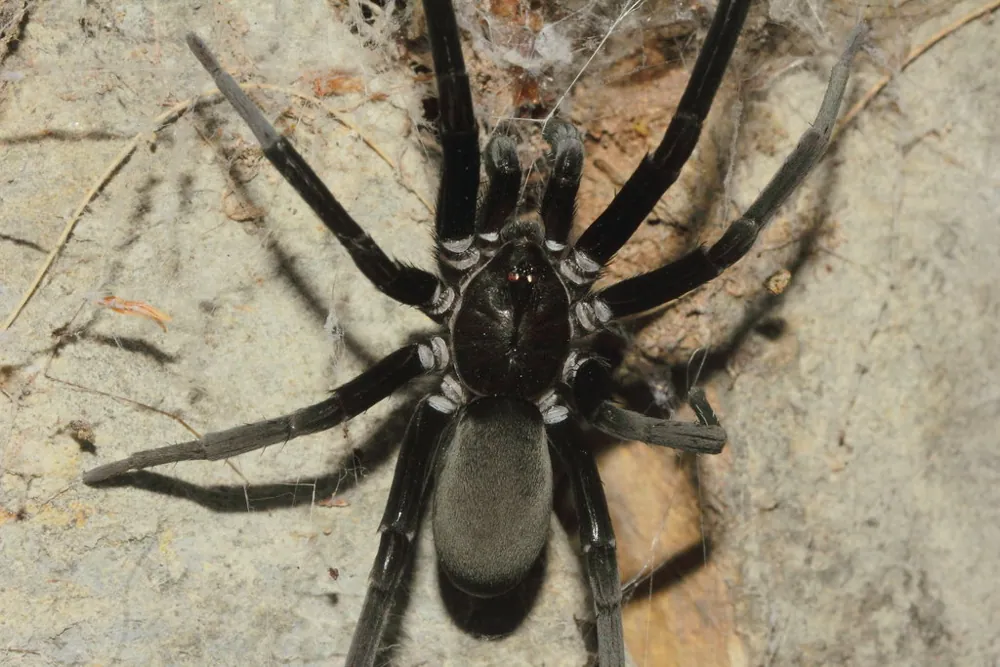
 Bí o ṣe lè dá a mọ̀
- Females are dark brown or black and more compact in shape, with often larger, bulbous bodies.1
- Males have longer legs and unusually long, slender pedipalps (the leg-like feelers near the mouth).1
- Males lack the violin-shaped marking on the front part of the body that the brown recluse has.1
- The abdomen (rear part of the body) is covered in fine, velvety light grey hair.1
- Both sexes may grow to about 5.1 cm across with legs extended.1
A sábà máa ń ṣì í mọ̀ sí: Males are often mistaken for the brown recluse because they have similar colours and body structure. Male southern house spiders are usually larger, have no violin shape on the front of the body, and have long, slender pedipalps.1
Agbára oró
Oró ń jáde láti inú eyín oró tàbí eyín rẹ̀ nígbà tí ó bá bùjẹ.
Báwo ló ṣe léwu tó fún ènìyàn?
Ewu fún ènìyàn: Fúyẹ́Bí ìtani oyin tàbí kò tó bẹ́ẹ̀. Kò fẹ́rẹ̀ẹ́ léwu fún ènìyàn.Males may seem aggressive, but they bite only when trapped. Their mouthparts are too small to easily get through human skin, so bites are unlikely to be harmful.1
Kí ni ó máa ń ṣe nígbà tí ẹ̀rù bá bà á?
When it feels threatened, it instinctively plays dead, a tactic that works well against its common predators.1
 Bí ó bá bùjẹ
- Fọ ibi ìbùjẹ náà kí o sì fi àpò yìnyín lé e fún ìrora. Wá ìrànlọ́wọ́ ìṣègùn bí ìrora bá le, tí ó ń tàn kálẹ̀, tàbí tí ara ẹni náà kò bá yá.
Máa kọ́kọ́ pe nọ́ńbà pàjáwìrì rẹ nígbà gbogbo (112, 000, 911). Èyí jẹ́ ìtọ́sọ́nà ìtọ́jú àkọ́kọ́ gbogbogbò, kì í ṣe ìmọ̀ràn ìṣègùn. Ìpìlẹ̀ ìtọ́jú àkọ́kọ́
 Wà láìléwu
- Má ṣe fọwọ́ kan, mú tàbí yọ ẹranko igbó lẹ́nu láéláé, kódà bí ó bá kéré, kódà bí ó bá dà bí ẹni pé ó ń sùn tàbí ó ti kú.
- Fún un ní àyè. Bí o bá pàdé ọ̀kan, farabalẹ̀, sẹ́yìn díẹ̀díẹ̀ kí o sì jẹ́ kí ó máa bá ọ̀nà rẹ̀ lọ.
- Bí ọ̀kan bá bù ọ́ jẹ: farabalẹ̀, má ṣe mira, pe nọ́ńbà pàjáwìrì rẹ (112, 000, 911) tàbí lọ sí ilé ìwòsàn kíákíá. Rántí bí ó ṣe rí, fọ́tò máa ń ṣèrànwọ́.
Kò wá ọ kiri láti ṣe ọ́ léṣe. Ó ń lo oró rẹ̀ láti mú oúnjẹ tàbí láti dáàbò bo ara rẹ̀, ó sì fẹ́ràn láti farapamọ́ jù. Sí i nípa wíwà láìléwu
Báwo ló ṣe tóbi tó?
Báwo ló ṣe gùn tó?
 ó kúrú ju ọmọdínrín ìka rẹ lọ
 lè sáré mítà 100 ní ìṣẹ́jú-àáyá 330 (ènìyàn tó yára jùlọ nílò 9.6)
Báwo ni Southern house spider ṣe tóbi tó tí a bá fi wé ÌWỌ?
Ìṣirò nìkan nínú bráwúsà rẹ. A kò fi ohunkóhun pamọ́, a kò sì fi ránṣẹ́ sí ibikíbi.
Báwo ló ṣe yára tó?


Òtítọ́
It is a cribellate spider, meaning its silk is not sticky. Its web works by tangling silk into a velcro-like net.1
It can crawl through cracks as narrow as 0.66 cm, thanks to its long body and compact legs.1
It is almost blind, so it may crawl over anything in its path, living or not, without meaning to attack.1
Its mating ritual can last over an hour, with long pauses where neither spider moves much.1
Its family, Filistatidae, is known as the crevice weavers because the females build webs around cracks.1
Olùfọ́ àròsọ
Àròsọ: Southern house spiders are aggressive and bite people often.
Òtítọ́: Males may look aggressive, but they bite only when trapped, and their mouthparts are too small to easily penetrate human skin. Their crawling over things is not aggression, as they cannot see larger animals.1
Ibi tí àwọn òtítọ́ ti wá
- Southern house spider (Wikipedia (CC BY-SA 4.0))
- Kukulcania hibernalis (iNaturalist): orúkọ àti ìpínsísọ̀rí.
- Venom Wiki: ìpele ewu, ìtóbi déédé àti àfojúbù ìyára jẹ́ tiwa. Wo bí a ṣe ń ṣírò wọn: Bí a ṣe ń díwọ̀n ewu.
Gbogbo òtítọ́ ojú-ìwé yìí ní nọ́ńbà tó tọ́ka sí orísun rẹ̀. Bí a bá ṣe àṣìṣe, má bínú, olólùfẹ́ ẹranko ni wá, kì í ṣe ìwé ìròyìn sáyẹ́ǹsì. Sọ fún wa ní [email protected] a ó sì tún un ṣe.
 Ebi ń pa àkekèé! Iṣẹ́ akanṣe ẹnì kan ṣoṣo ni Venom Wiki: ọ̀fẹ́ ni, kò sí ìpolówó, kò sì sí olùtọpinpin. Ẹ̀bùn kékeré ń ràn án lọ́wọ́ láti wà lórí íńtánẹ́ẹ̀tì.Bọ́ àkekèé
 Brazilian wandering spider
 Brown recluse
 Southern black widow
 Amazon wandering spider
 Chilean recluse
 Northern black widow
 Terciopelo
 Eastern coral snake
 Eastern diamondback rattlesnake
 Eyelash viper
 Timber rattlesnake
 Western diamondback rattlesnake