
 非洲
非洲 亞洲
亞洲 歐洲
歐洲 南美洲
南美洲 澳洲與大洋洲
 南極洲
南極洲 太平洋
太平洋 大西洋
大西洋 印度洋
印度洋 北極海
北極海 地中海
地中海 紅海
紅海 加勒比海
加勒比海 珊瑚海
珊瑚海 南海
南海 菲律賓海
菲律賓海 安達曼海
安達曼海 北海
北海 帝汶海與阿拉弗拉海
 孟加拉灣
孟加拉灣 加利福尼亞灣
Mangrove box jellyfish
 會螫人的觸手
The mangrove box jellyfish is a small, boxy jellyfish about 1 cm across. It lives in sunlit water among mangrove roots in the Caribbean Sea, the Central Indo-Pacific and off the north coast of South America. Its bell is see-through, so it can be hard to spot.1


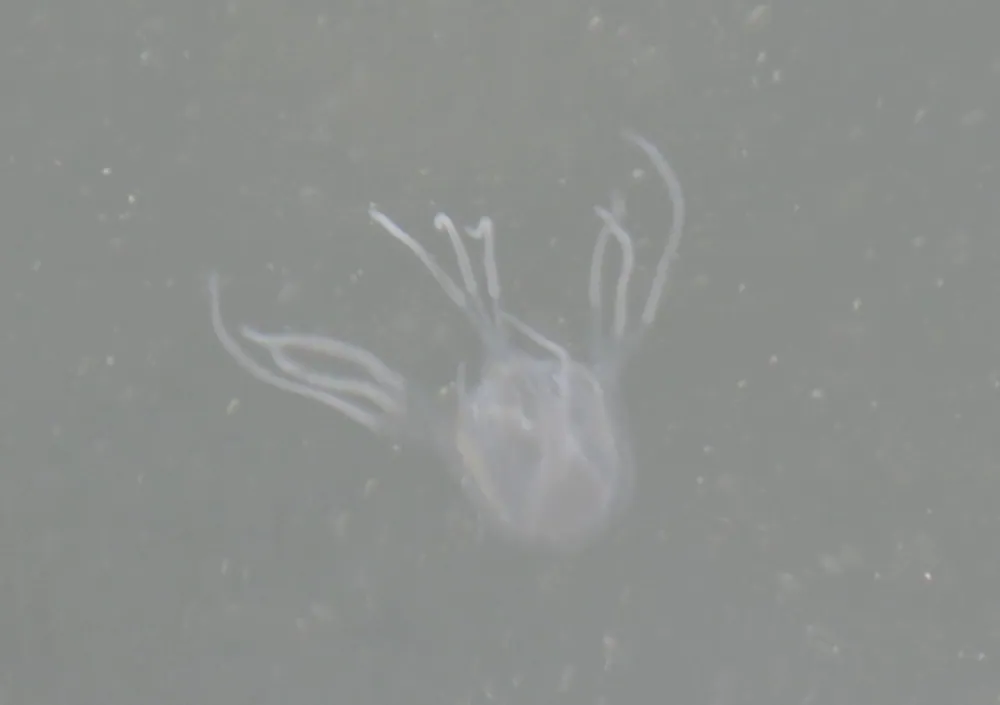
 怎麼認出牠
怎麼認出牠毒液力量
有東西碰到時,成千上萬個小小的刺細胞就會發射。
牠對人有多危險?
對人的危險: 輕微跟蜜蜂螫差不多或更輕微。對人基本上無害。 如果牠螫人
如果牠螫人
- 離開水裡,把觸手拿掉(戴手套或用布)。
- 熱帶箱形水母:在螫傷處倒醋至少 30 秒,求救,並準備好做心肺復甦術(CPR)。藍瓶水母和大多數其他水母:用海水沖洗,再用熱水止痛。
一定要先打緊急電話(112、000、911)。這是一般急救指引,不是醫療建議。 急救基本知識
 注意安全
注意安全
- 絕對不要碰、抓或捉弄野生動物,就算是很小的動物,就算牠看起來在睡覺或已經死了也一樣。
- 給牠空間。如果遇到了,保持冷靜,慢慢往後退,讓牠自己離開。
- 如果被牠螫了:保持冷靜,保持不動,打緊急電話(112、000、911)或趕快去醫院。記住牠的樣子,有照片會很有幫助。
牠不是想來抓你。牠用毒液來捕捉食物或保護自己,而且牠更想躲起來。 更多安全知識
牠有多大?
牠有多長?
 小到可以坐在你的指甲上
 可以在 36 秒內游完一座大游泳池(50 公尺)
Mangrove box jellyfish 跟「你」比起來有多大?
只是在你的瀏覽器裡做算術。什麼都不會儲存,也不會傳送到任何地方。
牠有多快?
小知識
It has six eyes in each of its four rhopalia, which are structures on the bell that contain light-sensitive cells.1
It can spot a cylindrical object such as a mangrove root when it gets close and swerve sharply to avoid it.1
It stays in shafts of sunlight where its copepod prey gathers, which helps it catch more food.1
Its life cycle includes a small polyp stage that attaches to the seabed before young jellyfish form.1
給毒液專家
- 學名
- Tripedalia cystophora
- 類群
- 水母和會螫人的海洋生物
- 家人
- Tripedaliidae2
- 排序
- Carybdeida
- 各大洲
- 大西洋, 加勒比海, 太平洋, 海洋
- 寶寶
- After fertilisation, the female broods the planula larva inside her bell until it is expelled. The larva settles on the bottom and becomes a small polyp, which can bud new polyps and eventually produce young jellyfish.1
- 對人的危險
- 1 / 5: 輕微3
知識的出處
- Tripedalia cystophora (Wikipedia (CC BY-SA 4.0))
- Tripedalia cystophora (iNaturalist): 名稱和分類。
- Venom Wiki: 危險等級、一般大小和速度估計都是我們自己定的。看看我們是怎麼算出來的: 我們怎麼評估危險.
這一頁的每個知識都有一個數字,指向它的出處。如果我們寫錯了,對不起,我們是動物迷,不是科學期刊。寫信到 [email protected] 告訴我們,我們會修正。
 蠍子肚子餓了! Venom Wiki 是一個人的計畫:免費、沒有廣告、沒有追蹤器。一點點小費就能幫它繼續上線。餵蠍子
 Australian box jellyfish
 Irukandji jellyfish
 Portuguese man o' war
 Lion's mane jellyfish
 Moon jellyfish
 Common kingslayer
 Hawksbill sea turtle
 Blue sea dragon
 Greenland shark
 Common octopus
 Common stingray
 Greater weever