
 非洲
非洲 亞洲
亞洲 歐洲
歐洲 南美洲
南美洲 澳洲與大洋洲
 南極洲
南極洲 太平洋
太平洋 大西洋
大西洋 印度洋
印度洋 北極海
北極海 地中海
地中海 紅海
紅海 加勒比海
加勒比海 珊瑚海
珊瑚海 南海
南海 菲律賓海
菲律賓海 安達曼海
安達曼海 北海
北海 帝汶海與阿拉弗拉海
 孟加拉灣
孟加拉灣 加利福尼亞灣
Textile cone
 螫
螫The textile cone is a venomous sea snail. It is a mollusc with a patterned shell, and it hunts other snails at night. It lives in warm seas around Africa, Australia and the Pacific, and it can sting people, so it is important to know it.1

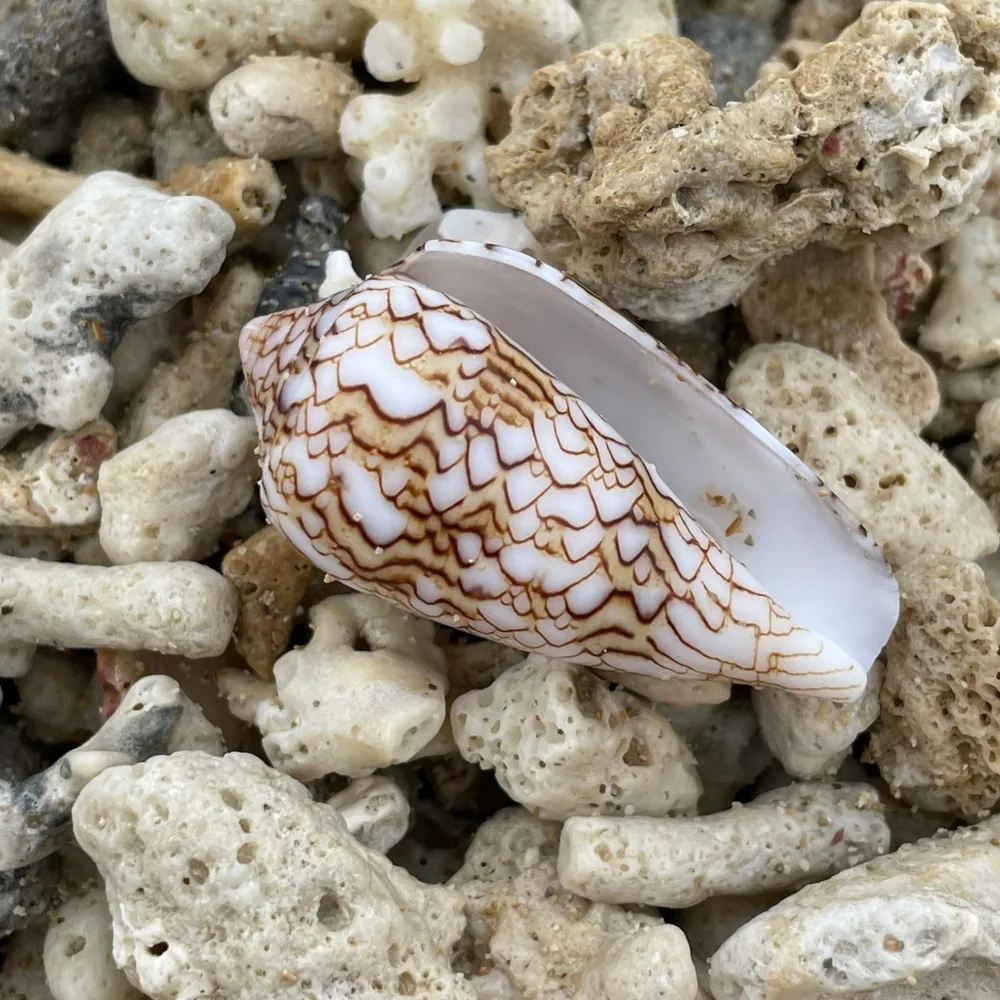
 怎麼認出牠
怎麼認出牠毒液力量
毒液從螫針出來。
牠的毒液有什麼作用?
Its venom is a conotoxin, a mix of toxins injected through the harpoon-like radular tooth. The venom contains the neurotoxin RPRFamide, which attacks the nerves.1
牠對人有多危險?
對人的危險: 非常危險如果沒有治療,牠可能會害死一個人。Several human deaths have been attributed to this species. A 2004 report linked about 30 human deaths to cone snails as a group. Live animals should be handled carefully or not at all, and anyone handling one without protecting exposed skin is at risk.1
 如果牠螫人
如果牠螫人
- 加壓固定法:用彈性繃帶緊緊包住咬傷處,再往上包住整條手臂或腿,用夾板固定,並讓傷者完全不動,直到救援抵達。
- 藍環章魚或芋螺會讓人在意識還清醒時就停止呼吸:馬上求救,並準備好做人工呼吸,直到救護人員接手。
一定要先打緊急電話(112、000、911)。這是一般急救指引,不是醫療建議。 急救基本知識
 注意安全
注意安全
- 絕對不要碰、抓或捉弄野生動物,就算是很小的動物,就算牠看起來在睡覺或已經死了也一樣。
- 給牠空間。如果遇到了,保持冷靜,慢慢往後退,讓牠自己離開。
- 如果被牠螫了:保持冷靜,保持不動,打緊急電話(112、000、911)或趕快去醫院。記住牠的樣子,有照片會很有幫助。
牠不是想來抓你。牠用毒液來捕捉食物或保護自己,而且牠更想躲起來。 更多安全知識
牠有多大?
牠有多長?
 跟 5 塊玩具積木排成一排一樣長
 比花園蝸牛還慢
Textile cone 跟「你」比起來有多大?
只是在你的瀏覽器裡做算術。什麼都不會儲存,也不會傳送到任何地方。
牠有多快?

小知識
Its shell pattern is made by natural cellular automata, and it resembles Wolfram's rule 30 pattern.1
The pigment cells that make the pattern sit in a narrow band along the shell's lip, and each cell responds to its neighbours.1
Its proboscis can reach any part of its own shell.1
In Australia it is most common in northern Queensland, but sightings are spreading south into New South Wales as ocean temperatures warm with climate change.1
Its larvae drift in the current for about 16 days before settling on the bottom of the sea.1
給毒液專家
- 學名
- Conus textile
- 類群
- 芋螺和章魚
- 家人
- Conidae2
- 排序
- Neogastropoda
- 各大洲
- 印度洋, 太平洋, 珊瑚海, 紅海, 菲律賓海, 阿拉伯海與波斯灣, 帝汶海與阿拉弗拉海, 孟加拉灣, 海洋
- 寶寶
- The female lays several hundred eggs at a time. They hatch after about 16 or 17 days, and the larvae float in the current for about 16 days before settling on the sea floor at about 1.5 mm long.1
- 對人的危險
- 4 / 5: 非常危險3
知識的出處
- Conus textile (Wikipedia (CC BY-SA 4.0))
- Conus textile (iNaturalist): 名稱和分類。
- Venom Wiki: 危險等級、一般大小和速度估計都是我們自己定的。看看我們是怎麼算出來的: 我們怎麼評估危險.
這一頁的每個知識都有一個數字,指向它的出處。如果我們寫錯了,對不起,我們是動物迷,不是科學期刊。寫信到 [email protected] 告訴我們,我們會修正。
 蠍子肚子餓了! Venom Wiki 是一個人的計畫:免費、沒有廣告、沒有追蹤器。一點點小費就能幫它繼續上線。餵蠍子
 Geography cone
 Greater blue-ringed octopus
 Southern blue-ringed octopus
 Blue sea dragon
 Common octopus
 Giant Pacific octopus
 Australian box jellyfish
 Hawksbill sea turtle
 Irukandji jellyfish
 Reef stonefish
 Crown-of-thorns starfish
 Portuguese man o' war