
 I-Afrika
 I-Asia
 I-Yurophu
 INingizimu Melika
 I-Australia ne-Oceania
 I-Antarctica
 ULwandlekazi iPacific
 ULwandlekazi i-Atlantic
 ULwandlekazi i-India
 ULwandlekazi i-Arctic
 Ulwandle iMediterranean
 Ulwandle Olubomvu
 Ulwandle iCaribbean
 Ulwandle iCoral
 Ulwandle lwaseNingizimu China
 Ulwandle lwasePhilippines
 Ulwandle i-Andaman
 Ulwandle i-North Sea
 Ulwandle lwaseTimor ne-Arafura
 Ichweba laseBengal
 Ichweba laseCalifornia
Giant Caribbean sea anemone
 Ama-tentacle ahlabayo
The giant Caribbean sea anemone is a large, colourful sea animal that looks like a soft, flower-shaped blob on the seabed. It lives in shallow reefs and calm inshore waters in the Caribbean and western Atlantic. Its sting is strong enough to stun the fish and shrimp it eats.1



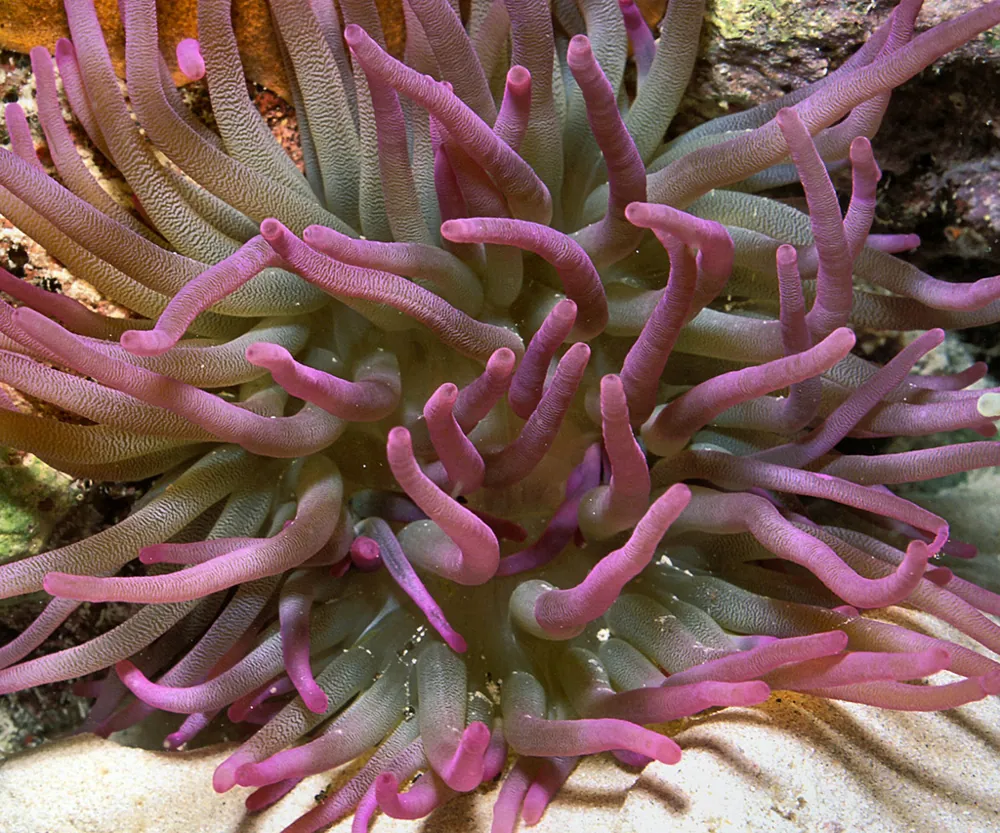
 Indlela yokusibona
- Grows about 15 cm high and 30 cm wide, with a disc up to about 40 cm across1
- Body can be white, light blue, pink, orange, pale red or light brown1
- More than 100 tentacles surround the mouth1
- Tentacle tips may be purple or rose-coloured, or may be paler than the body1
- Grows singly or in loose groups, never as colonies1
Amandla obuthi
Izinkulungwane zamaseli amancane ahlabayo ziyadubula uma kukhona okuzithintayo.
Ubuthi baso benzani?
Its stinging cells (nematocysts) at the tentacle tips contain a toxin called CgNa. When the stinging cells fire, they impale the attacker and release the toxin, which causes extreme pain and paralysis.1
Siyingozi kangakanani ebantwini?
Ingozi ebantwini: KuncaneNjengokuhlatshwa yinyosi noma ngaphansi. Cishe akunangozi ebantwini.Senzani uma sesabile?
When threatened it shrinks by pulling its tentacles into its body and forcing out most of the water, which reduces the surface a predator can attack.1
 Uma sihlaba
- Phuma emanzini bese ukhipha noma yimiphi imicu ehlabayo (ama-tentacle) (ngamagilavu noma ngendwangu).
- Kuma-box jellyfish asezindaweni ezishisayo: thela uviniga ezindaweni ezihlatshiwe okungenani imizuzwana engama-30, biza usizo futhi ulungele ukwenza i-CPR. Kuma-bluebottle nakwamanye amaningi: hlanza ngamanzi olwandle, bese usebenzisa amanzi ashisayo ngenxa yobuhlungu.
Njalo shayela kuqala inombolo yezimo eziphuthumayo (112, 000, 911). Lokhu kuyiseluleko sosizo lokuqala esijwayelekile, akusona iseluleko sezokwelapha. Izisekelo zosizo lokuqala
 Hlala uphephile
- Ungalokothi uthinte, ubambe noma ugcone isilwane sasendle, ngisho noma sincane, futhi ngisho noma sibukeka silele noma sifile.
- Sinike isikhala. Uma uhlangana naso, hlala uzolile, uhlehle kancane bese usiyeka sihambe ngendlela yaso.
- Uma sikuhlaba: hlala uzolile, ungashukumi, shayela inombolo yezimo eziphuthumayo (112, 000, 911) noma uye esibhedlela ngokushesha. Khumbula ukuthi besibukeka kanjani, isithombe siyasiza.
Asikuzingeli wena. Sisebenzisa ubuthi baso ukuze sibambe ukudla noma ukuzivikela, futhi singancamela ukucasha. Okwengeziwe mayelana nokuhlala uphephile
Kuphi emhlabeni?
Sikhulu kangakanani?
Side kangakanani?
 side njengezitini zamathoyizi ezingu-5 ezilandelanayo
 sihamba kancane kunomnenke wasengadini
Giant Caribbean sea anemone mkhulu kangakanani uma uqhathanisa NAWE?
Yizibalo nje kusiphequluli sakho. Akukho okulondolozwayo noma okuthunyelwa ndawo.
Sishesha kangakanani?

Amaqiniso
Its nerve cells contain proteins that are molecularly similar to those in mammal nerve cells, which helps scientists study how nervous systems evolved.1
Fish and cleaner shrimp shelter among its tentacles, and it serves as a base station for fish cleaning.1
Although mostly stuck in place, it can crawl very slowly on its base, the pedal disc.1
Its larvae carry their own food in a yolk, so starvation is unlikely and they can drift far to spread out.1
Most individuals are either male or female, with a roughly equal ratio of the two sexes, though they occasionally have both.1
Okongoti bobuthi
- Igama lesayensi
- Condylactis gigantea
- Iqembu
- Ama-jellyfish nezinye izilwane zasolwandle ezihlabayo
- Umndeni
- Actiniidae2
- Ukuhleleka
- Actiniaria
- Amazwekazi
- ULwandlekazi i-Atlantic, Ulwandle iCaribbean, Ichweba laseMexico, Izilwandlekazi
- Izinsana
- Eggs and sperm are released into the water, where fertilisation happens. The fertilised egg becomes a larva that settles on the seabed and grows into an adult.1
- Ingozi ebantwini
- 1 / 5: Kuncane3
Lapho amaqiniso evela khona
- Condylactis gigantea (Wikipedia (CC BY-SA 4.0))
- Condylactis gigantea (iNaturalist): amagama nokuhlelwa ngezigaba.
- Venom Wiki: izinga lengozi, usayizi ojwayelekile nesiqagela sejubane kungokwethu. Bona ukuthi sikubala kanjani: Indlela esilinganisa ngayo ingozi.
Iqiniso ngalinye kuleli khasi linenombolo ekhomba umthombo walo. Uma senze iphutha, uxolo, singabathandi bezilwane, hhayi iphephabhuku lesayensi. Sitshele ku-[email protected] futhi sizolilungisa.
 Ufezela ulambile! I-Venom Wiki iwumsebenzi womuntu oyedwa: imahhala, ayinazo izikhangiso noma izilandeli. Isipho esincane sisiza ukuyigcina ku-inthanethi.Phakela ufezela
Okunye okuvela eqenjini elifanayo: Ama-jellyfish nezinye izilwane zasolwandle ezihlabayo
 Australian box jellyfishAma-jellyfish nezinye izilwane zasolwandle ezihlabayoKuyabulalaUngathinti
 Irukandji jellyfishAma-jellyfish nezinye izilwane zasolwandle ezihlabayoKungabulalaUngathinti
 Portuguese man o' warAma-jellyfish nezinye izilwane zasolwandle ezihlabayoKudinga udokotelaUngathinti
 Lion's mane jellyfishAma-jellyfish nezinye izilwane zasolwandle ezihlabayoKubuhlungu njeUngathinti
 Moon jellyfishAma-jellyfish nezinye izilwane zasolwandle ezihlabayoAkunangozi
 Common kingslayerAma-jellyfish nezinye izilwane zasolwandle ezihlabayoKungabulalaUngathinti
Futhi ihlala: ULwandlekazi i-Atlantic
 Hawksbill sea turtleEzinye izilwane ezinoshevuKungabulala
 Blue sea dragonIminenke ye-cone nezingwaneKubuhlungu nje
 Greenland sharkEzinye izilwane ezinoshevuKubuhlungu nje
 Common octopusIminenke ye-cone nezingwaneAkunangozi
 Common stingrayIzinhlanzi ezinobuthiKudinga udokotela
 Greater weeverIzinhlanzi ezinobuthiKudinga udokotelaUngathinti