
 I-Afrika
 I-Asia
 I-Yurophu
 INingizimu Melika
 I-Australia ne-Oceania
 I-Antarctica
 ULwandlekazi iPacific
 ULwandlekazi i-Atlantic
 ULwandlekazi i-India
 ULwandlekazi i-Arctic
 Ulwandle iMediterranean
 Ulwandle Olubomvu
 Ulwandle iCaribbean
 Ulwandle iCoral
 Ulwandle lwaseNingizimu China
 Ulwandle lwasePhilippines
 Ulwandle i-Andaman
 Ulwandle i-North Sea
 Ulwandle lwaseTimor ne-Arafura
 Ichweba laseBengal
 Ichweba laseCalifornia
Mitchell's water monitor
 Ukuluma
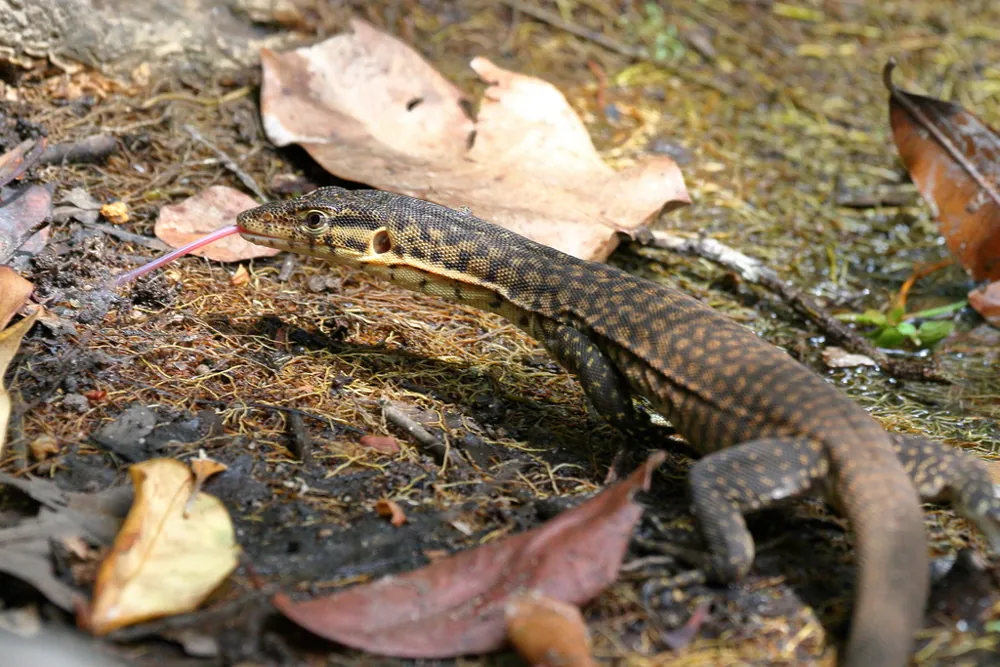
Mitchell's water monitor is a large, slender lizard that lives in the northern rivers, swamps and lagoons of Australia. It spends much of its time near water and can climb trees. It is on the IUCN Red List as Critically Endangered, so it matters a great deal to protect it.1



 Indlela yokusibona
Amandla obuthi
Ubuthi buphuma ngamazinyo aso obuthi noma ngamazinyo uma siluma.
Siyingozi kangakanani ebantwini?
Ingozi ebantwini: KuncaneNjengokuhlatshwa yinyosi noma ngaphansi. Cishe akunangozi ebantwini.Senzani uma sesabile?
If disturbed, it heads for the water. It is described as nervous and shy.1
 Uma siluma
- Geza inxeba, gcina umuntu ezolile bese uthola usizo lwezokwelapha.
Njalo shayela kuqala inombolo yezimo eziphuthumayo (112, 000, 911). Lokhu kuyiseluleko sosizo lokuqala esijwayelekile, akusona iseluleko sezokwelapha. Izisekelo zosizo lokuqala
 Hlala uphephile
- Ungalokothi uthinte, ubambe noma ugcone isilwane sasendle, ngisho noma sincane, futhi ngisho noma sibukeka silele noma sifile.
- Sinike isikhala. Uma uhlangana naso, hlala uzolile, uhlehle kancane bese usiyeka sihambe ngendlela yaso.
- Uma sikuluma: hlala uzolile, ungashukumi, shayela inombolo yezimo eziphuthumayo (112, 000, 911) noma uye esibhedlela ngokushesha. Khumbula ukuthi besibukeka kanjani, isithombe siyasiza.
Asikuzingeli wena. Sisebenzisa ubuthi baso ukuze sibambe ukudla noma ukuzivikela, futhi singancamela ukucasha. Okwengeziwe mayelana nokuhlala uphephile
Sikhulu kangakanani?
Side kangakanani?
 side njengobhanana abangu-4 abalandelanayo
 singahamba amamitha ali-100 ngemizuzwana engu-30 (umuntu oshesha kunabo bonke udinga engu-9,6)
Mitchell's water monitor mkhulu kangakanani uma uqhathanisa NAWE?
Yizibalo nje kusiphequluli sakho. Akukho okulondolozwayo noma okuthunyelwa ndawo.
Sishesha kangakanani?

Amaqiniso
Where cane toads arrived at Kakadu National Park, almost the entire population of this lizard was wiped out. Its numbers have been estimated to have dropped by as much as 97% within three years.1
Its eyesight is excellent, but it is night blind because its retinas have no rods, the cells used for night vision.1
The biggest threat to this lizard is the cane toad. Cane toads are poisonous to it, and it can eat the larger toads, which carry lethal doses of poison.1
The Australian name 'goanna' probably comes from 'iguana', because the first European settlers thought these lizards looked like the iguanas of South America.1
Okongoti bobuthi
- Igama lesayensi
- Varanus mitchelli
- Iqembu
- Izibankwa ezinobuthi
- Umndeni
- Varanidae2
- Ukuhleleka
- Squamata
- Amazwekazi
- I-Australia ne-Oceania
- Izinsana
- It lays eggs (it is oviparous). Females lay between April and June in the dry season, with clutches of 3 to 12 eggs.1
- Isikhathi sokuphila
- cishe iminyaka engu-101
- Simo saso endle
- Critically Endangered1
- Ingozi ebantwini
- 1 / 5: Kuncane3
Lapho amaqiniso evela khona
- Mitchell's water monitor (Wikipedia (CC BY-SA 4.0))
- Varanus mitchelli (iNaturalist): amagama nokuhlelwa ngezigaba.
- Venom Wiki: izinga lengozi, usayizi ojwayelekile nesiqagela sejubane kungokwethu. Bona ukuthi sikubala kanjani: Indlela esilinganisa ngayo ingozi.
Iqiniso ngalinye kuleli khasi linenombolo ekhomba umthombo walo. Uma senze iphutha, uxolo, singabathandi bezilwane, hhayi iphephabhuku lesayensi. Sitshele ku-[email protected] futhi sizolilungisa.
 Ufezela ulambile! I-Venom Wiki iwumsebenzi womuntu oyedwa: imahhala, ayinazo izikhangiso noma izilandeli. Isipho esincane sisiza ukuyigcina ku-inthanethi.Phakela ufezela
Okunye okuvela eqenjini elifanayo: Izibankwa ezinobuthi
 Lace monitor
 Perentie
 Spiny-tailed monitor
 Yellow-spotted monitor
 Komodo dragon
 Gila monster
Futhi ihlala: I-Australia ne-Oceania
 Coastal taipanIzinyoka zase-AustraliaKuyabulala
 Common death adderIzinyoka zase-AustraliaKuyabulala
 Eastern brown snakeIzinyoka zase-AustraliaKuyabulala
 Inland taipanIzinyoka zase-AustraliaKuyabulala
 Sydney funnel-web spiderAma-tarantula nama-funnel-webKuyabulala
 Inyoka yehlosiIzinyoka zase-AustraliaKuyabulala