
 I-Afrika
 I-Asia
 I-Yurophu
 INingizimu Melika
 I-Australia ne-Oceania
 I-Antarctica
 ULwandlekazi iPacific
 ULwandlekazi i-Atlantic
 ULwandlekazi i-India
 ULwandlekazi i-Arctic
 Ulwandle iMediterranean
 Ulwandle Olubomvu
 Ulwandle iCaribbean
 Ulwandle iCoral
 Ulwandle lwaseNingizimu China
 Ulwandle lwasePhilippines
 Ulwandle i-Andaman
 Ulwandle i-North Sea
 Ulwandle lwaseTimor ne-Arafura
 Ichweba laseBengal
 Ichweba laseCalifornia
Peacock spider
 Ukuluma
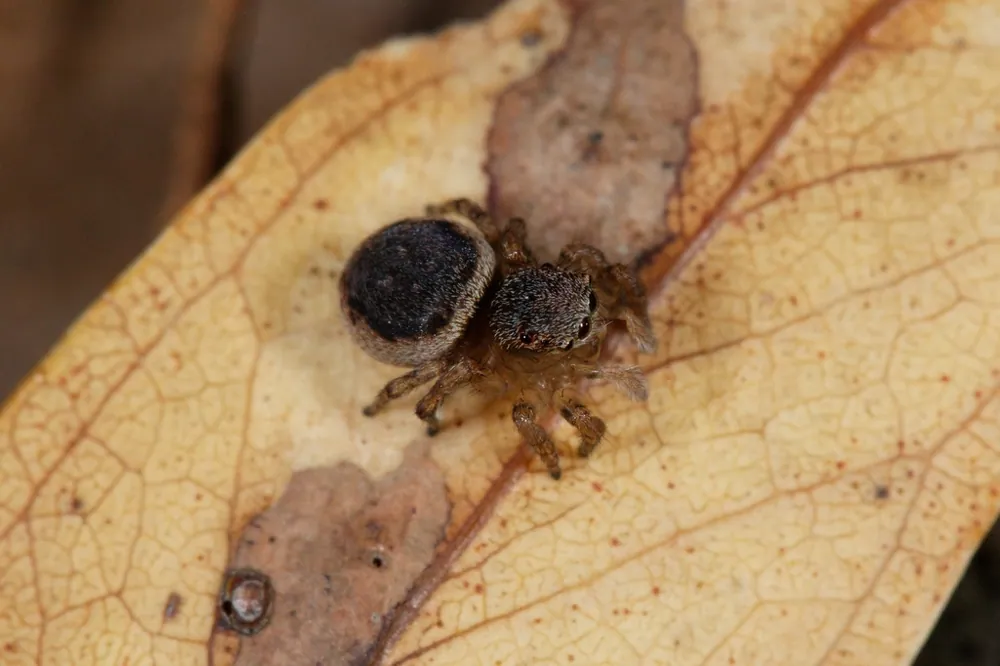
The peacock spider is a tiny jumping spider from Australia. Males are brightly coloured, and they show off with a fan of flaps on their abdomen and a dance to win a female. Its eyesight is so good that it can see ultraviolet light, which helps it hunt.1

 Indlela yokusibona
- Males are red, blue and black, with flap-like extensions on the abdomen that have white hairs and can be folded down.1
- Females and young spiders are brown, with colour patterns that set them apart from related species.1
- Both sexes reach about 5 mm in body length.1
- The males raise their abdomen and spread the flaps into a white-fringed, circular field of colour during courtship.1
Amandla obuthi
Ubuthi buphuma ngamazinyo aso obuthi noma ngamazinyo uma siluma.
Siyingozi kangakanani ebantwini?
Ingozi ebantwini: KuncaneNjengokuhlatshwa yinyosi noma ngaphansi. Cishe akunangozi ebantwini. Uma siluma
- Geza inxeba lokulunywa bese ubeka iphakethe leqhwa phezu kwalo ngenxa yobuhlungu. Thola usizo lwezokwelapha uma ubuhlungu bunamandla, busabalala noma umuntu ezizwa engaphilile.
Njalo shayela kuqala inombolo yezimo eziphuthumayo (112, 000, 911). Lokhu kuyiseluleko sosizo lokuqala esijwayelekile, akusona iseluleko sezokwelapha. Izisekelo zosizo lokuqala
 Hlala uphephile
- Ungalokothi uthinte, ubambe noma ugcone isilwane sasendle, ngisho noma sincane, futhi ngisho noma sibukeka silele noma sifile.
- Sinike isikhala. Uma uhlangana naso, hlala uzolile, uhlehle kancane bese usiyeka sihambe ngendlela yaso.
- Uma sikuluma: hlala uzolile, ungashukumi, shayela inombolo yezimo eziphuthumayo (112, 000, 911) noma uye esibhedlela ngokushesha. Khumbula ukuthi besibukeka kanjani, isithombe siyasiza.
Asikuzingeli wena. Sisebenzisa ubuthi baso ukuze sibambe ukudla noma ukuzivikela, futhi singancamela ukucasha. Okwengeziwe mayelana nokuhlala uphephile
Sikhulu kangakanani?
Side kangakanani?
 sincane kangangokuthi singahlala ezinzipheni zakho
Peacock spider mkhulu kangakanani uma uqhathanisa NAWE?
Yizibalo nje kusiphequluli sakho. Akukho okulondolozwayo noma okuthunyelwa ndawo.
Sishesha kangakanani?


Amaqiniso
Some males can change their scale colours from red to green to violet with slight movements, because their scales reflect light in a special way.1
Peacock spiders can jump up to 40 times their own body length.1
They have eight eyes and can see ultraviolet light as well as the full visible spectrum.1
Males dance and vibrate their abdomen for an average of about 24 minutes to win a female, and the dance can last from 6 to 50 minutes.1
Females of this species are thought to mate only once.1
Umqothuli wezinganekwane
Inganekwane: The male spider uses its colourful flaps as wings to help it glide or sustain its leaps.
Iqiniso: This belief has been debunked by the Australasian Arachnological Society.1
Okongoti bobuthi
- Igama lesayensi
- Maratus volans
- Iqembu
- Izicabucabu
- Umndeni
- Salticidae2
- Ukuhleleka
- Araneae
- Amazwekazi
- I-Australia ne-Oceania
- Izinsana
- Females dig nests underground in December and lay between 6 and 15 eggs per clutch. Some females have several broods in a season.1
- Isikhathi sokuphila
- cishe iminyaka engu-11
- Ingozi ebantwini
- 1 / 5: Kuncane3
Lapho amaqiniso evela khona
- Maratus volans (Wikipedia (CC BY-SA 4.0))
- Maratus volans (iNaturalist): amagama nokuhlelwa ngezigaba.
- Venom Wiki: izinga lengozi, usayizi ojwayelekile nesiqagela sejubane kungokwethu. Bona ukuthi sikubala kanjani: Indlela esilinganisa ngayo ingozi.
Iqiniso ngalinye kuleli khasi linenombolo ekhomba umthombo walo. Uma senze iphutha, uxolo, singabathandi bezilwane, hhayi iphephabhuku lesayensi. Sitshele ku-[email protected] futhi sizolilungisa.
 Ufezela ulambile! I-Venom Wiki iwumsebenzi womuntu oyedwa: imahhala, ayinazo izikhangiso noma izilandeli. Isipho esincane sisiza ukuyigcina ku-inthanethi.Phakela ufezela
Okunye okuvela eqenjini elifanayo: Izicabucabu
 Redback spider
 Katipo
 White-tailed spider
 Badge huntsman spider
 Black house spider
 Eastern white-tailed spider
Futhi ihlala: I-Australia ne-Oceania
 Coastal taipanIzinyoka zase-AustraliaKuyabulala
 Common death adderIzinyoka zase-AustraliaKuyabulala
 Eastern brown snakeIzinyoka zase-AustraliaKuyabulala
 Inland taipanIzinyoka zase-AustraliaKuyabulala
 Sydney funnel-web spiderAma-tarantula nama-funnel-webKuyabulala
 Inyoka yehlosiIzinyoka zase-AustraliaKuyabulala