
 I-Afrika
 I-Asia
 I-Yurophu
 INingizimu Melika
 I-Australia ne-Oceania
 I-Antarctica
 ULwandlekazi iPacific
 ULwandlekazi i-Atlantic
 ULwandlekazi i-India
 ULwandlekazi i-Arctic
 Ulwandle iMediterranean
 Ulwandle Olubomvu
 Ulwandle iCaribbean
 Ulwandle iCoral
 Ulwandle lwaseNingizimu China
 Ulwandle lwasePhilippines
 Ulwandle i-Andaman
 Ulwandle i-North Sea
 Ulwandle lwaseTimor ne-Arafura
 Ichweba laseBengal
 Ichweba laseCalifornia
Peruvian giant centipede
 Ukuluma
The Peruvian giant centipede is the largest centipede species in the world, growing longer than 30 centimetres. It lives in northern South America and on several Caribbean islands, mostly in rainforests and dry forests. It hunts a wide range of animals, from insects to bats, and its venom is strong enough to stop small mammals.1



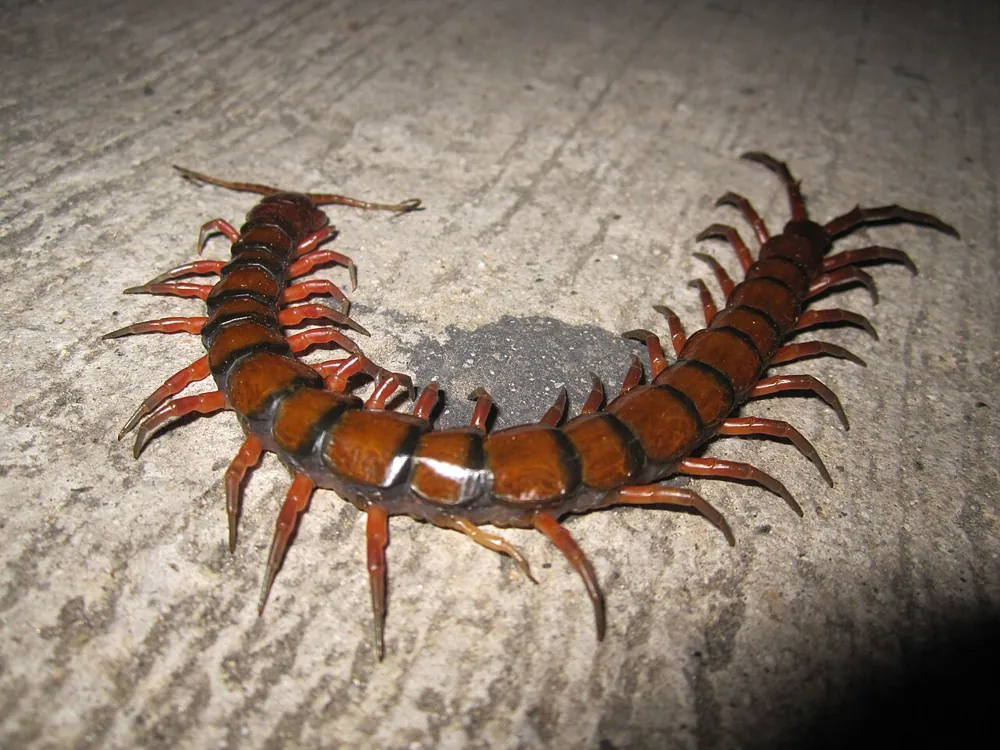
 Indlela yokusibona
Amandla obuthi
Ubuthi buphuma ngamazinyo aso obuthi noma ngamazinyo uma siluma.
Ubuthi baso benzani?
Its venom is strong enough to immobilise small mammals it hunts, such as bats and mice. The venom is produced in a modified pair of legs placed under the head.1
Siyingozi kangakanani ebantwini?
Ingozi ebantwini: Kubi kakhuluUkulunywa kudinga udokotela. Ukufa kuyivelakancane kakhulu.At least one human death has been linked to its venom. In 2014, a four-year-old child in Venezuela died after being bitten by a giant centipede hidden inside an open soda can. Researchers at Universidad de Oriente later confirmed the animal was this species.1
 Uma siluma
- Geza inxeba lokulunywa, lipholise noma ulicwilise emanzini afudumele ngenxa yobuhlungu, bese uthola usizo lwezokwelapha uma kuba kubi kakhulu.
Njalo shayela kuqala inombolo yezimo eziphuthumayo (112, 000, 911). Lokhu kuyiseluleko sosizo lokuqala esijwayelekile, akusona iseluleko sezokwelapha. Izisekelo zosizo lokuqala
 Hlala uphephile
- Ungalokothi uthinte, ubambe noma ugcone isilwane sasendle, ngisho noma sincane, futhi ngisho noma sibukeka silele noma sifile.
- Sinike isikhala. Uma uhlangana naso, hlala uzolile, uhlehle kancane bese usiyeka sihambe ngendlela yaso.
- Uma sikuluma: hlala uzolile, ungashukumi, shayela inombolo yezimo eziphuthumayo (112, 000, 911) noma uye esibhedlela ngokushesha. Khumbula ukuthi besibukeka kanjani, isithombe siyasiza.
Asikuzingeli wena. Sisebenzisa ubuthi baso ukuze sibambe ukudla noma ukuzivikela, futhi singancamela ukucasha. Okwengeziwe mayelana nokuhlala uphephile
Sikhulu kangakanani?
Side kangakanani?
 side njengezitini zamathoyizi ezingu-9 ezilandelanayo
 singahamba amamitha ali-100 ngemizuzwana engu-140 (umuntu oshesha kunabo bonke udinga engu-9,6)
Peruvian giant centipede mkhulu kangakanani uma uqhathanisa NAWE?
Yizibalo nje kusiphequluli sakho. Akukho okulondolozwayo noma okuthunyelwa ndawo.
Sishesha kangakanani?


Amaqiniso
Large individuals have a clever way of catching bats: they climb cave ceilings and hold their heavier prey with only a few legs attached to the ceiling.1
It is the largest centipede species in the world, with a length exceeding 30 centimetres.1
It can overpower animals as large as tarantulas, and it can also kill snakes up to 25 centimetres long.1
Its venom comes from a modified pair of legs placed just underneath its head.1
It climbs readily and will use hiding spaces under tree bark.1
Its natural predators include large birds, spiders, and mammals that hunt arthropods, such as the coati, kinkajou and opossum.1
Lapho amaqiniso evela khona
- Scolopendra gigantea (Wikipedia (CC BY-SA 4.0))
- Scolopendra gigantea (iNaturalist): amagama nokuhlelwa ngezigaba.
- Venom Wiki: izinga lengozi, usayizi ojwayelekile nesiqagela sejubane kungokwethu. Bona ukuthi sikubala kanjani: Indlela esilinganisa ngayo ingozi.
Iqiniso ngalinye kuleli khasi linenombolo ekhomba umthombo walo. Uma senze iphutha, uxolo, singabathandi bezilwane, hhayi iphephabhuku lesayensi. Sitshele ku-[email protected] futhi sizolilungisa.
 Ufezela ulambile! I-Venom Wiki iwumsebenzi womuntu oyedwa: imahhala, ayinazo izikhangiso noma izilandeli. Isipho esincane sisiza ukuyigcina ku-inthanethi.Phakela ufezela
Okunye okuvela eqenjini elifanayo: Izinkume
 Amazonian giant green-horned centipedeIzinkumeKudinga udokotela
 Galapagos centipedeIzinkumeKudinga udokotela
 Chinese red-headed centipedeIzinkumeKudinga udokotela
 Giant Australian centipedeIzinkumeKubuhlungu nje
 Giant desert centipedeIzinkumeKubuhlungu nje
 Mediterranean banded centipedeIzinkumeKubuhlungu nje
 Golden poison frog
 Terciopelo
 Brazilian wandering spider
 Eyelash viper
 Golden lancehead
 South American bushmaster