
 I-Afrika
 I-Asia
 I-Yurophu
 INingizimu Melika
 I-Australia ne-Oceania
 I-Antarctica
 ULwandlekazi iPacific
 ULwandlekazi i-Atlantic
 ULwandlekazi i-India
 ULwandlekazi i-Arctic
 Ulwandle iMediterranean
 Ulwandle Olubomvu
 Ulwandle iCaribbean
 Ulwandle iCoral
 Ulwandle lwaseNingizimu China
 Ulwandle lwasePhilippines
 Ulwandle i-Andaman
 Ulwandle i-North Sea
 Ulwandle lwaseTimor ne-Arafura
 Ichweba laseBengal
 Ichweba laseCalifornia
Giant desert centipede
 Ukuluma
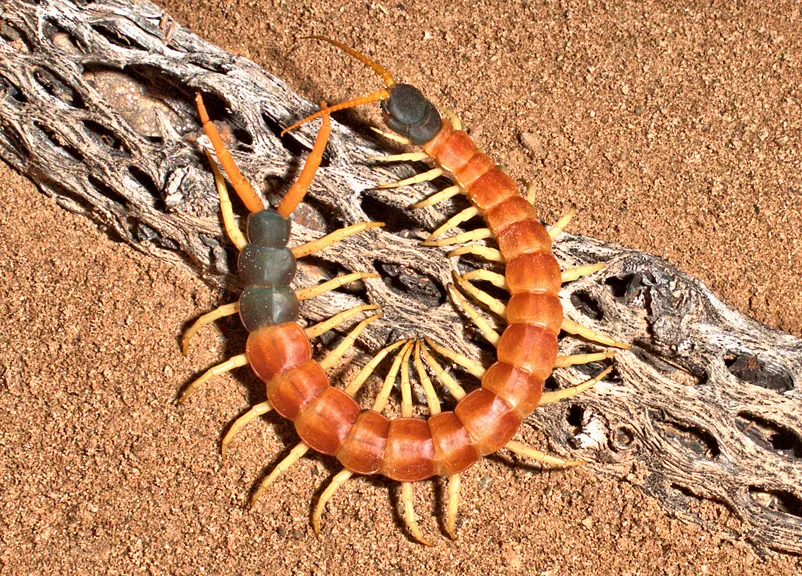
The giant desert centipede is the largest centipede in North America. It lives in dry deserts and rocky woodlands in the southwestern United States and northern Mexico. Its bright colours warn predators to keep away, and its bite is very painful.1



 Indlela yokusibona
Amandla obuthi
Ubuthi buphuma ngamazinyo aso obuthi noma ngamazinyo uma siluma.
Ubuthi baso benzani?
Its venom is similar to that of other Scolopendra centipedes. It acts as a cytolysin, which damages cell membranes and ruptures cells, and it contains heart-affecting (cardiotoxic) proteins. The exact effects of the venom have not been fully studied, because it is hard to collect in useful amounts and breaks down quickly once processed.1
Siyingozi kangakanani ebantwini?
Ingozi ebantwini: KubuhlunguKungaba buhlungu ngempela, kodwa cishe akukaze kube kubi kakhulu.Bites cause sharp, searing pain and swelling in people, and there have never been any confirmed deaths from this species. Occasional symptoms include nausea, headache and localised skin death (necrosis). Severe cases, including kidney failure from muscle breakdown and heart attack, have been reported from Scolopendra bites in general.1
Senzani uma sesabile?
Its bright warning colours are a signal to predators to leave it alone.1
 Uma siluma
- Geza inxeba lokulunywa, lipholise noma ulicwilise emanzini afudumele ngenxa yobuhlungu, bese uthola usizo lwezokwelapha uma kuba kubi kakhulu.
Njalo shayela kuqala inombolo yezimo eziphuthumayo (112, 000, 911). Lokhu kuyiseluleko sosizo lokuqala esijwayelekile, akusona iseluleko sezokwelapha. Izisekelo zosizo lokuqala
 Hlala uphephile
- Ungalokothi uthinte, ubambe noma ugcone isilwane sasendle, ngisho noma sincane, futhi ngisho noma sibukeka silele noma sifile.
- Sinike isikhala. Uma uhlangana naso, hlala uzolile, uhlehle kancane bese usiyeka sihambe ngendlela yaso.
- Uma sikuluma: hlala uzolile, ungashukumi, shayela inombolo yezimo eziphuthumayo (112, 000, 911) noma uye esibhedlela ngokushesha. Khumbula ukuthi besibukeka kanjani, isithombe siyasiza.
Asikuzingeli wena. Sisebenzisa ubuthi baso ukuze sibambe ukudla noma ukuzivikela, futhi singancamela ukucasha. Okwengeziwe mayelana nokuhlala uphephile
Sikhulu kangakanani?
Side kangakanani?
 side njengezitini zamathoyizi ezingu-6 ezilandelanayo
 singahamba amamitha ali-100 ngemizuzwana engu-190 (umuntu oshesha kunabo bonke udinga engu-9,6)
Giant desert centipede mkhulu kangakanani uma uqhathanisa NAWE?
Yizibalo nje kusiphequluli sakho. Akukho okulondolozwayo noma okuthunyelwa ndawo.
Sishesha kangakanani?


Amaqiniso
It can grab small flying insects out of the air.1
It is the largest centipede found in North America.1
Its colours change between variants, and the red-headed form found in Arkansas, Missouri and Texas is especially well known.1
It is a slow-growing species that can live for more than a decade.1
It grows slowly, and it keeps the same number of body segments for its whole life.1
Umqothuli wezinganekwane
Inganekwane: A bite from this centipede is deadly.
Iqiniso: No deaths from its bites have been confirmed. For people, the bite usually causes sharp pain and swelling in the area bitten.1
Lapho amaqiniso evela khona
- Scolopendra heros (Wikipedia (CC BY-SA 4.0))
- Scolopendra heros (iNaturalist): amagama nokuhlelwa ngezigaba.
- Venom Wiki: izinga lengozi, usayizi ojwayelekile nesiqagela sejubane kungokwethu. Bona ukuthi sikubala kanjani: Indlela esilinganisa ngayo ingozi.
Iqiniso ngalinye kuleli khasi linenombolo ekhomba umthombo walo. Uma senze iphutha, uxolo, singabathandi bezilwane, hhayi iphephabhuku lesayensi. Sitshele ku-[email protected] futhi sizolilungisa.
 Ufezela ulambile! I-Venom Wiki iwumsebenzi womuntu oyedwa: imahhala, ayinazo izikhangiso noma izilandeli. Isipho esincane sisiza ukuyigcina ku-inthanethi.Phakela ufezela
 Common desert centipede
 Green centipede
 Haitian giant centipede
 Eastern red centipede
 Florida blue centipede
 Peruvian giant centipede
 Terciopelo
 Eastern coral snake
 Eastern diamondback rattlesnake
 Eyelash viper
 Timber rattlesnake
 Western diamondback rattlesnake