
 I-Afrika
 I-Asia
 I-Yurophu
 INingizimu Melika
 I-Australia ne-Oceania
 I-Antarctica
 ULwandlekazi iPacific
 ULwandlekazi i-Atlantic
 ULwandlekazi i-India
 ULwandlekazi i-Arctic
 Ulwandle iMediterranean
 Ulwandle Olubomvu
 Ulwandle iCaribbean
 Ulwandle iCoral
 Ulwandle lwaseNingizimu China
 Ulwandle lwasePhilippines
 Ulwandle i-Andaman
 Ulwandle i-North Sea
 Ulwandle lwaseTimor ne-Arafura
 Ichweba laseBengal
 Ichweba laseCalifornia
Spur-winged goose
 Sinoshevu uma sidliwaSidla: IzitshaloSinoshevu, asinabo ubuthi bokuluma noma bokuhlaba
The spur-winged goose is a large waterbird from Sub-Saharan Africa, and on average it is the world's largest goose. Some populations are poisonous to eat: birds that feed on many blister beetles carry a poison called cantharidin in their body tissue.1



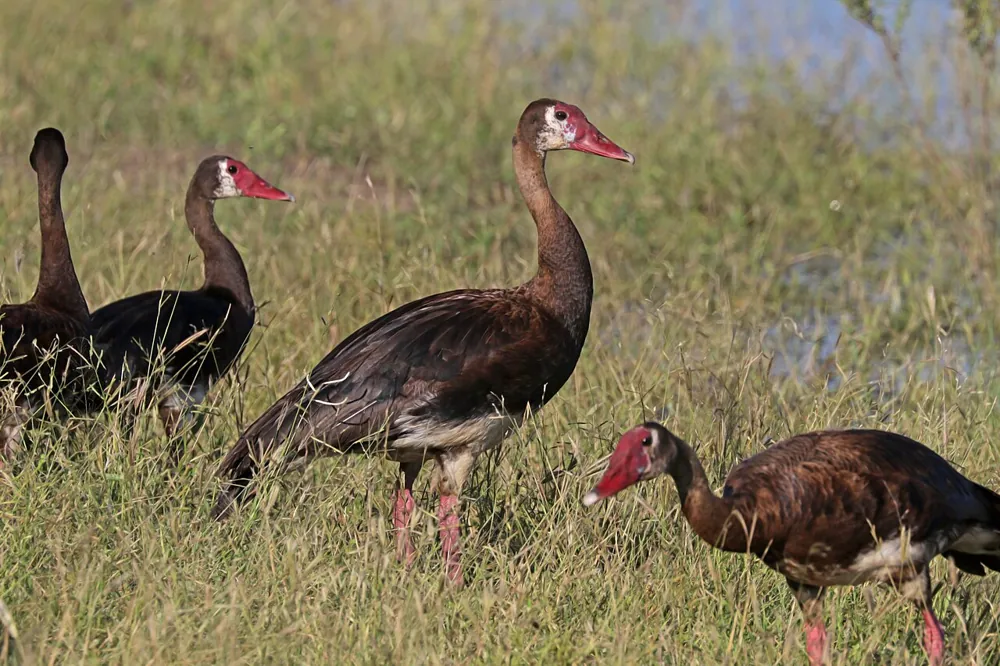
 Indlela yokusibona
Amandla oshevu
Siyingozi kuphela uma kukhona okusidlayo.
Ushevu waso wenzani?
This goose is not venomous. Its poison, cantharidin, is held in the bird's tissue and comes from blister beetles it eats. Eating the cooked goose poisons the person who eats it.1
Siyingozi kangakanani ebantwini?
Ingozi ebantwini: KubuhlunguKungaba buhlungu ngempela, kodwa cishe akukaze kube kubi kakhulu.Only populations whose diet includes large amounts of blister beetles are poisonous. A dose of 10 mg of cantharidin can kill a human. The risk is to people who eat the cooked goose.1
Senzani uma sesabile?
Its alarm call is a soft bubbling "cherwit" when it takes flight or feels alarmed.1
 Uma umuntu esithintile noma esidlile
- Uma umuntu esidlile noma enezimpawu ngemva kokusidla: shayela inombolo yezimo eziphuthumayo noma isikhungo soshevu (poison centre) ngokushesha.
Njalo shayela kuqala inombolo yezimo eziphuthumayo (112, 000, 911). Lokhu kuyiseluleko sosizo lokuqala esijwayelekile, akusona iseluleko sezokwelapha. Izisekelo zosizo lokuqala
 Hlala uphephile
- Ungalokothi uthinte, ubambe noma ugcone isilwane sasendle, ngisho noma sincane, futhi ngisho noma sibukeka silele noma sifile.
- Sinike isikhala. Uma uhlangana naso, hlala uzolile, uhlehle kancane bese usiyeka sihambe ngendlela yaso.
- Uma usithintile noma usidlile: ungahlikihli amehlo noma umlomo wakho, geza izandla zakho futhi uthole usizo lwezokwelapha.
Asikuzingeli wena. Ushevu waso ukhona nje ukuze kungabikho okusidlayo. Okwengeziwe mayelana nokuhlala uphephile
Sikhulu kangakanani?
Side kangakanani?
Sisinda kangakanani?
 side njengamakati asekhaya angu-2.5 kusuka ekhaleni kuya emsileni
 side njengobhanana abangu-6 abalandelanayo
 singandiza siwele inkundla yebhola yonke ngemizuzwana engu-9.5
Spur-winged goose mkhulu kangakanani uma uqhathanisa NAWE?
Yizibalo nje kusiphequluli sakho. Akukho okulondolozwayo noma okuthunyelwa ndawo.
Sishesha kangakanani?


Amaqiniso
On average, it is the world's largest goose. It is also one of the largest African waterfowl, after the wading Goliath heron.1
During the breeding season, it is highly aggressive. It can use the spur on the bend of its wing in fights with other birds.1
Its wingspan can reach 150 to 200 cm, which is wider than most adults are tall.1
Its nests can be found in unusual places, including tree holes, rock cavities, old nests of other birds, termite mounds and aardvark burrows.1
Although it belongs to the duck, goose and swan family, Anatidae, its unique features place it in its own subfamily, the Plectropterinae.1
Lapho amaqiniso evela khona
- Spur-winged goose (Wikipedia (CC BY-SA 4.0))
- Plectropterus gambensis (iNaturalist): amagama nokuhlelwa ngezigaba.
- Venom Wiki: izinga lengozi, usayizi ojwayelekile nesiqagela sejubane kungokwethu. Bona ukuthi sikubala kanjani: Indlela esilinganisa ngayo ingozi.
Iqiniso ngalinye kuleli khasi linenombolo ekhomba umthombo walo. Uma senze iphutha, uxolo, singabathandi bezilwane, hhayi iphephabhuku lesayensi. Sitshele ku-[email protected] futhi sizolilungisa.
 Ufezela ulambile! I-Venom Wiki iwumsebenzi womuntu oyedwa: imahhala, ayinazo izikhangiso noma izilandeli. Isipho esincane sisiza ukuyigcina ku-inthanethi.Phakela ufezela
Okunye okuvela eqenjini elifanayo: Ezinye izilwane ezinoshevu
 African crested ratEzinye izilwane ezinoshevuKudinga udokotelaUngathinti
 Common quailEzinye izilwane ezinoshevuKubuhlungu nje
 Fahaka pufferfishEzinye izilwane ezinoshevuKungabulala
 Red-striped oil beetleEzinye izilwane ezinoshevuKubuhlungu njeUngathinti
 Japanese pufferfishEzinye izilwane ezinoshevuKuyabulala
 Hawksbill sea turtleEzinye izilwane ezinoshevuKungabulala
 Black mamba
 Deathstalker
 Egyptian cobra
 Ibululu
 Boomslang
 Fat-tailed scorpion
.jpg)